Commercial Roof Inspection in Greenville, TX
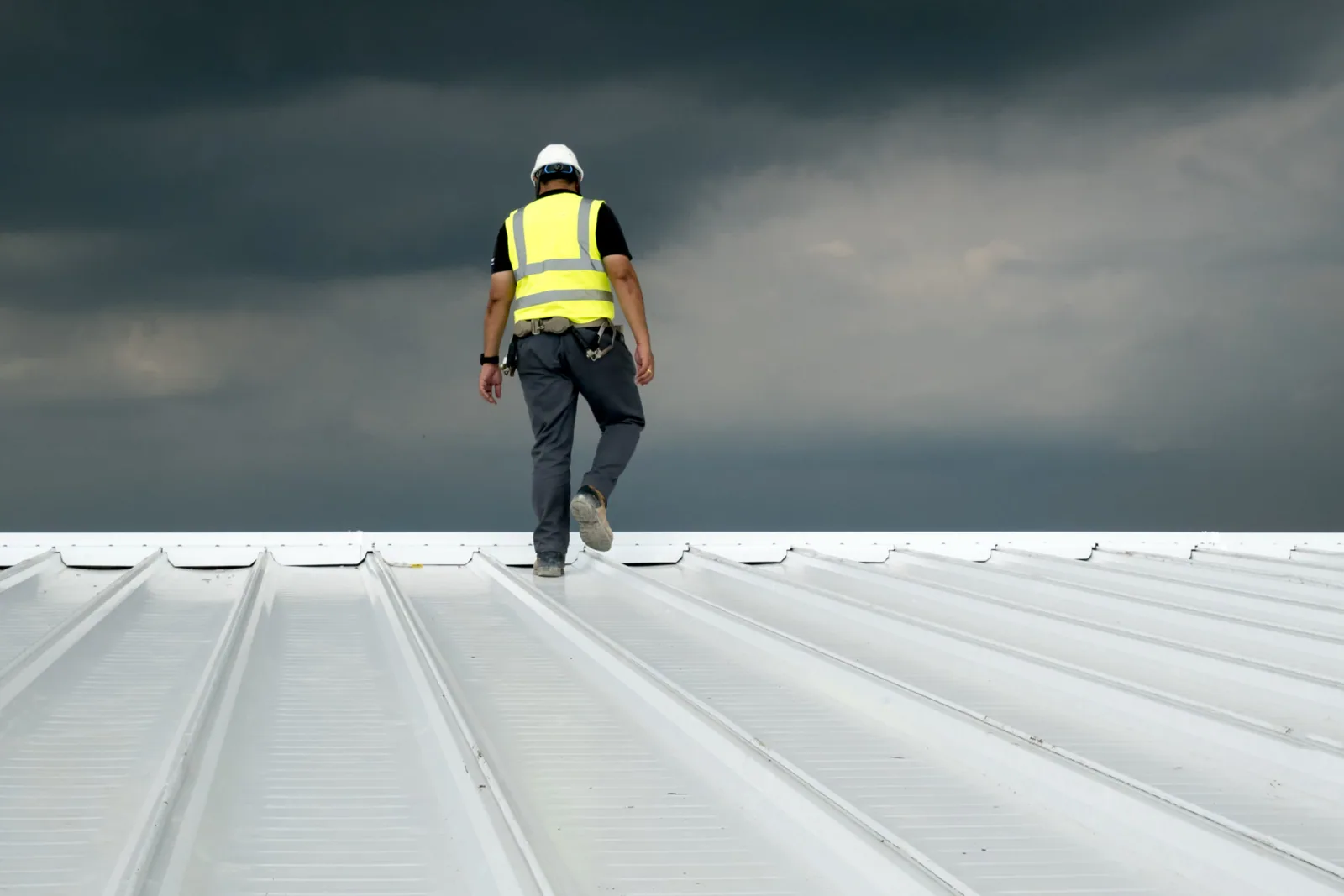
Most roof problems are plain from five feet away and invisible from the ground. A lifted lap, a crushed drain, a soft spot by the unit. You find them by walking the roof, with a thumb, a probe and a camera. A photo from the parking lot finds none of them.
A commercial roof inspection in Greenville, TX is that walk, written up so you can act on it. We tell you what condition the roof is in, what is failing, what can wait and what each choice costs. Owners use it to fix the right things first and spend the budget once.
What does a hands-on inspection actually cover?
We start at the edge and work in. The crew checks the membrane field, every seam and lap, every wall base and curb, every penetration and every drain. They look at edge metal, coping, gutters and scuppers. They check rooftop units for loose panels, leaking condensate lines and curbs that have shifted.
Underneath the surface we press and probe. Insulation that gives under foot is flagged. Fasteners that have backed out get marked. Where the deck is visible from inside, we look at its underside for rust, staining and sagging.
Then we go indoors if access allows. Stains on ceiling tile or deck tell us where water has already traveled, and they help us tie interior signs to roof defects.
What turns up that a drive-by would miss?
Plenty. Hail bruising is the big one. It shows as dimples or soft spots, and the roof may not leak for months. Ponding water leaves a ring of dirt that outlines a low spot. Shrinkage pulls membrane tight until a flashing lets go at a wall.
We also find the work other trades left behind: screws dropped into the membrane, cut conduit with no boot, a unit installed without a curb flashing. Those small things create leaks that nobody can trace.
When something looks suspicious, we do not stop at an opinion. We follow it with a core cut or a scan. An infrared moisture survey and a drone roof inspection are part of the toolkit when the roof is large or the problem is hidden.
What do I get in writing?
You get a report you can hand to an owner, a lender or an adjuster. It carries dated photos tied to a roof map, a plain description of each finding and a priority for each one: fix now, fix this season, or watch.
Each finding comes with a repair scope. Beside it sits the cost of a replacement, so you can see where the line falls. The report ends with what needs repair, what can wait and the cost of each option. The report says what we would do with the roof if it were ours.
That document feeds capital planning, too. A run of dated roof condition reports shows where each roof stands across a multi-year budget, and a clean set of records helps in your next lender conversation.
A useful inspection record distinguishes what was observed from what remains hidden. It should identify the roof area, show the condition in dated photographs, note any test openings, and separate urgent water entry from aging that can be budgeted. Ask the inspector to state when an area was inaccessible and what follow-up would resolve the uncertainty. That makes the report usable by the facilities team, ownership and a future contractor without treating a visual walk as a warranty or destructive investigation.
When should a roof be inspected?
At minimum, twice a year: once after storm season and once before winter. Add a visit after any major hail or wind event, since damage often hides until the next heavy rain.
Other triggers matter just as much:
- Before buying or leasing a building. A due diligence roof survey shows what the roof will cost you before you sign.
- Before a budget cycle, so the roof line item matches the real condition.
- After other trades have been on the roof.
- When leaks start showing up in new places.
Regular inspections are the front door of a preventive roof maintenance program. They keep small defects small.
How is an inspection priced and scheduled?
Price follows roof size, access and how much testing is called for. A single small roof is a quick visit. A large plant roof with many units, multiple levels and a long punch list takes more time and more crew.
Scheduling is light on your end. We need roof access, a contact for the building and any safety rules we should know about. Occupied buildings are no problem, because an inspection is quiet work that does not disturb tenants.
The return is the point. A roof inspected once a year is cheaper to own than a roof ignored for five. Problems caught at the seam stage cost a fraction of the same problems caught at the ceiling-tile stage, and the report gives you the dates and photos to prove what happened and when.
What should I check on my Greenville roof after storm season?
Start with hail. Spring storms here can throw stones up to softball size, and a roof that looks fine from the roofline may be bruised across the field. The June 2019 Greenville storm brought baseball-sized hail and winds near 85 mph. After a storm affecting your building, inspect the roof and document observed conditions. Our hail damage repair starts with this same inspection.
Heat comes second. Long runs of 100-degree days dry out sealants and loosen flashing. Check every wall base and curb before the next summer.
Majors Airport is beside Greenville Business Air Park, where L3Harris performs aircraft modification work. For a roof there, inspect seams, equipment and access on the actual building before setting the report scope. Downtown Greenville includes older commercial buildings, and Hunt Regional Medical Center is on Joe Ramsey Boulevard. Inspect each roof’s parapets, seams and drainage on its maintenance schedule.
Commercial Roofing Questions
How many times a year should a big flat roof get walked in Hunt County?
Twice a year is the working standard: once in spring after the worst of the storms, and once in fall before winter. Add a visit after any hail or high-wind event. If the roof is old or has a history of leaks, move to more frequent checks. A short, regular routine costs less than one emergency call.
Do you need to get on the roof, or can a drone do it?
Both have a place. A drone covers big roofs quickly and safely, and it is great for photos. But a thumb test, a probe and a core cut tell you things a camera cannot. For most roofs we recommend a hands-on walk, with a drone added when size or access makes it worth it.
Will an inspection disrupt my tenants?
Almost never. The work happens on the roof with minimal noise, and we only need to come inside if we want to match a stain to a defect. Give us a point of contact and a window, and we will keep out of the way. Hospitals, schools and plants get a tighter plan around sensitive areas.
What if the report says the roof needs replacing?
Then you will have the evidence and the numbers to plan it. We show the condition, the repair option and the replacement option, with reasoning for each. You decide the timing. In many cases we also lay out a repair plan that buys a few seasons while you budget for the larger project.
Can the inspection report support an insurance claim?
It can help. Dated photos and a clear description of storm damage give an adjuster something concrete to evaluate. We write the cause and condition of each defect plainly and do not overstate. You will still need to work through your carrier, but a clean record puts you in a stronger spot.