Built-Up Roofing (BUR) in Greenville, TX
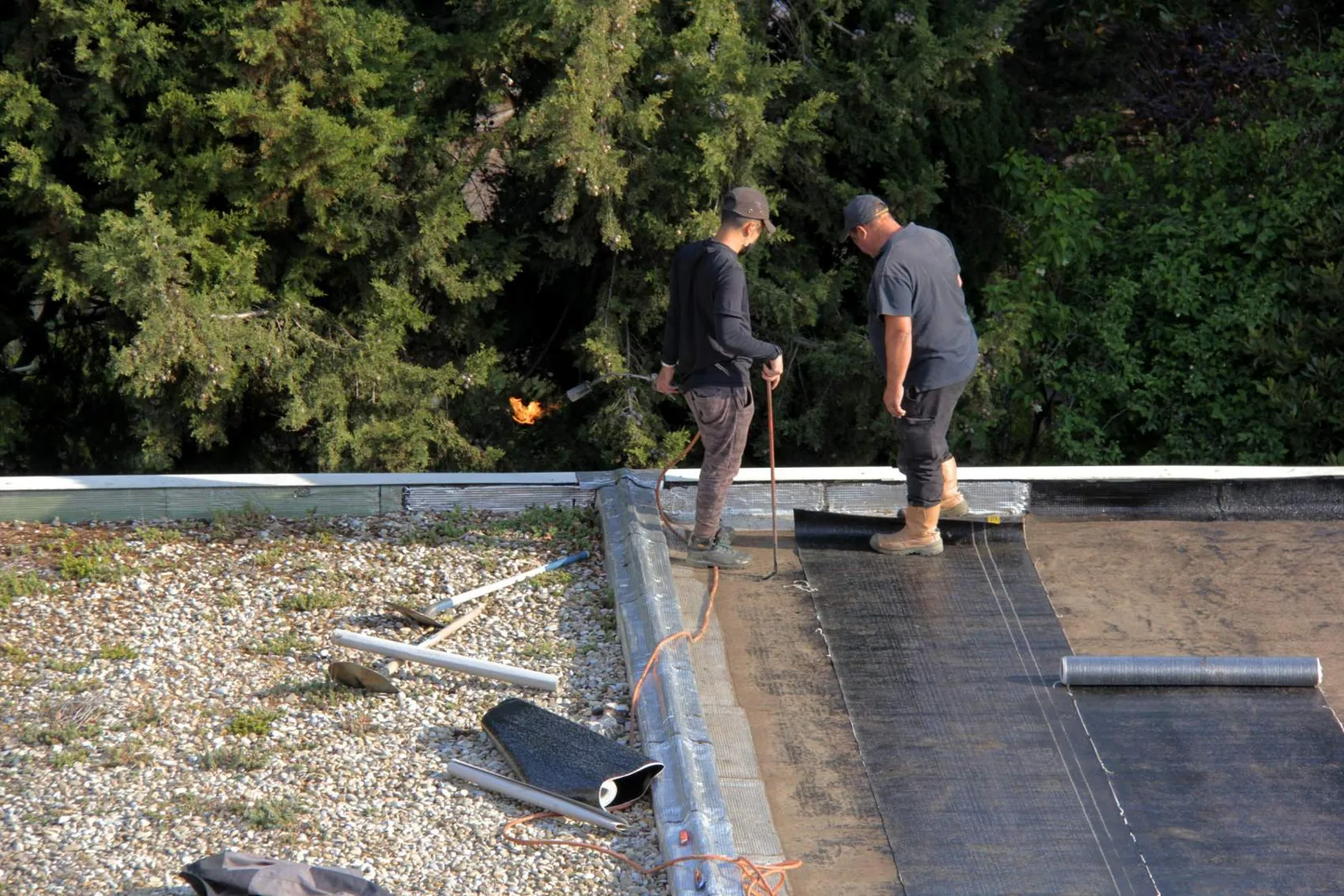
Walk a gravel-surfaced built-up roof in August and the tar bleeds up between the stones. It sticks to the boot and shines in the sun. That is asphalt doing what asphalt does in a hundred-degree afternoon, and on a sound roof it is only a nuisance. On a tired one it is a sign the surfacing is thin and the plies underneath are taking the heat.
Built-up roofing, or BUR, is the original multi-ply system: layers of reinforcing felt or fabric mopped together with hot asphalt, then topped with gravel or a cap sheet. In Greenville, TX an older flat roof may still carry one. Owners who inherit a BUR roof want three answers: how long it has left, what it costs to keep and what it costs to replace.
What is a built-up roof actually made of?
Layers, as the name says. A base ply goes over the deck or insulation, then alternating plies of asphalt and reinforcing felt are mopped on, usually three or four deep. The top gets either gravel pressed into a flood coat of asphalt or a mineral-surfaced cap sheet.
Each layer does a job. The plies give redundancy, so one weak spot does not mean a leak. The asphalt seals and bonds them together. The surfacing shields the asphalt from sun and hail, and it adds fire resistance.
Edges and walls finish with flashing plies and metal. That is where a lot of leaks start on older roofs, because every flashing is a handmade detail. We read a BUR roof by looking at those details first.
Why do some owners still choose BUR for a flat roof?
Because it is tough and predictable. A thick, layered roof tolerates foot traffic, equipment moves and trades working up top. Gravel gives hail somewhere to land, and a gravel roof can come through a storm with less damage than a thin single-ply sheet.
It is also easy to repair. Cut out a bad spot, lay new plies, mop and re-surface. The method has not changed much, and crews know it. A school roof or an older civic building with many penetrations suits that kind of work.
The price is weight, hot asphalt and odor. A kettle on the site means fumes near air intakes, and the roof is heavier than a sheet system. We discuss both before we recommend it.
What goes wrong with an aging BUR roof?
Alligatoring comes first. The surface cracks into a pattern like dry mud as the asphalt oxidizes, and water gets to the felt. Blisters follow where trapped moisture expands in the heat. Ridges form over insulation joints and split open when the roof moves.
Gravel loss is the next sign. Bare patches mean the asphalt is exposed, and exposed asphalt weathers fast. Slippage near the edges and flashings that have pulled from the wall round out the list.
None of these means the roof is done. We rate each one and map it. A few bare patches and a split flashing is a repair. A field of blisters over wet insulation is a replacement. A moisture survey sorts the two before you spend money on the wrong fix.
Can the old BUR roof stay, or does it have to come off?
Sometimes it stays. A BUR roof with a dry, sound base can take a new cover board and a single-ply membrane over it. That is a roof recover, and it saves tear-off labor and disposal. It adds weight, so we check the structure and the code.
Greenville has adopted the 2018 International Building Code, which limits reroofing over existing systems that are wet or have too many layers. If the old BUR is wet or already carries a previous roof, it comes off.
Tear-off of a BUR roof is hard work. Gravel is swept off, the plies are cut and hauled, and the deck is inspected before anything new goes down. Then we choose the new system, often modified bitumen or TPO, based on the building.
What does a BUR job cost and how long does it run?
The number follows the scope: roof size, tear-off or recover, insulation, flashings and the count of penetrations. Hot asphalt adds labor for the kettle and safety measures. A big, open roof moves faster than one cut up with equipment.
Schedule follows weather. Asphalt wants dry decks and moderate temperatures, and a spring thunderstorm can stop a day early. We tear off and dry in the same day so the building does not sit open overnight.
Occupied buildings add planning for fumes, noise and parking. We set kettle placement away from intakes and tell tenants what to expect. Johns Manville is one of several makers whose BUR products we install.
What do Greenville wind and hail do to gravel?
In June 2019 Greenville took winds near 85 mph and baseball-sized hail, the kind of load a loose-gravel roof has to survive. Stone can blow off an exposed edge and leave bare asphalt that cracks in the next heat wave. Greenville’s industrial areas include Park West Industrial Park along SH 380 and the broader SH 66 and US 380 industrial area. Identify the assembly at each property and inspect its surfacing, attachment and perimeter before estimating hail or wind repairs. Hail landing on gravel is usually less harmful than hail landing on a thin sheet.
A 2016 hailstorm in Wylie dropped softball-sized stones and caused more than $240 million in damage in that town. After a hail report, inspect the actual built-up assembly, including surfacing, flashing and cap sheet, before setting the repair scope.
After a storm we check the perimeter gravel, the flashing and the cap sheet. A wind damage roof repair follows the same perimeter check.
Commercial Roofing Questions
Is hot asphalt a problem for the tenants below?
Fumes and odor are the real issue, more than heat. The kettle sits where it can vent away from air intakes, and we ask your facility manager to set HVAC dampers during mopping. We also schedule the loudest, smelliest hours for when the building is least busy. If an occupant cannot accept any odor, we price a cold-applied alternative.
Why is there tar on top of my gravel in summer?
Bitumen softens in long heat, and it migrates up between the stones. A little is normal on a hot afternoon. A lot means the flood coat is thin or the asphalt has aged, and the roof is losing protection. We check the gravel depth, sweep in bare patches and recoat when the roof is sound. If the base is cracked, we say so.
How many plies should a built-up roof have?
Plan on three or four, plus the surfacing. More plies add redundancy and weight, and fewer plies save money on a roof that will not see much traffic. The right number depends on the deck, the insulation and what the roof will carry. We spec it after we see the building.
Should I replace my BUR roof with a single-ply sheet?
Compare what the building needs, not what is easiest to install. A single-ply system like TPO goes down faster and weighs less. BUR is heavier but tougher under foot traffic and gravel can help against hail. We price both with tear-off, insulation and drainage so you see the full picture before you choose.
How do I find a leak under gravel?
Start with the drains and the walls, because that is where water enters. Gravel hides cracks and holes, so a simple walk often misses them. We use an infrared scan at dusk to find wet insulation, then cut a few cores to confirm. Mark the area, fix the entry point and replace the wet material, and the leak stays fixed.