Emergency Roof Repair in Greenville, TX
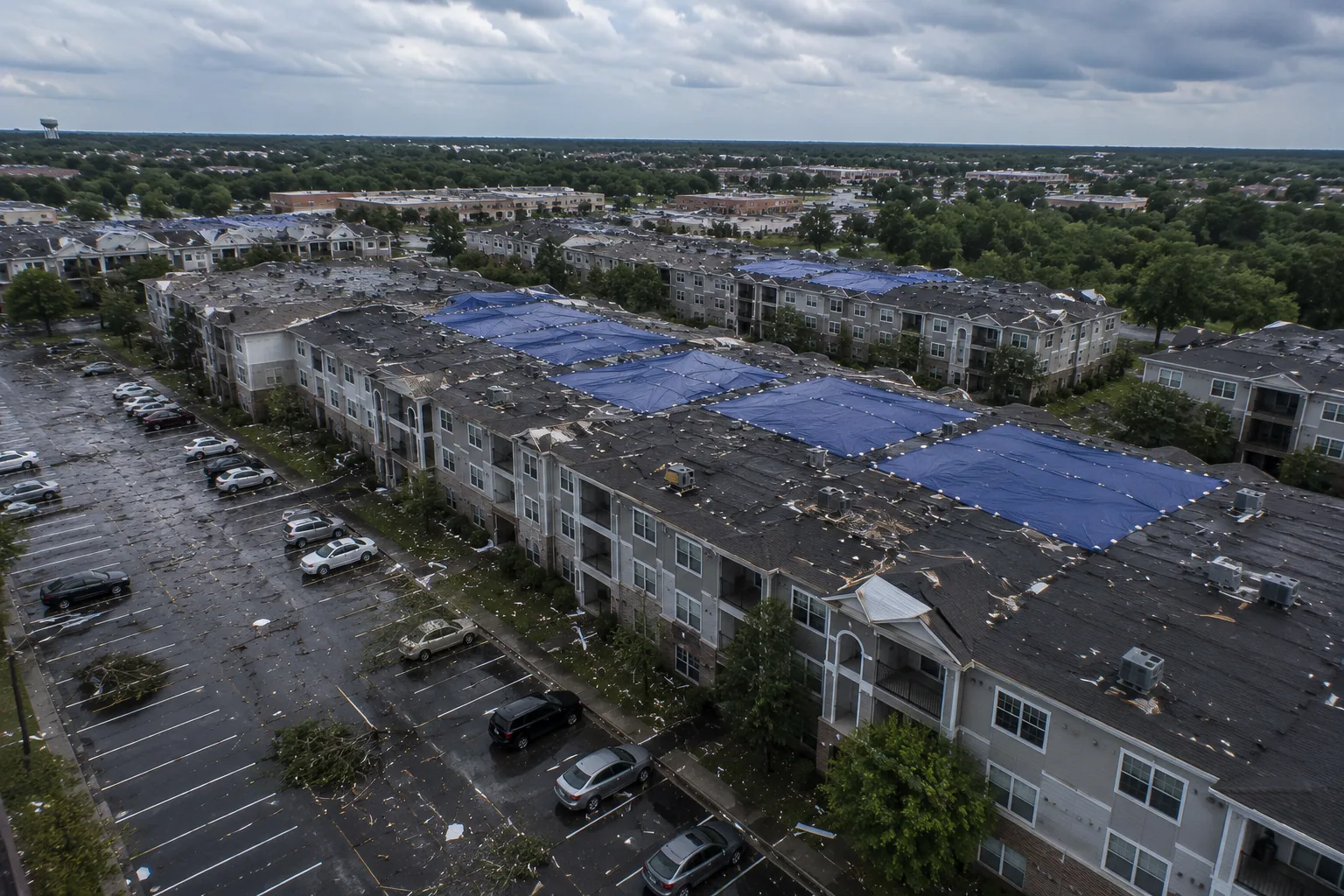
Daylight shows through the deck and the forecast says rain by dark. That is an emergency, and it does not wait for Monday. A building with an open roof can lose product, ceilings, electrical gear and a week of operations in one night.
Emergency roof repair in Greenville, TX starts with a call, a site address and the safest available plan to protect the building from active water entry. Our job on that first call is simple: get water out of the building and keep it out. The permanent repair comes after, once the scope is clear and the price is written down.
What happens when I call at two in the morning?
A person answers and asks the questions that matter. Is anyone hurt? Is the roof stable enough to stand on? Where is the water coming in and what is getting wet? Can you send photos? Those answers tell us what crew and material to send.
Then we roll. The crew arrives with tarps, sheeting, fasteners, sealants, lumber and the tools to cut out damaged material. They walk the roof, find the opening and make it safe before they touch it.
If the structure looks unsafe, we say so. We will not put people on a roof that is ready to give way, and we will tell you to clear the space below until an engineer or the fire marshal weighs in.
What is dry-in and how is it different from a repair?
Dry-in means stopping water, not finishing the roof. We cover the opening with materials that shed water and hold in wind: heavy tarps secured to the deck or wall, sheet material nailed down and sealed, or temporary membrane patches adhered over the damaged area.
It is the same idea as a bandage. It holds, but it is not the cure. Good dry-in lasts days or weeks, long enough for you to call your insurer, get a scope and schedule the real work.
The permanent repair uses materials that match the roof system, with proper fastening, welded or bonded seams and tied-in flashing. If the damage is limited, we may complete it on the same visit. If not, we hand you a written plan for the next step.
What does emergency work cost and why?
Emergency work costs more per hour than planned work, and it should. Crews are called out after hours, material is pulled from stock and the job often runs in bad weather. You are paying for speed and readiness.
Three things shape the bill:
- Size of the opening and how much roof has to be covered.
- Access. A low roof with a ladder is quick. A tall roof that needs a lift or crane is not.
- Time on site. A long storm night costs more than a quick tarp job.
We give you the scope and the price as soon as we can see the damage, and we keep the temporary work to what the building needs. Overbuilding a dry-in wastes your money. Under-building it loses the building to the next storm.
What should my staff do before the crew gets there?
Stay off the roof and out of the damaged area. Protect people first, property second. Move equipment, inventory and records out of reach of the water and cover what cannot move. Shut power to affected circuits if it is safe to reach the panel.
Take photos and video of every wet area and every sign of damage before anything is moved. Write down the time the problem started and who reported it. Keep that log, because it is the backbone of any claim.
Call your insurer early. Our roof insurance claim assistance helps pull together the photos, the cause of loss and the repair scope in the form a carrier expects.
Before anyone climbs, note which rooms are affected, protect movable inventory, and keep people away from a ceiling that is sagging or shedding material. If water is near electrical equipment, isolate the area and call the appropriate building trade. Photos from the floor can help the crew find the leak path, but do not send staff onto a wet roof. The first visit is for safe access, temporary control and a documented handoff to the permanent repair.
What comes after the dry-in?
We come back and size the permanent fix. For a hit from wind or hail, that usually means a full look at the roof, since storms rarely damage just one spot. That full look is the first step of storm damage roof repair.
Small openings often turn into a leak repair and a patch. Larger losses move into a planned commercial roof repair or a section replacement. If the damage is widespread, we will say so and put the cost of a full tear-off next to the cost of piecing the roof back together.
Whatever the path, the temporary work comes out or gets tied in correctly, so you are not left with a patchwork roof that leaks at every seam.
What kinds of emergencies hit Greenville roofs?
Storm nights, mostly. The June 2019 storm sent winds near 85 mph and baseball-sized hail through Greenville, dropped a roof at a building in downtown Greenville and badly damaged the roof of a church sanctuary on Joe Ramsey Boulevard. The same storm path ran on through Campbell, east along I-30.
Tornado risk is real too. Hunt County has 75 recorded tornadoes since 1680, with May as the peak month. An April 2014 EF1 east of Merit removed part of a structure’s metal roof and wall panels. Wind work is common, and it usually ends in wind damage repair or, after the worst events, tornado damage repair.
Spring gets the headlines, but fire, a failed rooftop unit or a hard summer storm can open a roof in any season. We run the line year round.
Commercial Roofing Questions
Do you really answer calls on weekends and holidays?
Yes. Emergency response runs 24 hours a day, every day, with no holiday gap. Storms do not check the calendar and neither do we. Call the main number and ask for emergency service. Have the address, the type of roof if you know it and what is getting wet ready, and we will get a crew moving.
Is a tarp enough, or do I need a real repair right away?
A tarp or temporary membrane is enough to hold for a short stretch while the permanent repair is scoped and scheduled. It is not a long-term roof. Plan the permanent repair within days or weeks, depending on the damage, the forecast and what is below. We will tell you how long we think the dry-in will hold.
Will my insurance cover emergency roof work?
Many policies cover reasonable emergency measures to protect the building after a covered loss, but terms differ. Keep every receipt and photo, and report the loss as soon as you can. We will write up the cause of damage and the work performed so your adjuster has the facts.
Can you work on a roof during a storm?
Not while lightning or high wind makes the roof unsafe. Crew safety comes first. We will stage close by, move in as soon as conditions allow and place the dry-in in the first usable window. In the meantime, we can talk you through protecting the inside of the building.
What if the damage is worse than it looked from the ground?
It often is, which is why we walk the whole roof, not just the opening. Once we are up there we may find wet insulation, a damaged deck or lifted membrane far from the visible hole. We stop what we can, tell you what else we found and give you a clear scope before anything is added to the bill.