Commercial Roofing in the SH 66 and US 380 Industrial Area, Greenville, TX
A scuff trail runs from the roof hatch to the rooftop unit, straight across the membrane. That is where technicians walk, and it is wearing a path through a roof that is still young. A set of walkway pads costs little. A patch after the first leak under that trail costs more.
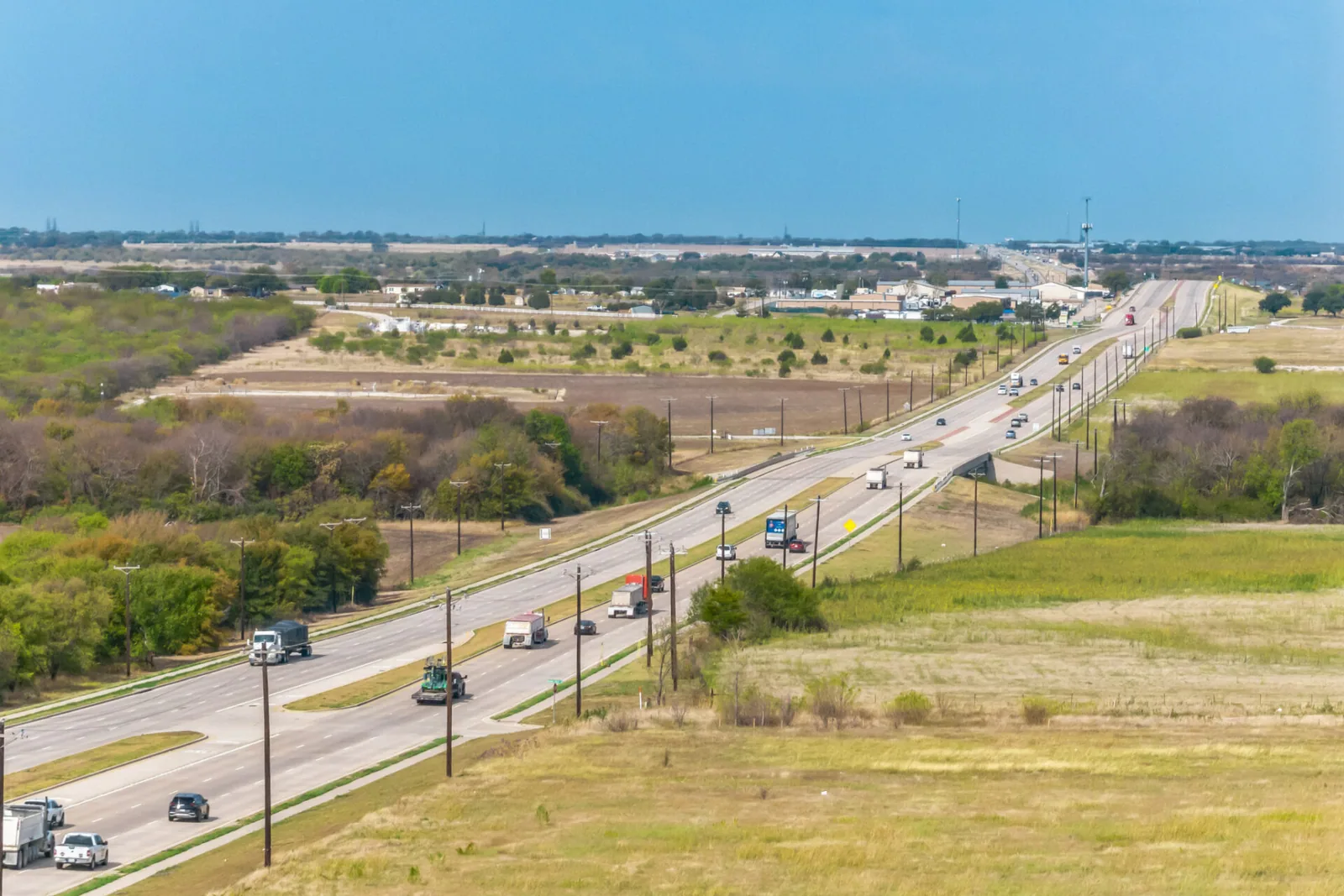
Commercial roofing along SH 66 and US 380 starts with the assigned building. Industrial employment is concentrated along these routes, and planning for growth near US 380 includes manufacturing, trucking and shipping. New industrial uses are directed toward existing industrial areas. We inspect the actual assembly, map the wear and price the repair beside the cost of waiting.
A leak over an operating industrial space needs a safe dry-in at any hour. Our emergency response stays open through nights and holidays.
Where do the weak points sit on a roof this size?
Everywhere there is a joint, a pipe or a person. A broad industrial roof can have long seam runs, wall bases and several drainage zones. Add the rooftop units, exhaust fans and conduit that a molding plant needs to move heat and air. Each penetration is a place where water can get in.
Foot traffic is the quiet problem. Service techs walk to the same units on the same paths, week after week. Without walkway pads the membrane wears thin, and a dropped tool or a pulled boot turns wear into a hole. We note every path and every unit that needs a pad.
Drains are the other one. A roof this size sheds an enormous amount of water in one storm, and one clogged drain makes a pond that loads the deck and stresses the seams. We check each drain and sump during an infrared moisture survey, because wet insulation tends to collect right beside them. A curb and equipment support that has shifted shows up on the same walk.
How does the building’s operation change the roof plan?
A production building may carry exhaust, piping and equipment penetrations that require coordination before flashing is rebuilt. We identify each curb and the trade responsible for disconnecting or preparing its unit. The roof scope should show where the detail ends and which work must happen first.
A warehouse roof puts attention on drainage, long seam runs and the areas where service crews travel. Water above stored goods can interrupt operations, so the inspection maps drains, sumps and open laps before a repair amount is set. Walk pads belong on repeated service paths when the assembly and layout call for them.
Some industrial operations release heat or process residue near the roof. Confirm the material exposure before selecting a membrane. PVC roofing and KEE roofing may warrant review where chemical compatibility is a concern, but the actual discharge and product guidance govern the decision.
What should an industrial roof baseline contain?
Start with the installation date, roof assembly and available closeout records. Manufacturing and freight uses are part of the planned US 380 growth area. Greenville’s developed industrial parks include Industrial Park West and the Business Airport. Gather the installation records and maintenance history, then compare them with a roof walk. The file should identify the installed assembly, documented repairs and current observed condition.
Build a baseline with dated roof photographs, a drain map, penetration notes and the material information available. It gives the owner a comparison point after a storm or a leak. We mark observed defects by area and note any portion the inspection could not reach, so a later repair does not rely on memory alone.
Keep inspection records and completed maintenance together with the warranty documents. If a later condition raises a claim question, dated findings help show what was observed and when. Schedule a roof walk after significant weather and keep routine service findings with the building file. Our roof asset management record can keep conditions, recommendations and completed work in one place.
How should owners plan roof spending over time?
Set a baseline, separate urgent repairs from planned renewal and review the remaining roof life against the owner’s budget cycle. Do not bury an unknown deck or wet-insulation condition inside a broad allowance. If the inspection cannot settle it, price the investigative opening as its own decision.
A practical schedule might begin with the repairs that protect the deck, then reserve a later stage for a coating or replacement if the assembly supports it. Roof capital planning gives the owner a way to compare those stages and the inspections that inform them.
Cost follows the measured area, wet insulation, deck condition, penetrations, staging and the portion of the building that must remain in operation. Repair and replacement can be compared on one scope, with concealed conditions listed as open questions rather than settled quantities.
How hard do spring storms and 100-degree days hit these buildings?
Severe wind and hail crossed Greenville in June 2019. After similar weather, check exposed edges, wall flashings and rooftop equipment supports. Hunt County also has a long tornado record, with May its peak month. Inspect the membrane, edge metal and rooftop equipment after severe weather before setting a repair boundary.
After a hail report, inspect the roof surface, flashing and rooftop equipment and map damage by area. A hail bruise does not always show. You press a thumb into the membrane and feel the soft spot. We mark those, core the worst and write them up while the claim window is open.
Summer heat finishes the job. Long summer heat dries exposed sealant and works on membrane details between storms. A roof walk before the hottest stretch and another after hail can catch loose edge metal or an open lap while the repair boundary is still manageable. Industrial Park West and the Greenville Business Air Park are separate local industrial areas with their own building-specific scopes.
Commercial Roofing Questions
What belongs in the first roof-condition file?
Start with the assembly, installation records, dated photographs, drain locations and visible defects. We walk the roof, map the condition and note areas that need another test. That baseline gives the owner a comparison after a storm or repair. It does not assume the entire roof has the same age or condition.
How much foot traffic can the membrane take from service techs?
Not much without pads. A TPO or PVC surface scuffs along the same path week after week, and the thinnest spot becomes the leak. Walkway pads from the roof hatch to each unit are a modest line item. Set them early, and keep tool bags and ladder feet off the open membrane.
How do you compare a repair with a later replacement?
Price the immediate work against the remaining assembly. A sound deck and dry insulation can make a focused repair practical; widespread wet material or failing attachment can change the recommendation. We list the findings and cost drivers separately, then show what a later renewal would include. The owner can plan the next inspection against that scope.
When should ponding trigger a closer look?
Check how long water remains, how deep it is and whether the outlet is clear. A persistent pond can point to blocked drainage, a low section or compressed insulation. We measure the area and examine the drain before pricing a correction. Do not coat over standing water and call the drainage problem solved.
How do process exhaust and residue affect membrane choice?
Identify what reaches the roof and where it lands. Heat, oils and chemical residue can affect materials differently. We compare the exposure with the proposed system and its product guidance before choosing a repair or replacement. If the operating process changes, inspect the affected area again instead of assuming the existing membrane remains suitable.