Rooftop Unit Curbs and Equipment Supports in Greenville, TX
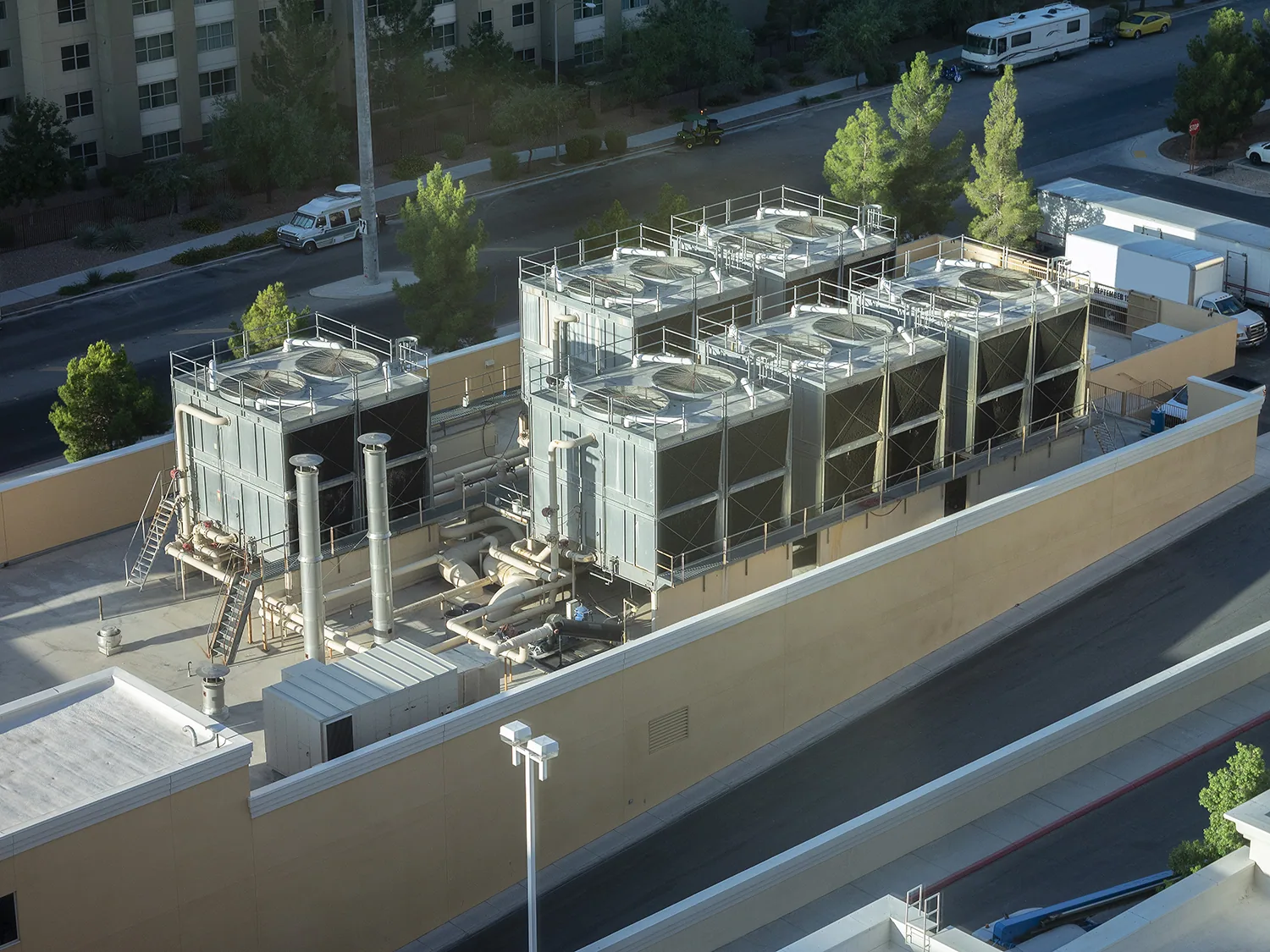
Rooftop unit bases deserve a close look. Check for split sealant, flashing pulled loose by vibration, or a dark ring where water has stood.
Curbs, equipment supports and pipe supports on commercial roofs in Greenville, TX hold up everything that is not membrane. A curb or penetrated support interrupts the roof surface, while equipment on pads needs a separate protection detail. We walk the roof, check every base and tell you which ones need new flashing, which need more height and which can wait another year.
A few accessible curbs may fit a short repair visit. A large group of units that need a crane requires its own lift, staging and mechanical schedule.
What fails at the base of a rooftop unit?
Most curb leaks are not the curb. They are the flashing that meets it. The membrane turns up the curb wall, gets fastened at the top and is covered by a counterflashing or a termination bar. Each layer can fail on its own.
We see three failures again and again. Sealant that dried out and split in the sun. Flashing that peeled off the curb because the unit shakes it all day. And a pond on the uphill side because nobody built a cricket.
A cricket is a small sloped saddle that sends water around a curb instead of into it. Without one, a wide unit acts like a dam. The water sits, the sun cooks the membrane around it and the corner seam opens.
How tall should a curb be, and what holds it down?
A curb has to lift the unit high enough that the base flashing can turn up well above the water line. When a roof gets a second layer or thicker insulation, an old low curb ends up too short. That is the usual surprise on a reroof.
The tear-off crew finds a curb built for the old roof, and the new flashing will not fit. The options are plain. Raise the curb with an extension, replace it, or set the unit on a new adapter. Each has a different price and a different crane day.
Wind is the other question. A rooftop unit can catch wind load, so check that curb, rail and unit attachments connect to the structure. Curbs and rails must be fastened to the structure, and the unit must be strapped to the curb. Straight-line winds near 85 mph came through Greenville in June 2019, so the tie-downs get checked first, the same ones that matter after any wind damage call.
What about pipe, conduit and gas line supports?
Pipes, conduit and gas lines cross a roof on supports. Some sit on pads. Some sit on rollers. Some are bolted down through the membrane. The ones resting on bare membrane are the ones we flag first.
A pipe that rests directly on a roof wears a groove with every heat cycle. Repeated heat cycles move pipes and can wear a roof at bearing points. Use protection pads or supports that spread the load.
Where a support is fastened through the roof, it needs its own flashing, either a pitch pocket or a pre-made boot. Pitch pockets dry out and shrink, and then they leak. We rebuild them or swap them for a sealed detail. The same logic applies to skylight and penetration flashing across the rest of the roof.
What does the work cost and who has to be on site?
Nobody can price curb work from the ground. The number depends on count, size and access. A few small curbs on a clean membrane can fit a repair visit. A large group of units may require a separate mobilization and mechanical coordination.
Four things move the price. How many bases need new flashing. Whether curbs get raised or replaced. Whether the mechanical and electrical trades must disconnect and lift units. And how much roof around the base must be cut back, because wet insulation will not hold new flashing.
We give you a unit-by-unit count with photos and a price on each line. You can fix the worst bases now and put the rest in next year's budget. Wet insulation near a unit shows up on an infrared moisture survey, which costs less than guessing and cutting.
Can a unit be swapped without opening the roof?
If the HVAC contractor is replacing a unit, call us first. A new unit that does not match the old curb leaves a gap, and the gap gets closed with whatever is on the truck. We would rather be on the roof with the right adapter and the right flashing already cut.
The sequence is short. Our crew preps the curb. The mechanical crew lifts and sets the unit. We flash and seal the same day, so the roof is dry-in before dark.
On a full tear-off, the better plan is to replace the roof and the failing curbs in one pass, with units raised or set aside. Doing the curbs after the roof means cutting into a new membrane.
What do Greenville heat and hail do to unit bases?
Spring brings Gulf moisture up against cold air from the north, and the storms can drop hail as large as softballs. Hail dents unit casings, bends coil fins and bruises the membrane on top of curbs. Summer heat works on seals and exposed materials between storms.
At Park West, Brakebush Brothers built a 315,000-square-foot chicken-processing facility. A roof survey measures the roof and records each curb, support and service path directly. Walk pads protect the membrane where technicians travel.
Along SH 66 and US 380 industrial area, Orbis operates a roughly 1.03-million-square-foot industrial building. That building area does not establish roof area or equipment count; any roof survey must record each base, support and access condition directly. Hunt Regional Medical Center completed a two-story expansion for surgical and women’s services in 2021. On an occupied healthcare roof, equipment lifts need to fit the facility’s operating schedule and access requirements. On manufacturing plant roofing, protect service paths with walk pads suited to the existing TPO roof.
Commercial Roofing Questions
Can you raise a curb without replacing the unit?
Often, yes. A curb extension lifts the unit and the flashing together, and the unit is set back down on the new height. It needs a lift, a mechanical crew to disconnect and reconnect, and a clear weather window. We confirm the structure can carry the unit at the new height before we price it. If the existing curb is rusted, cracked or not fastened properly, replacing it is the cleaner fix.
Do I need my HVAC contractor on the roof when you work on a curb?
Only when the unit has to move. Resealing a base, rebuilding a counterflashing or adding a cricket can be done around a running unit. Raising a curb or swapping a unit needs the mechanical trade to disconnect lines and set the unit. We schedule both crews for one morning, so the roof is open for the shortest time possible.
How can I tell that curb flashing has failed?
Walk the base and look for four things: cracked or missing sealant, membrane that has pulled away from the curb wall, rust streaks on the curb, and stained ceiling tiles right under the unit. A thumb pressed into the insulation next to the curb tells you plenty. Send us photos or have us walk the roof, and we will mark every base that needs work and rank them by urgency.
Should curb repairs wait until the whole roof is replaced?
Not if the base is leaking now. Water that gets under the membrane at a curb soaks the insulation, and wet insulation spreads. Fix the leaking bases now with a repair that you can later tear off with the rest of the roof. If replacement is near, keep the repair modest and put the permanent curb work into that scope.
Will other trades damage the roof when they service the equipment?
They can, and it happens often. Dropped tools, dragged panels and dumped filters all cut membrane. We recommend walk pads from the roof hatch to each unit, a rule that nobody services equipment without logging in with you, and a roof walk after any big mechanical job. We can photo the roof before and after.