Roof Recover and Overlay in Greenville, TX
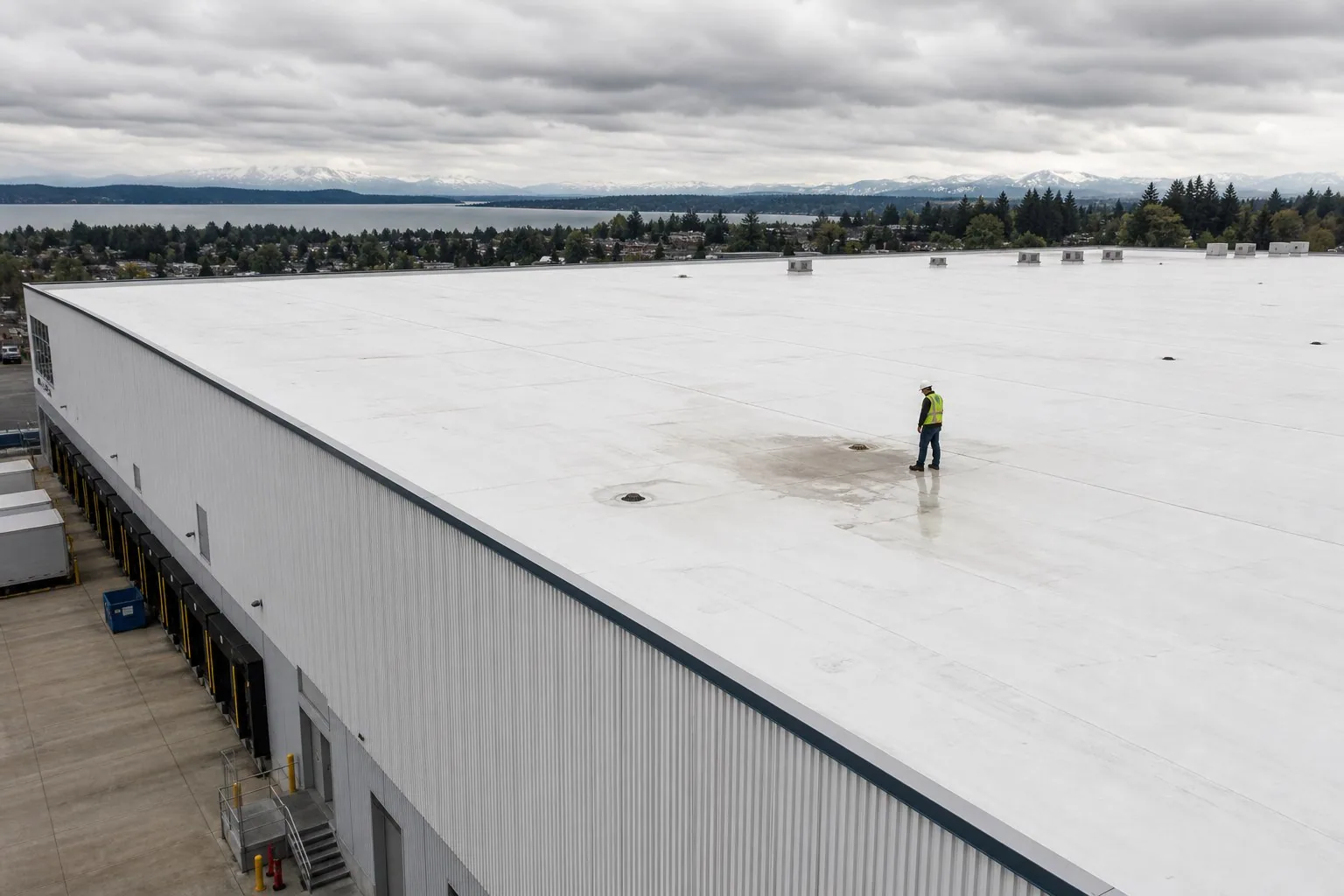
Press a thumb into the old membrane and it either pushes back or it does not. That one test tells us a lot about whether a recover is on the table. A roof that stays firm and dry underneath can often take a new system right over it. A roof that gives is a tear-off, no matter what the budget says.
A recover, also called an overlay, skips the strip-off and puts a new roof over the existing one. In Greenville, TX it saves real money and real time when the conditions are right. We check those conditions first and give you the answer before you spend anything on material.
Can my roof take a recover at all?
Four things have to be true. The insulation under the old membrane is dry. The deck is sound and holds fasteners. The roof carries only one existing system. And the structure can carry the added weight.
We do not guess at the first one. An infrared and core-cut moisture survey maps wet areas, and cores confirm what the camera shows. Wet insulation sealed under a new membrane does not dry out. It sits there, rots the deck and shows up as a leak a year later, on a roof that is now twice as hard to open.
Start with a hands-on roof inspection so we know what the existing roof is made of, how old the layers are and where the trouble sits. If the answer is yes on all four, we move to the options. If it is no, we tell you now.
What does the building code say about recovering?
Greenville has adopted the 2018 International Building Code, and its reroofing language is blunt. Where the existing roof is water soaked or deteriorated past the point of serving as a base, or already carries two or more applications, the code asks for the old roof to come off. That is the line most overlay projects live or die on.
A reroof goes through the City of Greenville Community Development Department, which handles permits for this kind of work. Permit the job and have the roof evaluated before you finalize scope, not after the material is on the dock.
Manufacturers add their own rules on top of the code. Each one sets limits on what it will accept as a substrate. We read those limits against your existing roof before we write a scope.
What actually goes over the old roof?
The answer depends on what is down there. A new single-ply membrane, usually TPO or PVC, goes over a layer of insulation board or cover board that is fastened through the old roof into the deck. That layer protects the new sheet from the old surface and adds hail resistance.
Old asphalt roofs and some single-ply membranes do not get along, so a separation layer goes in where the chemistry calls for it. We confirm compatibility before ordering, not on the roof.
On a metal building with a leaking old panel roof, a metal roof retrofit frames over the old panels and gives the building a new weathertight skin without a tear-off. And on a sound roof that is simply tired, a coating system may be all it needs. That route only works when the cores come back dry, and roof coating and restoration on a wet or failing surface wastes the money.
What do I save, and what do I give up?
You save the tear-off labor, the disposal and most of the exposure time. The building stays dried in for nearly the whole job. On an occupied building that means fewer days of dust and noise over tenants. On a busy plant it means fewer interruptions to production.
You give up some things too:
- A look at the deck. Use representative cores to identify the layers and moisture condition under the old roof before approving an overlay.
- Added weight on the structure.
- Height. Wall flashing, curbs, drains and door thresholds have to be raised to keep proper clearances.
- A fresh start. Problems in the old system stay in the building.
A recover also postpones the tear-off, it does not cancel it. The next owner or the next roof pays that bill. If you plan to hold the building for many years, price a full replacement next to the overlay and compare the two over the long run.
How long does a recover take and what does it need?
It moves faster than a tear-off. Crews stage material on the roof, lay the cover layer, set fasteners and weld or adhere the sheet. Because the old roof stays in place, the weather window is wider. A passing storm is a smaller problem when the building is never open to the sky.
Fastener pull tests come before the job. We test the deck to find out what holds and what does not, and we set the fastening pattern from those numbers. Lap welds get probed. Flashings get inspected before we close up. Then comes the punch list walk, with you on the roof.
Most of the schedule risk sits in the details: drains, edge metal and curbs. We plan those before mobilization so the crew is not waiting on parts.
Where does a recover make sense around Greenville?
Large low-slope roofs on warehouses and plants are the usual candidates. Park West Industrial Park lies along SH 380, and the Shelby Avenue district has manufacturing and warehouse properties. Measure each roof and test its layers before recommending a recover. Where the insulation has stayed dry and the roof has taken only one layer, an overlay can stretch the life of the building at a lower cost than a full tear-off.
Hail is the complication. Baseball-size hail was reported in Greenville during the June 2019 storm. After a hail report, inspect the membrane and test suspect areas before planning a recover. We core the worst spots before we commit to a recover, because a bruised roof can look fine from the roofline and be soaked below.
Summer heat matters as well. A July like 2022, when DFW logged 27 days at or above 100 degrees, bakes the old surface and softens asphalt, so adhesive and fastener choices change with the season. For a warehouse roof the right call often comes down to what the moisture cores show, and the Park West buildings are no exception. For recover candidates in Commerce and Sulphur Springs, verify the existing layers and moisture conditions on each roof before comparing project costs.
Commercial Roofing Questions
Is a recover always cheaper than a replacement?
On day one, usually yes, because you skip the tear-off and the haul-off. Over the life of the building the math is less clear. If the old layers stay and fail again, the next tear-off is bigger and costs more. Ask for both numbers and compare them on the years you plan to own the building. We will price both.
How many times can a roof be recovered?
Once, in most cases. Codes and manufacturers generally stop at one existing system under the new one, and the weight adds up fast. If your roof already has an overlay on it, plan on a full tear-off. A hands-on inspection will tell us how many layers are really up there, since records are often wrong.
What if the insulation is only wet in a few places?
Then we cut those areas out, replace the insulation and leave the dry sections alone. Spot repair of wet insulation before a recover is common and often sensible. If the wet area runs across a large share of the roof, the cost of chasing it passes the cost of a tear-off, and we will tell you so.
Will a recover change how the roof drains?
It can. A new layer raises the roof surface, which changes drain heights and can create low spots that hold water. We check slope and drain heights during the survey and raise drain bodies, sumps and scuppers where needed. Ponding water is worth solving now because it shortens the life of any new membrane.
Do I need a permit for a recover?
Yes. The city permits roofing work through Community Development, and a recover counts like any other reroof. Bring in the roof details early and the permit will not hold up your start date.