Roof Coating and Restoration in Greenville, TX
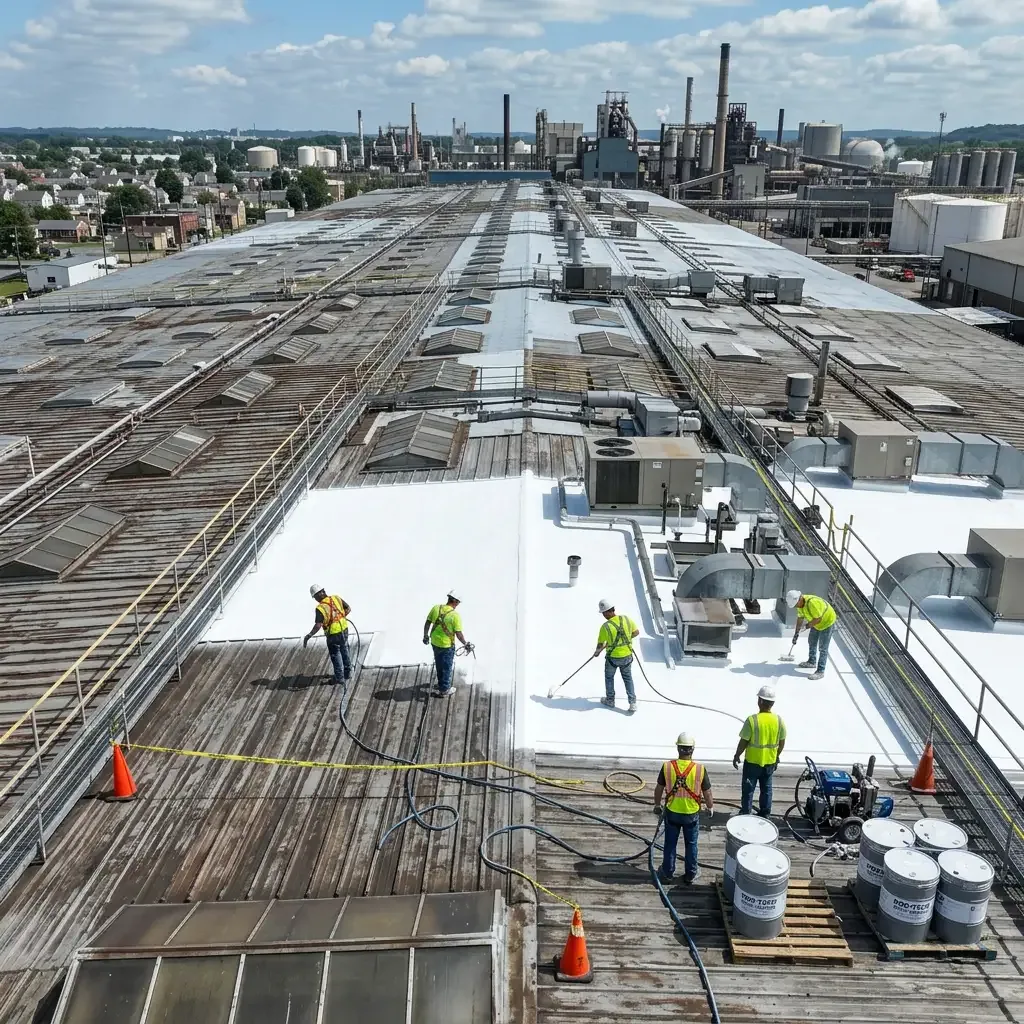
Drag a palm across a tired membrane and it comes back chalky. That white dust is the surface giving up after years of sun. It does not mean the roof is finished. Often the sheet underneath is still tight and the insulation is still dry.
When the roof is dry and its assembly is sound, a coating may be an alternative to tear-off. We compare the repair and preparation required before pricing either scope. In Greenville, TX the question is always the same: is the roof sound enough to coat, or is the coat just a nice color over a wet building? We answer it with cores and moisture readings before we put a number on the job.
Is my roof sound enough to coat?
Four things decide it. The insulation is dry. The deck is solid. The seams and laps are still bonded. The old surface will accept the new coating.
Wet insulation is the deal breaker. A coating seals the surface, so water already inside has nowhere to go. It rots the deck and blisters the new film. We run an infrared moisture survey and cut test cores to find out before the first gallon is ordered.
Adhesion gets tested too. We clean a patch, apply the product and pull it. If it does not bond, we change the primer or change the plan. Skipping that test is how coatings peel in the first summer.
If the roof fails the screen, we tell you plainly and price the better route. Sometimes that is a recover. Sometimes it is a full replacement.
Which coating goes on which roof?
The existing roof picks the product. Two families cover most of what we apply.
Silicone handles standing water well. It stays flexible, resists UV and does not break down when a roof ponds after a storm. That makes it the usual choice on flat roofs with slow drainage, and on metal, where it bridges fasteners and laps.
Acrylic is water based, easy to apply and bright white. It does best on roofs that shed water. It does not like long ponding, because the film can soften and lift where water sits.
Single-ply, modified bitumen, built-up, metal and spray foam all take coatings, each with its own primer and prep. Spray foam in particular needs a coating to protect it from sun, so a foam roof and a coating are never really separate decisions.
What does the crew do before the coating goes on?
Most of the job is prep. The coating is the last step and the easiest one to get wrong if the first steps were rushed.
We wash the roof and let it dry. We cut out blisters, re-secure loose laps and replace failed flashing. We seal every penetration and seam, and we embed reinforcing fabric where the roof moves. Drains get cleared and bare metal gets primed.
Then comes the coating itself, applied in coats with a wet-film gauge checking thickness as the crew goes. Thin spots shorten the life of the whole system, so thickness gets measured, not guessed. The finished roof gets a punch list walk with photos of the seams and details before we leave.
What does restoration cost next to a new roof?
The comparison depends on roof condition, preparation and product. A restoration scope may avoid tear-off and disposal, while replacement may be necessary if the assembly is wet or failing.
The number moves with roof area, how much repair the surface needs before coating, the product and the film thickness you want. A clean, dry roof with tight seams is the cheap end. A roof with scattered blisters and a long flashing list costs more to prep.
Be honest about the other side. A coating restores a qualifying surface but does not replace failed insulation or deck. We compare restoration and replacement scopes, list the assumptions and note what maintenance the coated roof would need. A maintenance program after coating keeps that extension going.
How long does it take and what stops the work?
A coating job moves faster than a tear-off, but it needs a real weather window. The roof has to be dry, and so does the forecast. Most products need a rain-free stretch to cure, and a dew-soaked morning pushes the start back.
Heat helps and hurts. A hot sun speeds the cure, but a surface that is too hot can make a coating skin over before it levels. Crews start early and work around the worst of the afternoon.
The building stays in use. Water-based and low-odor products keep the fumes light, and the crew works from the roof without entering the space below. We plan staging and material access around tenants and delivery schedules, and we tell the property manager each day what comes next.
Where does coating pay off around Greenville?
Sun-baked roofs are the best candidates. DFW recorded 31 days at or above 100 degrees in July 1980 and 27 in July 2022. Inspect the existing roof surface before deciding whether a reflective coating fits. A reflective white coating drops the surface temperature and slows the aging. A white membrane at replacement is the other path to the same goal, which is cool roof installation.
Greenville Business Air Park are Greenville employment areas. At a metal roof, inspect the panel surface, fasteners and laps before choosing silicone. The Brakebush Brothers facility in Park West Industrial Park along SH 380 is another local industrial property; measure its roof and inspect its assembly before comparing restoration with replacement.
Hail is the limit. A coating does not stop a softball-sized stone, and a roof already bruised by one needs repair before it gets any film. We check for hail damage first, every time.
Commercial Roofing Questions
What if the roof already leaks in a few places?
Fix the leaks first, then coat. A coating seals what it covers, but it will not stop a leak that is coming through a failed seam or a cracked flashing. We locate each entry point, repair it with compatible material and make sure the insulation near it is dry. If the leaks are spread across the whole roof, that points to a bigger problem and we say so.
How many times can a roof be coated?
Renewal is normal. A sound coating can take a maintenance coat when the film wears down, as long as it is still bonded and clean. What limits the number is the substrate underneath. Once the membrane or the insulation fails, no coat will rescue it, and the roof moves to replacement.
Will a coating affect my existing warranty?
Possibly. Some manufacturer warranties limit what can go on top of the original membrane, and coating the wrong way can void coverage. Hand us the warranty terms before work starts. We read them against the product we plan to use and tell you where the line is. The coating manufacturer may also offer its own coverage, which has its own conditions.
Can tenants stay in the building during the coating?
Yes. Coating work sits on the roof and does not need access to the floor below. Low-odor products keep fumes light, and we keep air intakes in mind when we stage material. Tell us where fresh air units sit and we plan the application around them.
Does a white coating really cool the building?
It cools the roof surface, and that usually lightens the load on rooftop units below. How much it saves depends on the building, the insulation and how the space is used. We do not promise a number, because the savings differ from one roof to the next. The steady benefit is less heat stress on the membrane itself.