About Commercial Roofing Contractors of Greenville, TX
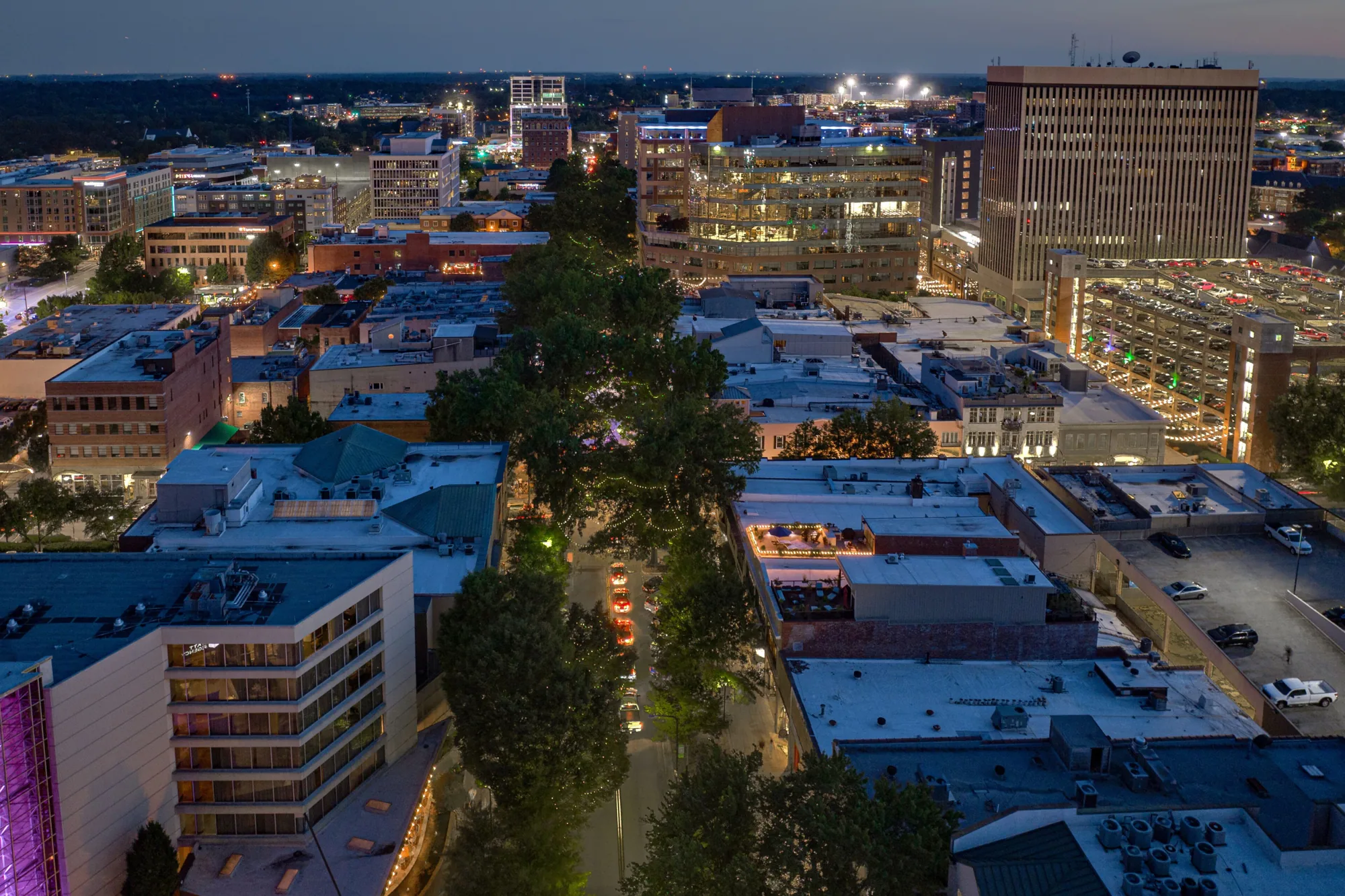
Chalk, a tape and a camera come off the truck first. Before anybody talks about a price, someone walks the roof, marks what is wrong and photographs it. That is how Commercial Roofing Contractors of Greenville, TX works, whether the building is a leaking strip center or a production facility with complex roof details.
We are a commercial roofing contractor serving Greenville, TX and the towns around Hunt County. We repair, replace, recover, restore, coat, inspect and maintain low-slope and metal roofs. We do it the same way on every building: walk first, scope second, price third.
What does the company actually do?
The work falls into a few groups, and most owners need more than one over the life of a roof.
- Repair and leak work: split laps, failed flashing, cracked boots, punctures and ponding spots, fixed with materials that match the existing system.
- Replacement and recover: a full tear-off when the insulation is wet, or a new membrane over the old one when it is still dry.
- Inspection: a hands-on walk, plus drone and infrared moisture surveys and a written report with photos.
- Maintenance and coatings: scheduled upkeep, plus silicone and acrylic coatings on roofs with life left in them.
- Storm and emergency work: emergency roof repair on nights, weekends and holidays, with a dry-in first and claim documentation once the weather clears.
On the systems side, we work on TPO, PVC, EPDM and KEE single-ply, modified bitumen and built-up, standing seam and retrofit metal, spray foam, and silicone and acrylic coatings. Each of those commercial roof systems fails its own way, so each gets repaired with matching material.
How does a job run from the first call to the punch list?
We follow a clear sequence so the bid reflects conditions found on the roof.
It starts with a call and a walk. A superintendent gets on the roof with you, or with whoever manages it, and looks at the membrane, the seams, the flashing, the drains and the equipment curbs. A commercial roof inspection adds the photos and moisture findings, which go into a written roof condition report.
Next comes the scope and the price. You get what the damage costs to fix now, what it costs if it waits, and what a full replacement would run. We list the weather window, mobilization and staging assumptions because each can affect the schedule.
Then the crew goes up. Tear-off happens in sections so the deck is dried in each evening. New membrane goes down, flashing gets tied in, and the roof is tested before we pack up. We finish with a punch list, walk it with you and hand over the photos. On a building that stays open, our plan for occupied building reroofing covers tenant notice, haul routes and noise.
What kinds of buildings do we roof?
Anything with a low-slope or metal commercial roof. Greenville has plenty of it. Park West sits along SH 380, the Orbis plant is on Shelby Avenue, and the Business Air Park is beside Majors Field, where L3Harris performs aircraft modification work. Inspect and measure each roof at its address. Hunt Regional Medical Center sits in Greenville, and downtown has older masonry commercial buildings on Lee Street and Washington Street, close to the 1929 Hunt County Courthouse.
That mix means we deal with warehouses and plants, medical offices and a hospital campus, school buildings, churches, shopping centers, restaurants, hotels, apartments and hangars. The roofs differ, so the scope does too. A hospital needs noise and dust planned around patient floors. A plant needs the line kept running. All the commercial property types we roof get the same walk first. Two local areas bring different access questions: the I-30 and Joe Ramsey commercial corridor, where Hunt Regional Medical Center provides hospital services, and Greenville Business Air Park, beside Majors Field.
Who are the owners and managers we work with?
People who run buildings and have to answer for the roof. Property managers who need a clean report and a price the owner will approve. Plant and facility managers who cannot afford downtime. School and public agency staff who work on a budget cycle and a procurement process. General contractors who need a roofing crew that keeps to their schedule. Owners who file a claim and need roof documentation the adjuster can use. All the industries we serve want the same thing from a roofer: a straight answer and a crew that shows up when it said it would.
Some owners are on a military installation or a government campus. The Greenville armory is on Jack Finney Boulevard, and the Sam Rayburn VA campus is in Bonham. Each facility requires its own access and project coordination plan. Roofing on a base follows its own rules for access, badging, escorts and scheduling around mission use, and the work is built to the Unified Facilities Criteria for roofing. We plan the schedule around those rules from the first walk.
What does North Texas weather do to the work?
It sets the calendar. Spring brings Gulf moisture up against cooler air, and that makes hail. Greenville learned that in June 2019, when winds peaking near 85 mph drove baseball-sized hail across town. Downtown, a building in downtown Greenville lost its roof to a collapse, and a church sanctuary on Joe Ramsey Boulevard took extensive roof damage. An April 2014 EF1 east of Merit partly removed metal roof and wall panels from a structure. Hunt County’s tornado record reaches back to 1680 and includes 75 events; after a reported wind event, inspect the assembly, edges and attachment at the affected property.
Summer is the other half. The 100-degree stretches in DFW summers, with 27 such days in July 2022 alone, bake dark membranes and dry out sealant. Our hail damage roof repair and coating work respond to those two seasons.
Permits are part of the job too. A reroof in town needs a building permit from the city's Community Development office, and the 2018 International Building Code that Greenville adopted sets the rules. We plan the schedule around that review.
What drives the cost and the timeline?
Condition, size and access. A dry roof with a few bad laps is a repair. A roof with wet insulation across half its area is a tear-off, and that costs more because the old material has to come out and the deck has to be checked. Equipment curbs, parapet height, drain count and how many days the weather gives us all move the number. So does whether the building keeps operating while we work.
We do not give a price from the parking lot. We walk the roof, write the scope and show the work behind each line, so you can compare it against any other bid. For storm damage we also build the photo file for the claim through our roof insurance claim assistance.
Commercial Roofing Questions
What do you need from me before you come out?
An address, a contact on site and any old reports or warranty papers you have. If the roof is leaking now, say so first and a crew dries it in before anything else. If nothing is leaking, just tell us what prompted the call, whether that is a bid, a sale or a storm.
Can you price the roof for a general contractor's bid package?
Send the drawings and the bid date. We walk the existing roof when there is one, check the deck and the tie-ins to any new work, and return a scope with plain exclusions. A GC gets a number with fewer surprises at mobilization, because the hidden conditions were looked for before the bid went in.
Do you only work on big industrial roofs?
No. A single storefront row and a small metal building get the same walk and the same written scope as a plant. The price follows the roof, and a small repair is priced as a small repair.
What should I expect after the work is done?
A walked punch list, the photos and a clear record of what went on the roof. We suggest a scheduled maintenance walk after that, so the next small problem gets caught while it is cheap.