Hail Damage Roof Repair in Greenville, TX
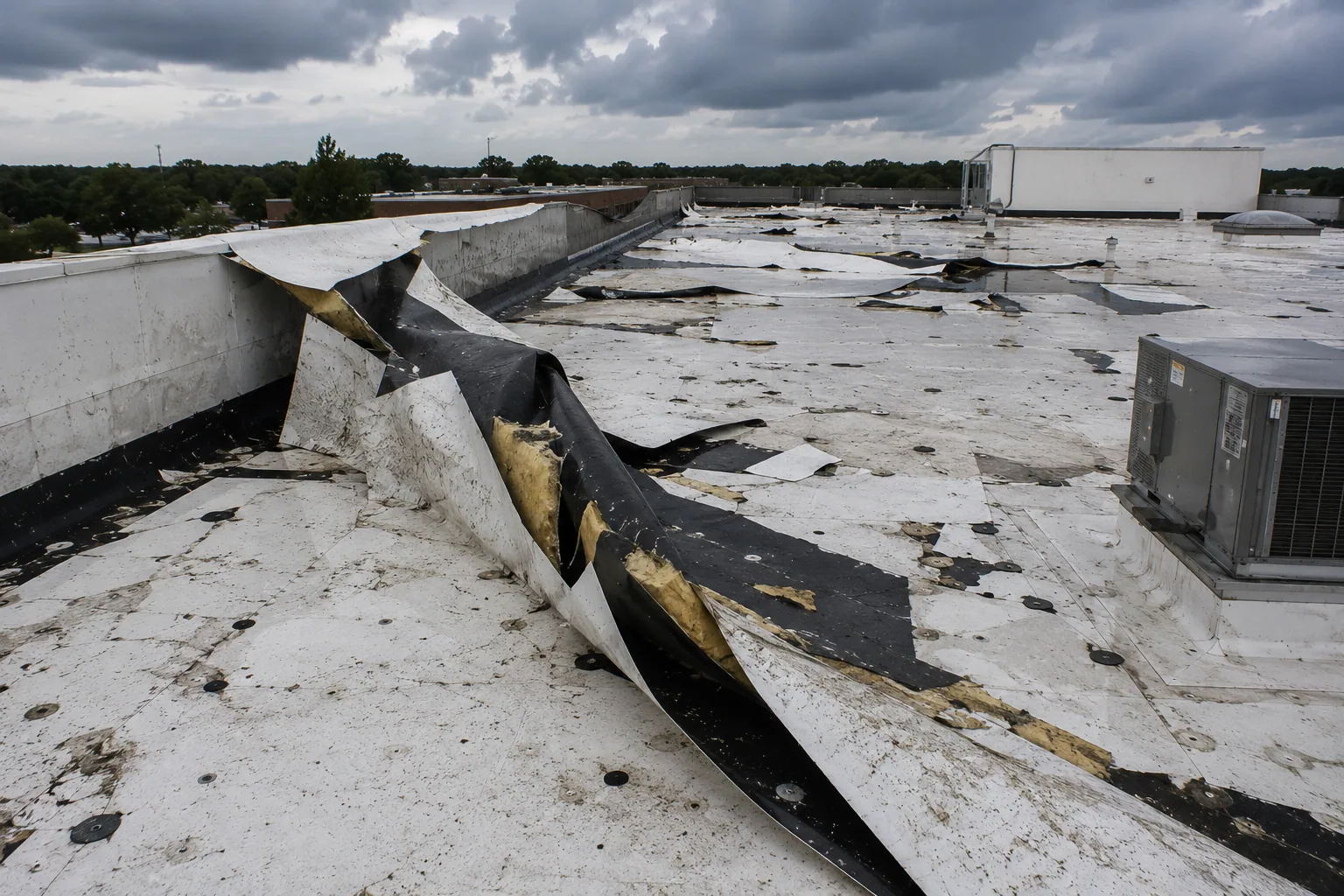
Dents in the rooftop units give hail away before the membrane does. If the units are dimpled, the roof was hit, and the sheet underneath needs a hand on it.
Hail damage repair in Greenville, TX is a counting job and a patching job. We count the hits, mark the ones that broke the membrane or crushed the insulation, and fix those. Then we write it up so you and your carrier are reading the same roof. It is one piece of the wider storm damage roof repair work we do after North Texas spring weather moves through.
How do you find hail damage you cannot see?
Start with the soft metal. Vents, louvers, unit housings and gutters show dents that tell you the stone size and the direction of the storm. Then walk the field in a grid.
Bruising is the main thing we hunt for. The stone does not puncture the sheet. It crushes the insulation or the mat under it, and the membrane over that spot thins out and cracks in the first hard heat or cold. You find it by pressing, and by looking for round marks, split laps and fractured granules. On a coated roof you look for cracked coating in rings.
We cut a core at the worst spots to see inside. On a big roof, a drone roof inspection shows the pattern from above and the walk confirms it. Every confirmed hit gets paint and a photo, and the hits get counted per test square so the density is on paper.
Which hail damage counts and which is just cosmetic?
That question is what every claim turns on. Functional damage shortens the life of the roof or lets water in: a fractured mat, a broken membrane, cracked coating, a crushed insulation board, a torn seam. Cosmetic damage is a dent in a metal panel that does not change how the panel sheds water.
Carriers draw the line in different places, and some policies carry cosmetic exclusions on metal roofs. We do not argue the policy. We put every hit on the record with photos, core results and what the damage does to the roof, so whoever decides is looking at facts. That record is the backbone of any roof insurance claim.
Do not sit on it. Policies set deadlines for reporting storm damage, and the date is in your paperwork. Check it early.
What did baseball-sized hail do to Hunt County roofs?
The June 19, 2019 storm gives the answer. Baseball-sized hail came down with 85 mph wind, and the storm path ran through Greenville and out to Campbell, ten miles east on Interstate 30. A church sanctuary on Joe Ramsey Boulevard took extensive roof damage, and the roofs around the I-30 and Joe Ramsey commercial corridor were worth a walk afterward.
Hail can run bigger. Spring storms here, where Gulf moisture meets cooler air from the north, can throw stones up to softball size. A 2016 hailstorm with softball-sized stones caused more than $240 million in damage in Wylie, in the same North Texas storm belt.
One storm does not end the risk. A roof that took a hit and was never repaired sits through every summer after it, and a bruised membrane ages unevenly.
Do you patch the bruises or replace the roof?
Density decides it. A scattered handful of hits on a young roof gets patched, with the weld or bond matched to the membrane. A roof with hits across the whole field, crushed insulation and cracked laps has lost life, and patching hundreds of spots costs more than it saves.
We lay the numbers side by side: repair price, replacement price and what each one buys you. Sometimes the answer is a partial. We replace the worst section, repair the rest and put the building on a watch list. When the insulation is crushed over a large area, the repair turns into a replacement, because the membrane is only as good as what it sits on.
Waiting costs money here. Bruises do not heal. They open up in the heat, and the roof that needed patches in April needs more than patches by October.
Should the new roof be tougher than the old one?
If it costs little to be tougher, yes. A thicker sheet, a reinforced membrane or a rigid board under the sheet spreads the impact so the stone has less to crush. Cover board is the cheapest upgrade of the three, and it works.
Material choice matters in this climate. Some membranes take impact better than others, and some manufacturers publish impact test data. We go over the options for your building and what each one adds to the price. Do not pay for toughness you do not need. Do not skip it on a roof that has already been hit twice.
Read the warranty too. Many manufacturer warranties limit or exclude hail above a stated stone size, and some leave hail out entirely. Pull the document before storm season, not after, and keep it in the roof file so the adjuster, the roofer and the owner are all working from the same terms. A storm inspection can also document related wind damage. Separate age-related surface wear from hail marks and heat and UV damage.
Mark the roof zones and use a consistent photo method so soft impacts, fractured surfacing and unrelated age wear do not get mixed together. Compare representative areas near field seams, edges and rooftop equipment, then note where a test cut or core would resolve an uncertainty. The owner can use that map to discuss repair, restoration or replacement with the insurer and contractor. Do not infer membrane damage from metal equipment dents alone; record each roof material separately and let the observed condition support the scope.
Commercial Roofing Questions
Nothing leaks after last month's hail. Do I still need someone up there?
Yes. Bruised membrane holds water for a while and then lets go on the first big heat swing, so a dry ceiling today tells you little. A walk now gives you photos dated close to the storm, which matters if you file later, and it shows you the damage while it is still cheap to patch.
Can hail hurt a metal roof that only dented?
Sometimes. Dents alone are usually cosmetic. But hail can crack the paint finish, knock fasteners loose and open the laps between panels, and those are not cosmetic. We check the finish and the laps and tell you in writing whether the damage is surface or functional.
Will a coating over hail damage fix it?
Only if the roof is otherwise sound. Coating seals small cracks and adds a surface layer, but it cannot restore crushed insulation or mend a broken membrane. We core first. If the insulation is dry and the sheet is solid, restoration is a real option. If not, the coating just covers the problem.
How many hits on a roof make a claim worth filing?
No set number applies across carriers. Policies and adjusters use their own thresholds, and the age and material of the roof matter. We count hits in test squares and record the type of damage. That gives you the facts to decide whether to file, and a record the adjuster can check on the roof.
Three buildings share my site and only one seems hit. What should I check?
Check all three. Hail falls in narrow bands, and a building fifty yards away can be untouched or wrecked. Dents on rooftop units are the quick tell. We walk each roof and report them separately, so you do not repair a roof that was missed or overlook one that was hit.