Roof Insulation, Tapered Systems and Cover Board in Greenville, TX
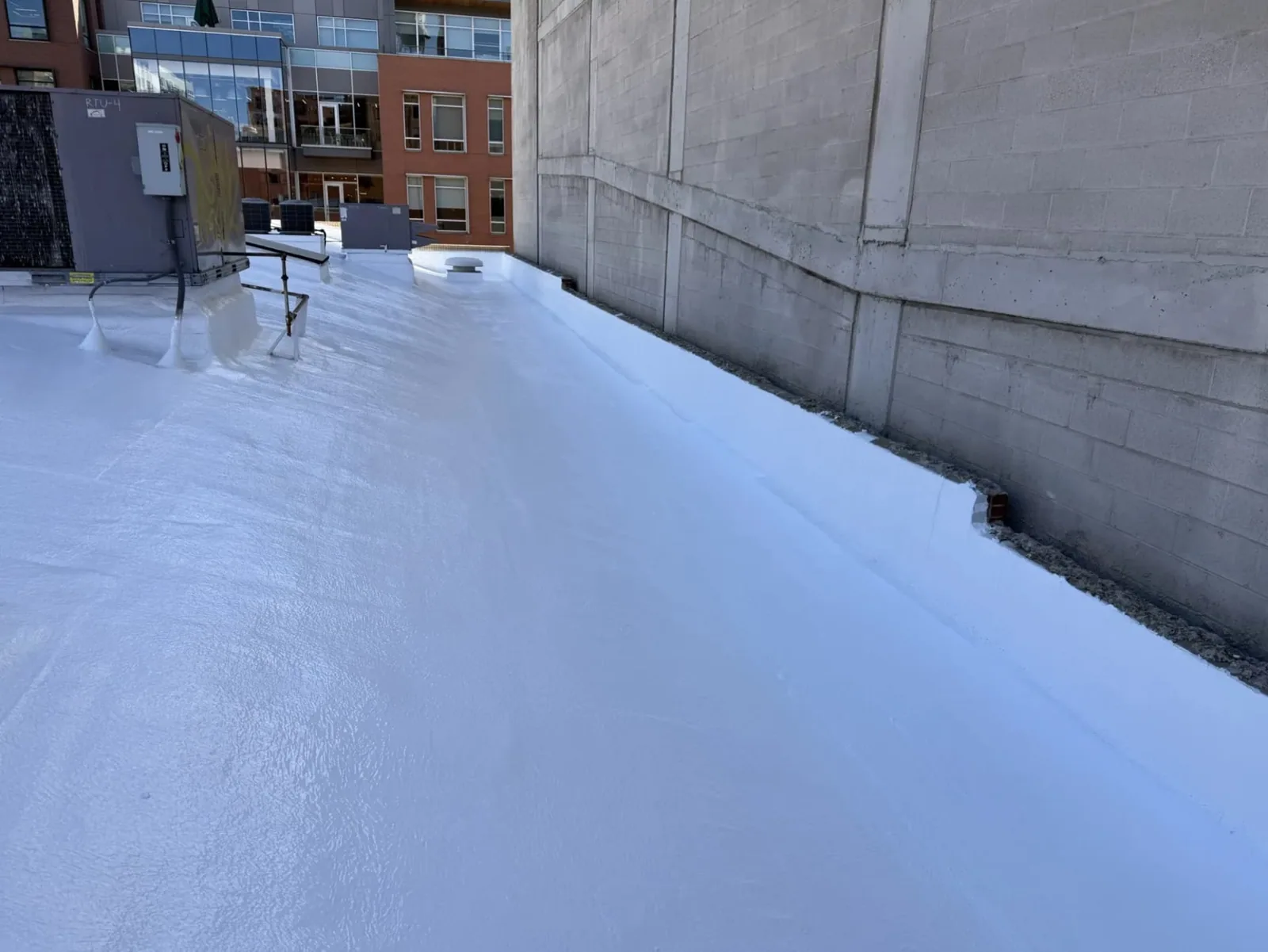
A soft spot under the membrane means the insulation below has given up. The sheet on top may look perfect. Press down and it gives like a wet sponge, because the board underneath is crushed, wet or both.
Insulation is the layer owners forget about until it fails. It sets the energy performance, the slope that drains the roof and the firm base the membrane depends on. In Greenville, TX the layers under the sheet take hail, heat and water, and what we put under a new roof decides how it ages. We specify it layer by layer, not as an afterthought.
What does the insulation layer actually do?
Three jobs. It slows heat flow through the roof, which lowers cooling and heating loads. It forms the firm, flat surface the membrane is attached to. And in a tapered system, it creates the slope that sends water to the drains.
Rigid polyisocyanurate board is the common choice on low-slope commercial roofs. It carries a high insulating value for its thickness and comes in sheets that fasten or adhere to the deck. Other boards, like expanded polystyrene and mineral wool, fit specific needs such as fire resistance or lower cost. The board needs to be strong enough to take foot traffic and the load of rooftop equipment without crushing.
The deck type steers the method. Steel, concrete and wood decks each take fasteners or adhesive differently, and we set the attachment pattern from pull tests, not from a drawing alone.
What is a cover board and when does it pay for itself?
A cover board is a thin, dense panel laid over the insulation and under the membrane. Gypsum, high-density polyiso and fiber-reinforced boards are the common types. It adds a hard surface the sheet can bond to, and it protects the softer insulation below.
The big benefit is hail. A membrane over bare foam can bruise and fracture the insulation under it, even when the surface looks intact. A cover board spreads the impact and stands up to stones better, which is why it is so often part of a repair after storm damage. It also resists foot traffic, protects against fastener backing out and helps the fire performance of some assemblies.
It costs more up front. Whether that cost is justified depends on your hail exposure, your roof traffic and how long you plan to own the building. Where hail exposure or roof traffic makes impact resistance important, hail damage inspection starts with the membrane and the insulation below it.
How does a tapered system fix drainage?
It builds the slope the deck never had. Tapered insulation comes in panels cut at different thicknesses, laid to a drawing so the surface tilts toward every drain. Crickets, which are small tapered ridges, divert water around curbs and wide equipment.
This is the permanent fix for ponding on a roof that is level or has settled. Adding drains helps but does not always solve it, and chasing water with sealant never does. A tapered layout, designed on a plan of the roof, takes the water where it should go.
It changes the roof height. The edges, wall flashings and door thresholds may need to rise, and we check every one before the design is final. Drains and scuppers are part of the same plan, because the slope only works if the outlet is at the low point.
What do we do about wet insulation?
Remove it. Wet insulation does not dry out under a sealed membrane, and it stops insulating the moment it gets wet. It also rots the deck and feeds corrosion in the fasteners.
We find it with an infrared moisture survey and confirm it with cores. Then the plan depends on how much there is. Isolated wet spots are cut out and replaced in a repair. A roof with wet insulation spread over most of its area is a replacement, and one of the checks that decides whether a recover is even possible.
The records matter. A moisture map and a core log show exactly where the damage runs. That lets you scope a repair to the wet areas and avoid replacing board that is still good.
What does the code ask for and what does it cost?
Greenville has adopted the 2018 International Energy Conservation Code, which sets minimum insulation values for commercial roofs. When a reroof exposes the insulation or the deck, the energy code can come into play, and the City of Greenville Community Development Department handles permits for that work. We confirm the requirement for your scope before pricing.
Cost follows the type and thickness of the board, the roof area, the deck and how much of the old system comes off. Cover board adds a layer. A tapered system adds design and more board. Thicker insulation raises the price of the board and the edge details that sit above it.
Energy savings are real but vary by building and use, so we do not promise a figure. When you are replacing the roof anyway, the insulation is the cheapest time to get it right. Adding it later means tearing the roof up again, which is why it belongs in a replacement scope.
Which Greenville roofs gain the most from the right layers?
Large, hail-exposed ones. Industrial employment is concentrated along SH 66 and US 380, and Orbis operates in Greenville. Facility floor area does not establish roof area; measure the assembly and map wet or damaged insulation before estimating cover-board work.
Hail is the driver. Greenville’s June 2019 storm brought baseball-sized hail. After a hail report, inspect the roof assembly and map observed damage before specifying cover board. A cover board over good insulation is a straightforward defense. Heat is the other pressure: July 2022 brought 27 days of triple-digit heat to DFW, and a roof that holds that heat out cuts the cooling load.
L3Harris performs aircraft modification at Majors Airport, adjacent to Greenville Business Air Park. Before laying insulation near the airfield, check the actual deck and fastener pattern against the approved assembly.
Commercial Roofing Questions
Is cover board worth adding on a roof that rarely sees hail?
Even a quiet roof benefits from a firmer surface, because foot traffic and equipment loads wear soft insulation down. Still, the case is strongest where hail is a real risk, and in North Texas it is. If your budget is tight, put it first on the large, exposed roofs.
How thick should the insulation be?
The energy code sets a minimum value, and the building use and your goals can raise it. We calculate the thickness from the code and your needs, then check the height it adds at the edges. Thicker is not always better if it forces new flashing at every wall. We balance the two.
Can wet insulation be dried in place?
Almost never. Once water is inside a sealed roof system, there is nowhere for it to go. Heat may move some of it, but the board stays damaged and the deck keeps taking moisture. The reliable fix is to cut out the wet material, replace it and seal the area back up.
Will tapered insulation raise my roof edges too much?
It can. Every layer you add raises the surface, and walls, curbs and doors need enough height for flashing. We lay out the taper on a plan and mark where the surface lands at each edge. If a wall cannot take it, we adjust the design, add a drain or use a thinner taper.
Does the insulation and cover board affect fire ratings?
Yes. Roof assemblies are tested as a whole system, and the insulation, board and membrane together earn the fire and wind classification. Swapping one layer can change the rating. We specify the full assembly from manufacturer-tested combinations, and we confirm it against the code before ordering.