Roof Drains, Scuppers and Ponding Correction in Greenville, TX
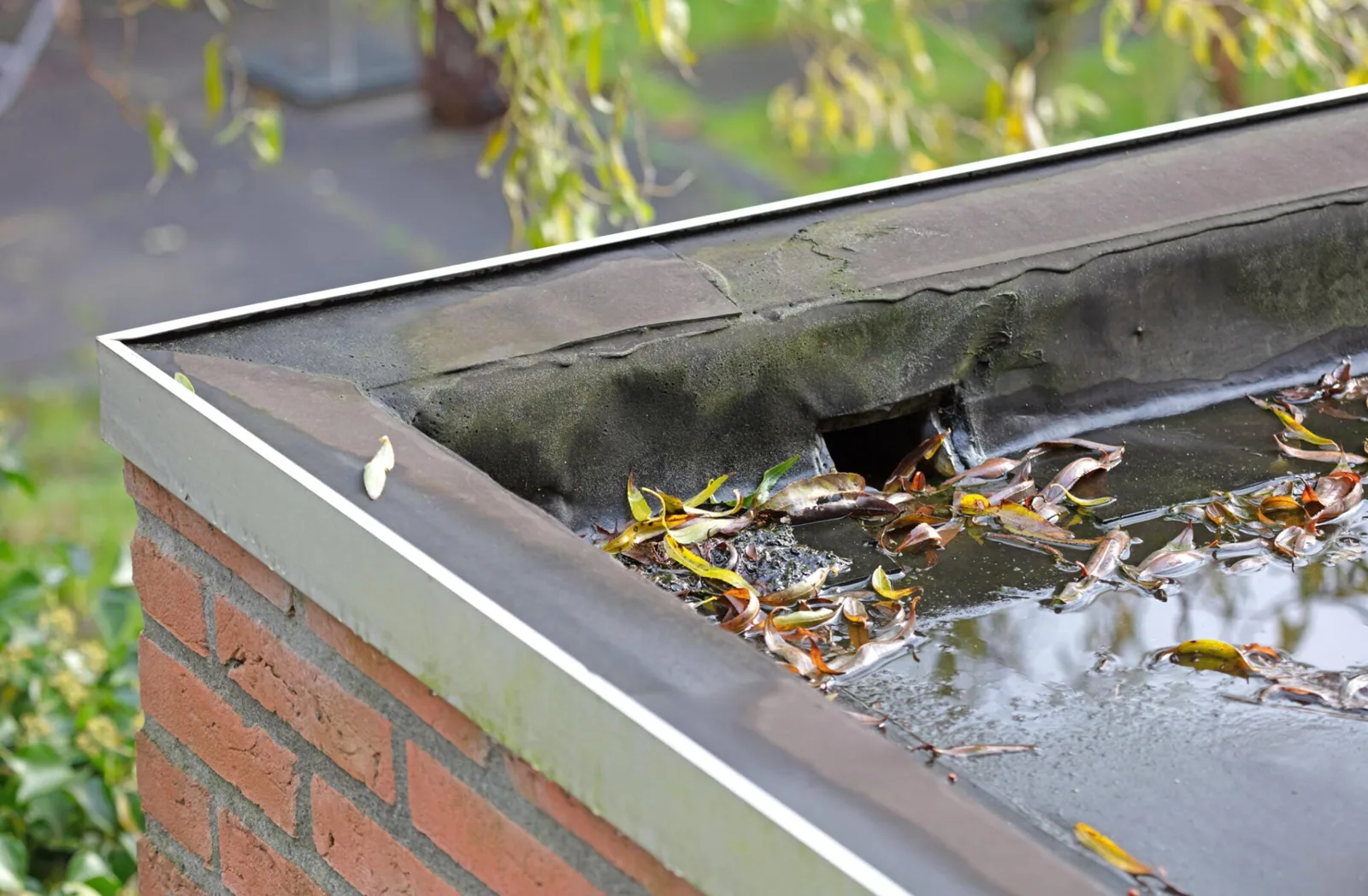
A pond still standing two days after the rain is a drainage problem. It is also a membrane problem, a deck problem and eventually a budget problem. Standing water adds weight, grows algae and works on every seam it touches.
Flat roofs are not flat. They are built to move water to a drain, a scupper or a gutter, and when that path breaks, the roof pays for it. In Greenville, TX we walk the water path from the high point to the outlet, find where it stops and fix the break instead of just chasing the puddle.
Where is the water supposed to go?
Every low-slope roof has a plan for water. Slope in the deck or in tapered insulation sends it toward the low points. Crickets, which are small ridges built behind curbs and equipment, split the flow around obstacles. Drains and scuppers take it off the roof. Gutters and downspouts carry it away from the walls.
On an interior-drain roof, water runs to a bowl in the field and down a pipe inside the building. On a scupper roof, it runs to an opening through the parapet wall and out the side. Either way, the outlet has to sit at the low point and sit low enough to pull the water off the membrane.
When any link fails, water stops moving. We start the diagnosis at the outlet and work backward up the slope, because that is where the evidence shows.
What goes wrong with drains and scuppers?
The list is short and familiar.
- Strainers and bowls packed with leaves, gravel and debris
- Cracked or loose drain bodies and failed clamping rings at the membrane
- Flashing at the drain that has pulled away or split
- Scuppers set a notch above the roof surface, so water has to pond before it can leave
- Downspouts that are crushed, disconnected or discharging at the foundation
- No overflow path if the main outlet clogs
Some of those are a cleaning job. Others are built into the roof. A drain that was set a half inch high at install will hold a pond forever, no matter how often it is swept. That is a rebuild of the drain sump with new flashing, and we price it that way. Leaks around a failed drain often show up as stains near the pipe, which a leak repair visit traces back to the bowl.
How do crickets and tapered insulation fix ponding?
They put the slope back. When a low spot sits far from a drain, no amount of cleaning helps. The roof needs a new shape.
A cricket is the usual answer behind a curb or a wide unit that dams water on the high side. Tapered insulation is the answer when a whole bay has settled or was built flat. It is laid in a pattern that tilts the surface toward the outlet. On larger areas, we may add a new drain or relocate one into the actual low spot.
Which fix suits the roof depends on the deck, the system on top and how much height the perimeter walls allow. Raising a surface changes the flashing height at walls and doors, so we check that first. A tapered layout draws on the same insulation and cover board choices as a reroof, and a ponding water repair only holds if the new slope, drain height and flashing heights agree.
Does the code require a backup drain?
Where a roof is surrounded by walls or parapets that could trap water, yes. Greenville has adopted the 2018 International Building Code family, which includes the plumbing code, and the code calls for a secondary way out. That means overflow drains or overflow scuppers set above the primary outlet, sized to carry the load if the main drain clogs.
This is not a formality. Water that cannot leave piles up on the deck, and a roof carries that load every time a downpour hits. Overflow outlets give a clogged main drain somewhere to send the water before the structure takes it.
Roof work in Greenville runs through the Community Development Department for permits. We check the existing overflow when we scope any drainage job and flag where it falls short.
What does drain work cost and how long does it take?
Cleaning and minor repair is a short visit and a small number. Rebuilding drain sumps, adding scuppers or installing tapered insulation is a project with a scope and a schedule.
The price follows how many outlets are involved, how much of the roof must be opened and what system sits on top. Tapered work is driven by the area and the amount of slope needed. Anything that raises the surface adds flashing work at the edges.
We try to pair the work with something already scheduled. A drainage fix during a coating job or a reroof is cheaper than a separate trip. If the fix is bigger than the roof can justify, we say so and talk about a maintenance program that keeps the problem small.
Which Greenville roofs need a hard look at drainage?
The big ones. Orbis operates in Greenville. Size drainage from measured roof area, rainfall design and outlet locations. One clogged drain on a roof like that loads a section of deck. It is the same story on the plants and warehouses across the SH 66 and US 380 industrial area, and manufacturing plant roofing depends on getting that water off fast.
Spring storms make it worse. They drop heavy rain and hail debris in the same hour, and strainers fill. An older masonry building along Lee Street in downtown Greenville that has a parapet and interior drains leaves a blocked outlet with nowhere to go. We check those first after a storm.
Hospitals leave no room for error. Hunt Regional Medical Center is on Joe Ramsey Boulevard. At an occupied medical property, coordinate drainage work and temporary protection with facilities staff. Out along SH 380, the Brakebush Brothers chicken plant in Park West, at 315,000 square feet, has a lot of roof to drain.
Commercial Roofing Questions
How long is too long for water to stand on a roof?
Water still standing about two days after rain is the usual line for ponding. A little dampness at a low spot is normal. A pond with algae, dirt rings or a sagging deck under it is not. If you see that, get it looked at before summer, because heat plus standing water ages a membrane quickly.
Can you add a drain without replacing the roof?
Usually yes. A new drain means coring the deck, setting the bowl and flashing it into the existing membrane. Plumbing connects below. It needs coordination with whoever is inside, because work happens above and under the roof. We confirm the deck type and the pipe route before we quote.
Does a scupper need an overflow too?
Often, yes. A scupper set at the roof surface is a primary outlet. If it clogs, water rises behind the parapet until it finds another way out, and that way may be through the roof. Overflow scuppers sit a few inches higher, sized to carry the flow. We measure the parapet and add the overflow in the same trip.
Is cleaning the drains twice a year enough?
For most roofs, it is a good start. Add a check after any hail or wind event, since storms blow debris across the roof. Roofs near trees, along open prairie or with a lot of gravel need more. A maintenance program puts the checks on a calendar so they do not get forgotten.
Will ponding void my manufacturer warranty?
It can. Some warranties exclude damage from standing water, and some set limits on how long and how deep it may stay. Read your terms. If ponding shows up, fixing the slope is the way to protect the coverage. We document the condition and the correction so the file shows you addressed it.