Commercial Roof Leak Repair in Greenville, TX
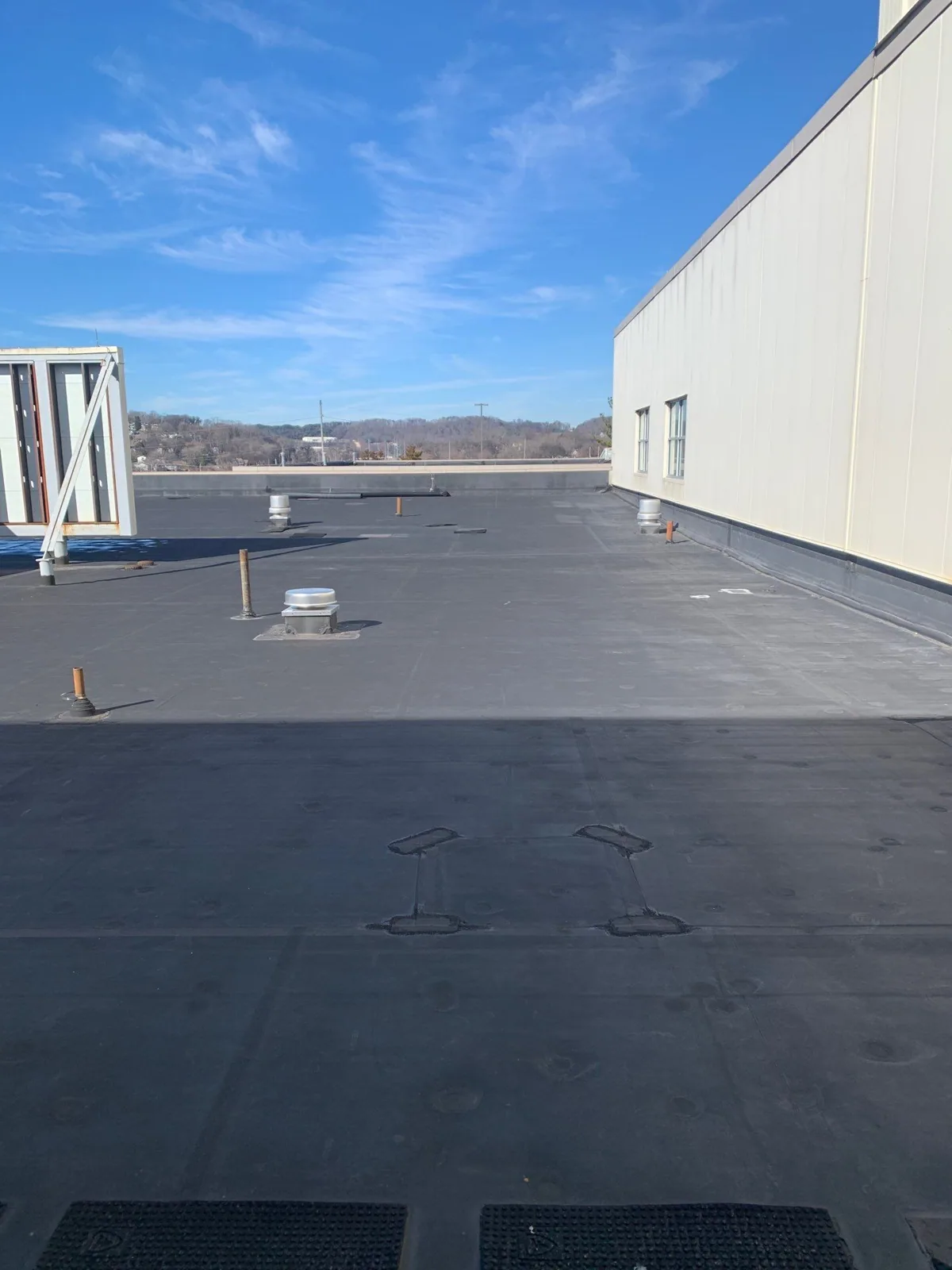
Water stains on a ceiling tile rarely sit under the hole. Water rides the deck, follows a flute, drops at a seam and shows up thirty feet from where it came in. Patch the stain and you have patched nothing. That is why most leaks come back after the first repair.
Commercial roof leak repair in Greenville, TX starts with tracing, not tarring. We find the entry point, prove it, fix it and check the surrounding roof so the same water does not find a second way in. The goal is one trip that works, not three that almost do.
Where is the water really coming in?
We start inside. A stain map shows where water lands and which direction it seems to travel. Then we go up and read the roof above that area, looking uphill along the slope and along any run of deck or insulation joints.
Most entry points sit within a few feet of a detail: a penetration, a curb, a wall base, a drain. But when the cause is not obvious, we use tools. An infrared scan shows wet insulation as a temperature pattern after the sun goes down. A controlled water test, run in sections from low to high, isolates one area at a time until the leak shows itself.
We do not guess and we do not smear sealant over every spot that looks suspicious. A repair that is not tied to a confirmed entry point is a coin flip, and you are paying for the coin.
What causes most commercial roof leaks?
The same short list covers most calls:
- Failed flashing at walls, curbs and parapets.
- Split or open seams in the membrane.
- Penetrations such as pipes, vents and conduit with cracked boots or dried sealant.
- Clogged or broken drains and scuppers that let water stand.
- Rooftop units whose curbs, covers or condensate lines have failed.
- Punctures from foot traffic, dropped tools or storm debris.
- Loose coping and edge metal that let wind-driven rain behind the wall.
Standing water makes everything worse. If the roof ponds, seams stay wet for days, and a small defect gets hours more water every time it rains. Drains and sumps need attention first, because ponding water repair usually begins with clearing or re-setting the roof drains and scuppers.
What happens on the first visit?
We stop the water first. If the entry point is clear, we make the permanent repair on the spot, using materials that match your membrane. If it is not clear, or the weather is wrong, we set a temporary dry-in that holds until conditions allow the real fix.
Then we document. Photos, a sketch of the repair location and a written note on cause go in your file. If the leak has soaked insulation, we tell you how much and what it will take to dry out or replace that material.
Leaks that arrive after hours or in the middle of a storm go through our emergency roof repair line, which runs around the clock. The tracing and permanent repair follow once the weather clears.
What should I do inside while the roof gets fixed?
Protect what is below. Move inventory, electronics and records out from under the drip line. Lay plastic over equipment that cannot move. Shut off power to any fixture that is taking water. Put out buckets, but also photograph everything with a date stamp.
Photos matter. If the leak turns into an insurance claim, the first set of images shows how fast the damage grew. Keep a log of when the leak started, when it was reported and what steps you took. We can help organize that through our roof insurance claim assistance.
Wet ceiling tile and insulation should come out quickly, before mold takes hold. A roof that is repaired over a wet building has only solved half the problem.
What does leak repair cost and how long does it take?
A leak fixed at one clear detail is a short visit and a modest price. A leak that has run through insulation, soaked the deck and needs several sections reopened is a different job. The number follows the scope, so we price after tracing, not before.
Three things drive cost: how many entry points there are, how much wet material has to come out, and how hard the area is to reach. Roof height, equipment crowding and tenant access all play in.
Time depends on the weather as much as the work. Most repairs go in within a single visit once the entry point is proven. If the roof keeps leaking in different places, that is a sign the system is past planned patching, and a larger conversation about planned commercial roof repair or replacement is the honest next step.
Why do Greenville roofs start leaking after storm season?
Hail does it. Spring thunderstorms in North Texas can drop stones large enough to bruise and fracture membranes, and a bruised roof often does not leak until a later rain. By the time the stain shows, the damage is weeks or months old. A hail damage repair may be the real answer behind a recurring leak.
Wind finishes what hail starts. The June 2019 Greenville storm brought winds near 85 mph and collapsed a roof on Lee Street. After any leak, trace the entry point and document the affected property before setting repair scope. Wind of that strength goes after edge metal and flashing. Heat comes next. Summer runs of 100-degree days stress every seam on a flat roof.
Medical buildings along the I-30 and Joe Ramsey commercial corridor have little tolerance for an active leak over sensitive space. At a plant or warehouse on Shelby Avenue, identify the affected interior area and roof assembly during the leak inspection. Either way, we schedule the fix quickly. If a portfolio includes Commerce and Sulphur Springs, map each leak to its own roof section and repair history before comparing repeat calls.
Commercial Roofing Questions
The leak stopped after the rain ended. Do I still need a repair?
Yes. A leak that only runs in heavy rain is still a hole, and the next storm will bring it back. Dry weather simply hides it. Call us while the stain is fresh, because the tracing is easier when the ceiling, the deck and the roof surface still show where the water went. Waiting lets damp insulation spread the problem.
Can you stop a leak without tearing up the roof?
Most of the time, yes. Typical leak repairs are localized: a welded patch, a new flashing, a replaced boot or a resealed termination. We only open the roof further when the insulation under the entry point is wet, and in that case we cut out the soaked section so the repair does not trap water. We explain which one you are getting before we start.
Why did the leak come back after a previous repair?
Usually the earlier fix addressed where the water showed up, not where it entered. Sealant over the wrong spot looks like a repair and does nothing. Another common reason is a second entry point on the same roof. We retrace from scratch, confirm the cause and then fix both the entry point and any other weak spot nearby.
Will my insurance cover a leaking roof?
It depends on the cause and the policy. Sudden storm damage is treated differently from wear and age. Keep photos, dates and every invoice, and report the loss early. We will document the cause of the leak in writing so you have a clear record to take to your carrier or adjuster.
How fast can you get on the roof?
Emergency roof response is available around the clock, including holidays. Arrival and temporary protection depend on site access, safety and weather conditions. Tell us what is getting wet inside so the team can assess urgency and next steps.