Modified Bitumen Roofing in Greenville, TX
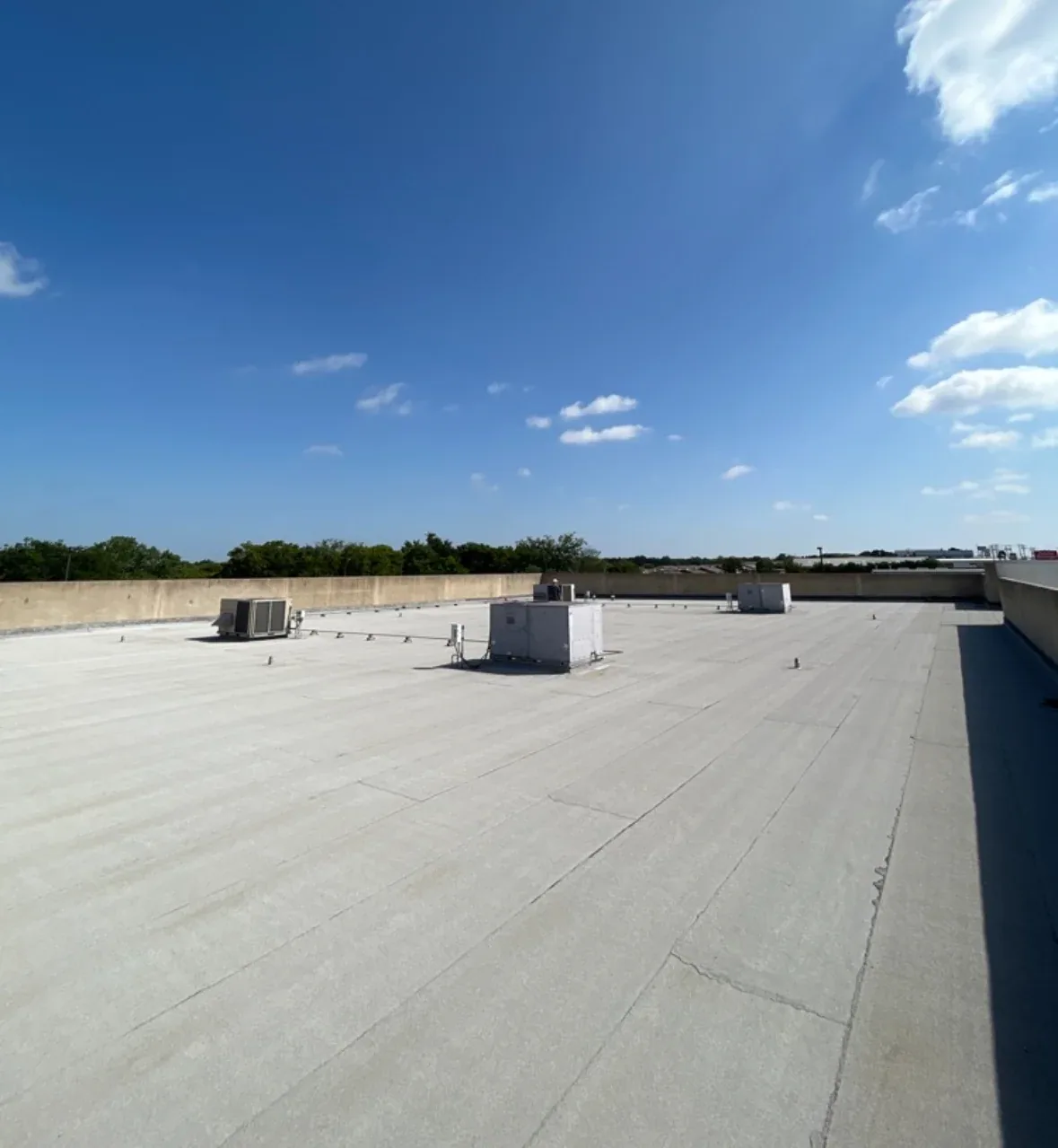
Granules pile up in the scuppers, and the mat shows through the cap sheet above them. That bare patch is the sun reaching the asphalt, and asphalt does not last long once the stone is gone. It is the oldest warning on a modified bitumen roof and the one that gets ignored until a seam opens. The cost of waiting is easy to calculate: a recoat now, or a cap sheet replacement later.
Modified bitumen is asphalt blended with polymers and laid in sheets, usually in two plies. For a Greenville low-slope roof, modified bitumen is one candidate among several; the existing assembly, drainage, deck and project requirements determine whether it fits. The inspection should identify the actual system and condition before a repair or reroof specification is chosen.
What separates SBS from APP, and does it matter on my roof?
The polymer. SBS is a rubber modifier, and it makes the sheet stretchy and forgiving when the building moves. APP is a plastic modifier, and it makes the sheet stiff and more resistant to heat and UV. Both are asphalt sheets with a surfaced cap, usually mineral granules or a reflective coating.
The choice follows the building and the install method. SBS sheets are commonly cold-applied with adhesive or self-adhered, which keeps a torch off the roof. APP is usually torch-applied, which means a flame and a fire watch on the job.
Roofs on older masonry often take SBS for its flexibility. Roofs in strong sun and heavy traffic may suit APP. We pick the sheet after we look at the deck, the insulation and what is under the roof. Makers such as Soprema and GAF sell modified bitumen systems, and we install both the SBS and APP styles.
How does a modified bitumen roof go down?
In layers. A base sheet or a layer of insulation and cover board goes on first, then a cap sheet over it. The plies are laid with torch, hot asphalt, cold adhesive or a self-adhering back, depending on the system. Seams are staggered so no two laps sit over each other.
Flashings go up walls and around curbs in the same material, with a base ply and a cap ply. This is the hand work that decides whether the roof leaks. The crew presses and checks every lap, and the edge gets finished with metal.
Heat work needs controls. On an occupied building we use cold-applied or self-adhered products where we can, and we stage fire watches and extinguishers when a torch is needed. The plan is set with your facility manager before anyone lights a flame.
How do I tell when a cap sheet is worn out?
Look at the surface. Bare spots where granules are gone, hairline cracks that look like dry mud, blisters that give under a boot and laps that have lifted all say the same thing. The sheet is aging, and the asphalt under it is taking the sun.
Check the low spots too. A ponding water repair job on a modified roof often shows a darker, slicker surface where water sits and grit grinds the stone away. Standing water shortens a cap sheet's life.
Not every blister means failure. A small one over dry insulation can be cut, dried and patched. A field of them, or one with moisture inside, points toward a bigger fix. We cut a core, check what is under the surface and tell you which side of the line you are on.
Where does modified bitumen earn its keep around Greenville?
Multi-ply asphalt is easy to patch and hard to puncture. Along Lee Street and Washington Street, downtown Greenville keeps its older masonry commercial buildings, and on any building like that, parapets, odd corners and many penetrations are where a sheet roof earns its keep. It cuts around those details with torch or adhesive and holds together.
A hospital roof asks for redundancy. Hunt Regional Medical Center is on Joe Ramsey Boulevard and expanded its surgical and women’s services in 2021. Confirm current access and work restrictions with facilities before planning roof work. If a hospital roof is being evaluated for modified bitumen, confirm the assembly, facility restrictions and application method; a cold-applied option may avoid open flame.
Both settings value a system that can be repaired with a crew, a few rolls and a day of weather. That is modified bitumen's strong suit.
How does modified bitumen handle Greenville hail and heat?
Reasonably well, with limits. The thick layers resist punctures better than a thin single-ply sheet, and a granule surface takes some hail without damage. Large stones still bruise the cap and knock granules loose, which is where the aging starts.
Greenville and Campbell experienced baseball-sized hail and winds near 85 mph during the June 2019 storm. After severe weather, inspect cap-sheet bruising, granule loss, laps, flashing and edge metal before setting a repair scope. Our hail damage roof repair work starts with exactly that walk.
Heat is slower and steadier. DFW recorded 27 days at or above 100°F in July 2022. After prolonged heat, inspect the roof itself for granule loss, dry splits and open laps. A reflective coating over a sound cap, such as an acrylic coating, can cut surface heat and protect the granules that remain. If the existing assembly includes multiple asphaltic layers, compare its condition with built-up roofing. For a roofing project in Commerce or Bonham, confirm the membrane in place before selecting a compatible repair, recover or replacement system.
Commercial Roofing Questions
Is torch-down roofing safe on an occupied building?
It can be, with controls that we set before the first roll goes down. We use cold-applied or self-adhered products wherever the building allows, and we keep open flame to the places that need it. Fire watches, extinguishers, clear escape routes and a post-work check are standard. If your insurer or landlord forbids torches, we price a flame-free option so you are not stuck choosing between safety and schedule.
Can a worn cap sheet be coated instead of replaced?
Coating buys time on a sound sheet, and it fails on a bad one. If the asphalt is cracked, wet or lifting at the laps, a coating only hides the problem. We scan and test first, repair what is failing and then recommend a coat when the roof qualifies. A good coat on a good roof adds reflectivity and a protective layer. A good coat on a bad roof adds a bill.
How many layers does a modified bitumen roof usually have?
Most have two, a base sheet and a cap sheet, over insulation or a cover board. Some older roofs carry more, and some single-ply modified systems are thinner. The layer count affects repairs and weight, and it matters if you are thinking about a recover. We cut a core to see what is there before we talk about adding another system.
Should I pick SBS or APP for a hospital or school roof?
Lean toward SBS where a torch is a problem. Cold-applied and self-adhered SBS systems avoid open flame, which helps on occupied or sensitive buildings. APP is a good sheet, and where a torch is acceptable, it holds up well in sun. We compare both for your building, then put the install method, schedule and cost on one page.
How do you patch a blister on a modified bitumen roof?
Cut it, dry it, then patch it. The crew cuts the blister open, checks whether the insulation below is wet and removes any damp material. Then a new patch of sheet goes over the opening and is heat or cold bonded and sealed at the edges. If moisture keeps coming back, the blister is a symptom, and a planned repair of the area is the right fix.