Commercial Roofing in Park West, Greenville, TX
A drain bowl sweats on a cold morning, and it has not rained in a week. On a plant roof that is moisture moving up from inside the building and condensing under the membrane. It means wet insulation, and wet insulation gets more expensive every month it stays put.
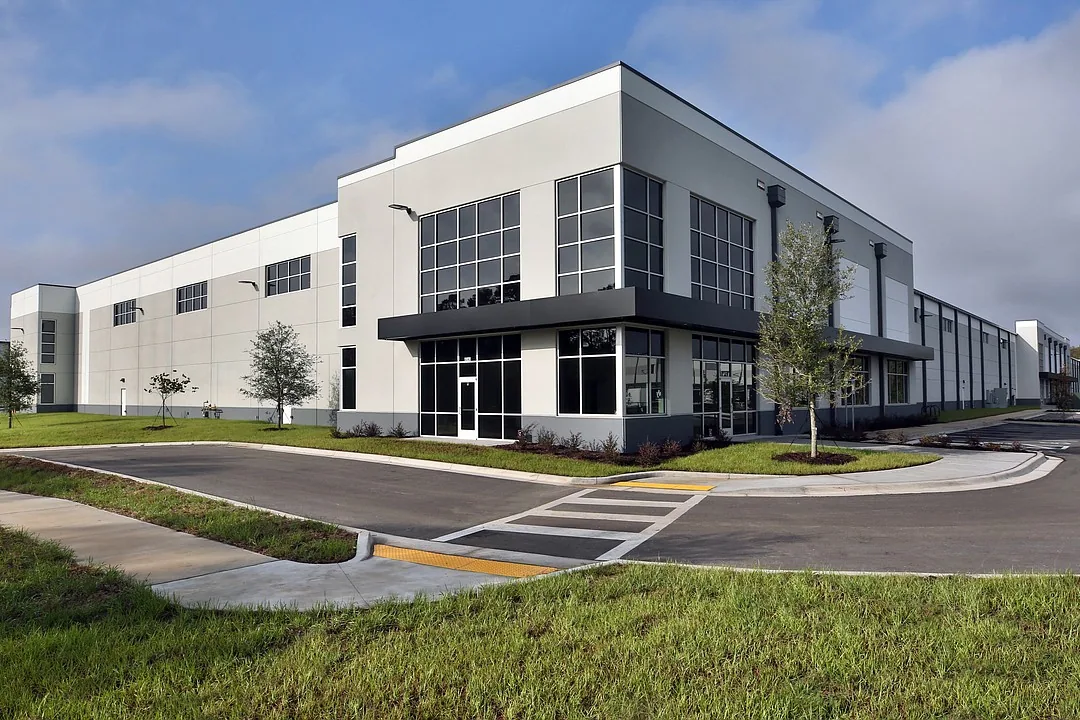
Commercial roofing in Park West Industrial Park is large-roof work. The park sits at the entrance to Greenville, TX along SH 380, and the Board of Development sells sites there to manufacturing and distribution users. Brakebush Brothers’ Park West processing facility is reported at 315,000 square feet and more than 800 jobs. That describes the facility, not its roof; measure each roof before setting material quantities. Use the measured roof plan to quantify membrane, seams, curbs and rooftop equipment before pricing work. We walk them, flag what is failing and price the repair beside the cost of waiting.
A sudden leak or storm hit gets a crew on the phone at any hour. A plant with product on the line cannot wait for a business day.
Why do processing and distribution roofs get wet from the inside?
Because the building makes its own weather. A plant that runs washdown, cooling and refrigeration pushes warm, wet air upward all day. On a cold morning that air hits the underside of the membrane or the deck, drops its water and soaks the insulation. The roof looks fine from above. It is not fine below the surface.
We look for the signs from both sides. Sweating drain bowls, rust at deck flutes, stained ceiling tiles, soft spots under a boot sole and blistered membrane over wet board. A flat plate of insulation that feels spongy is finished.
The fix depends on where the moisture comes from. Sometimes the vapor retarder is missing or torn. Sometimes a penetration lets humid air leak through. An infrared moisture survey maps the wet areas so we cut out only the wet and keep the dry. Cold rooms below the deck make the vapor problem worse, so we check the roof above them first.
What does it cost to fix a roof the size of a Park West plant?
Size sets the base. Park West is one of Greenville’s three developed industrial parks, within a citywide inventory reporting more than 700 available acres. Measure its roof separately before setting repair scope. At that scale, every small line item gets multiplied. A small difference per square foot on cover board, drains or edge metal becomes the story of the whole bid.
Here is what moves the price. The area of wet insulation. Rust in the deck flutes. The count of curbs, stacks and exhaust fans on the roof. How far the crew has to haul material and how many truck courts have to stay clear. And whether the old roof stays on or comes off.
On a plant this large, a roof recover can skip the tear-off if a core shows the old layers dry and solid. A TPO roofing system over new cover board is a common recovery choice for a flat, sun-baked deck. Where the old system is soaked, only a full tear-off will do. We put both prices on one page and you pick by budget year.
What do we check on a young building in an open industrial park?
Construction damage first. A new roof gets walked by a lot of trades. Mechanical crews, electricians and fire-protection crews all put boots on a membrane, drop tools and cut penetrations. Loose edge metal, scuffed seams and open boots from that traffic show up in the first year.
Ponding next. A deck deflects a little under load, and a drain that is a half inch high holds water. We mark the ponds, measure the depth and decide whether the drains or the slope need correcting. Check the roof drains and scuppers before the first storm season.
Citywide, Greenville counts three developed industrial parks and over 700 acres available, and the Board of Development manages and sells sites in them. Any new building next door means more dust, more construction traffic and more debris landing on your roof. A twice-yearly preventive roof maintenance visit keeps that from turning into a leak.
How do we reroof beside a plant that cannot shut down?
We start with the plant, not the roof. Production shifts, truck schedules, washdown zones and food-safety rules set the map. The crew works section by section, and every evening the open area is small and closed up.
Odor and fumes matter on a processing site. Hot asphalt near an air intake is a bad idea. We choose systems that keep odor low, set the kettle or adhesive staging away from intakes and tell the plant manager which days will smell. Product and open ingredients stay covered, and we sign off with plant quality staff before and after.
Material hauling gets planned, too. Greenville’s freight access includes I-30 and three rail lines. Confirm truck routes and delivery windows with the property contact before mobilization. We stage deliveries and lifts so a truck court or a dock door does not get blocked. The section-by-section dry-in that protects a manufacturing plant roof works on a distribution center roof too.
What do SH 380 wind and 100-degree days do to roofs in Park West?
Industrial Park West sits at Greenville’s entrance along SH 380. On June 19, 2019, a Greenville thunderstorm produced straight-line winds near 85 mph and baseball-size hail. After a later storm report in Park West, inspect each affected roof and document its actual edges, seams and penetrations.
May leads the county’s tornado record, which contains 75 events dating to 1680. An April 2014 EF1 tornado east of Merit, near FM 1569 and FM 903, removed metal roof and wall panels from one structure. For a Park West roof, use the local event report and current inspection findings before assigning cause. During the survey, inspect wall panels and rooftop equipment for observed wind damage.
Heat does the slow work. Greenville has long, very hot summers. Inspect roof coatings and sealants after extended heat. A sun-baked membrane gets brittle and splits at laps and flashings. The SH 66 and US 380 industrial area and Greenville Business Air Park are other Greenville employment areas; measure each property and scope its roof separately.
Commercial Roofing Questions
Does a new industrial roof need a first-year walk?
Walk it once the trades are out. By then the mechanical and electrical crews have finished cutting and the damage from them is on the roof. We mark scuffed seams, open boots and loose edge metal while the building is still fresh in the builder's mind. Findings that early are easier to get addressed than the same finding in year five.
Do heavy rooftop units change how you flash the curbs?
They do. Every unit is a load on a curb and a vibration through the deck. Curbs need solid wood or steel under them, tall enough flashing and a clean transition at the corners. We also check that unit drains do not dump onto the membrane, because a steady drip wears a hole in a season.
Should we price a coating or a recover for a dry, sun-baked roof?
Price a survey first. A coating only works over a roof that is dry and sound. Scan it, core it and see how much insulation has gone wet. If the field is dry and the seams are still solid, a coating can stretch the roof. If not, a recover or replacement saves paying for a coating twice.
How do we keep roofing odor out of the plant air intakes?
Placement and product choice do most of the work. We keep heating equipment and adhesive drums downwind of intakes, pick low-odor systems and ask the plant to shut down or filter specific intakes during certain steps. A plan that names the intakes in writing beats a morning phone call, and it protects the product.
How long does a tear-off on a building this size take?
The schedule follows roof size, access, material availability and the weather window; confirm it after the first walk. We break the roof into sections, open only what can be dried in each day and move on when the area is tight. A schedule with named sections and hold points gives the plant a calendar it can plan shifts around.