Commercial Roofing in Downtown Greenville, TX
Mortar dust and grit sit in the scupper box, and the roof edge is telling you something. On an older downtown building that usually means a parapet or coping joint is opening up. Caught this season, it is a small repair. Left alone, the water runs down inside the wall.
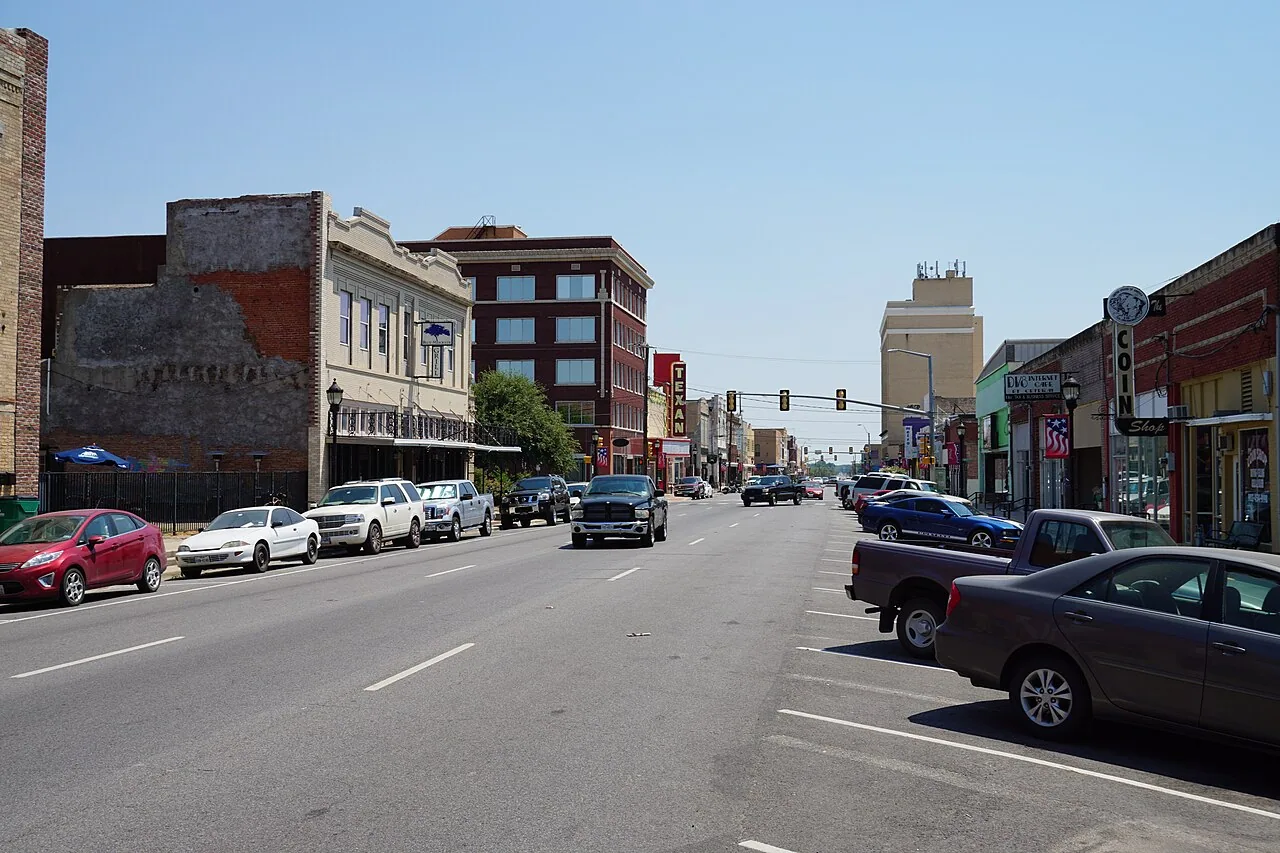
Commercial roofing in downtown Greenville, TX is edge and wall work first, field work second. The 1929 Hunt County Courthouse sets the look. Older masonry commercial buildings line Lee Street and Washington Street. Inspect each roof’s assembly, parapets and drainage directly before selecting a repair or replacement scope. We walk those roofs and mark every failure. You get one price to fix it this season and one for what waiting costs.
A crew picks up emergency calls overnight and on holidays. A downtown roof that opens up at night is on a street people see in the morning.
What do we find on the masonry buildings along Lee and Washington?
The same short list shows up on masonry buildings like these. A low-slope roof behind a parapet drains to a few low points, and nearly everything that goes wrong goes wrong where the membrane meets the masonry.
- Wall flashing pulled loose or split where the membrane climbs the brick.
- Coping that rocks under a hand, or mortar joints open along the top of the parapet.
- Scuppers and internal drains packed with street grit and leaves.
- Patch on patch on patch, three or four materials stacked in one corner.
- Pipe and vent boots with cracked sealant.
Older masonry holds water like a sponge. Downtown counts a 1909 Beaux Arts post office, a 1938 Art Deco municipal auditorium and the 1895 Katy Depot railroad museum among its older buildings, and Each roof still needs a field inspection to locate current weak joints, regardless of the building’s age. A parapet that stays wet loses mortar, and then brick starts to flake. We flag any masonry we think a mason should look at before we close it in. Good edge metal and coping keeps that water out. A proper commercial roof inspection finds the open joint before the ceiling does.
What did the June 2019 storm do to roofs on Lee Street?
It took one down. A thunderstorm on June 19, 2019 brought 85 mph gusts and hail the size of baseballs. Broken storefront glass littered downtown blocks. The storm collapsed a roof and damaged the facade of one Lee Street building. The National Weather Service called it straight-line wind, not a tornado.
On the buildings still standing we look for wet insulation, a sagging deck, layers piled on layers, and edges that were loose before the wind showed up. Straight-line wind works the edges first. It lifts coping and peels flashing. A storm damage roof repair call after a night like that starts at the parapet. The church sanctuary on Joe Ramsey Boulevard also sustained roof damage; the surrounding commercial center calls for building-specific scopes.
Summer takes its turn. Set the summer work window from current product limits and observed roof conditions, not from a regional summary alone. Inspect membrane and lap condition after prolonged heat. Hunt County tornado records run to 75, with May leading the list. Walk the roof in March, not in June.
What moves the price on a downtown roof?
Access moves it more than size. Take a street-retail building like a courthouse-facing storefront in the downtown commercial district. The building is not large by commercial standards, so the cost is on the street side: where the lift sits, how debris leaves the building, how the sidewalk stays protected.
After access, five things set the number. How many layers are already on. How much insulation is wet. What shape the parapet and coping are in. How many drains and penetrations the roof carries. And whether the tenant stays open while we work.
Permits are part of the scope. Greenville's Community Development Department handles the building permit for a reroof, and the city works from the 2018 building code family and the 2018 energy code. Insulation and wall details get written to those editions.
Fix the edge, recover it, or tear off to the deck?
Fix the edge when the field of the roof is dry and only the perimeter has failed. New flashing, reset coping and repointed joints can buy several seasons on a sound roof.
A roof recover fits a single dry layer on a firm deck. The building code limits how many layers a recover can sit on, so a roof with layers already stacked up usually has to come off. That is the tear-off, and a full commercial roof replacement is the right answer when a core shows wet insulation across the field.
On the new membrane, modified bitumen is a common fit for a roof with foot traffic and rough edges. Near old wood framing we avoid open flame and choose self-adhered, cold-applied or heat-welded laps. Both prices land on one sheet, and you choose by budget year. For a roof in Park West, measure the field and inspect its own edges, drainage and equipment before pricing work.
How do you stage a tear-off on a street the courthouse faces?
Slowly at the curb, fast on the roof. Day one is mobilization: sidewalk protection, a lift or hoist on the street side, a debris chute and a set of cones. We tell neighbors and tenants the schedule before the first truck shows up.
The crew opens only what it can dry in by evening. Every night ends with a dry-in, so a pop-up storm does not catch a roof half open. We watch the weather window and stop for wind or lightning.
Storefronts stay open. Customers walk under a protected entry, and we keep noise to the roof deck and the early hours when we can. The job ends with a punch list walked with you, not mailed to you. Where a downtown building shares a wall with its neighbor, we also tie our parapet work into the neighbor's roof line so a seam is not left between two owners.
Commercial Roofing Questions
Who pays to fix a parapet that two storefronts share?
Read the deed and any party-wall agreement first. We cannot settle ownership, but we can show both owners the same photo set and a roof map that marks where water gets in and which side it comes from. That usually turns an argument into a split scope. Get both owners on the roof together when the crew walks it.
A tenant has two small ceiling stains. Do we need a whole new roof?
Probably not yet. Small stains near a wall or a drain often come from a failed flashing or a plugged scupper, and those repairs are cheap. If the same stain returns after a repair, suspect wet insulation and scan for it with infrared. Price the replacement at that point, so you have the number ready.
Do we need a permit to reroof an older downtown building?
Yes, the city wants a building permit through its Community Development Department before a reroof starts. We pull the paperwork and write the insulation and wall details to the adopted code. Ask early, because a permit and a lift booking can add days before mobilization.
Can a crew work over a busy Saturday on Lee Street?
Most of the noise and dust stays on the deck, so shops below can usually keep trading. We protect the entry, keep the sidewalk lane clear and push the loud tear-off into the early hours. For a restaurant or a clinic below the roof, we agree the quiet windows in writing before the crew mobilizes.
What does an edge repair cost compared with a full reroof?
Price the edge first. Reset coping, new wall flashing and a few repaired laps cost a fraction of a replacement, and on a sound field they stop most leaks. Then ask for the replacement number next to it. If cores show wet insulation, the repair only delays the larger bill, and the gap between the two numbers tells you which year to spend it.