PVC Roofing in Greenville, TX
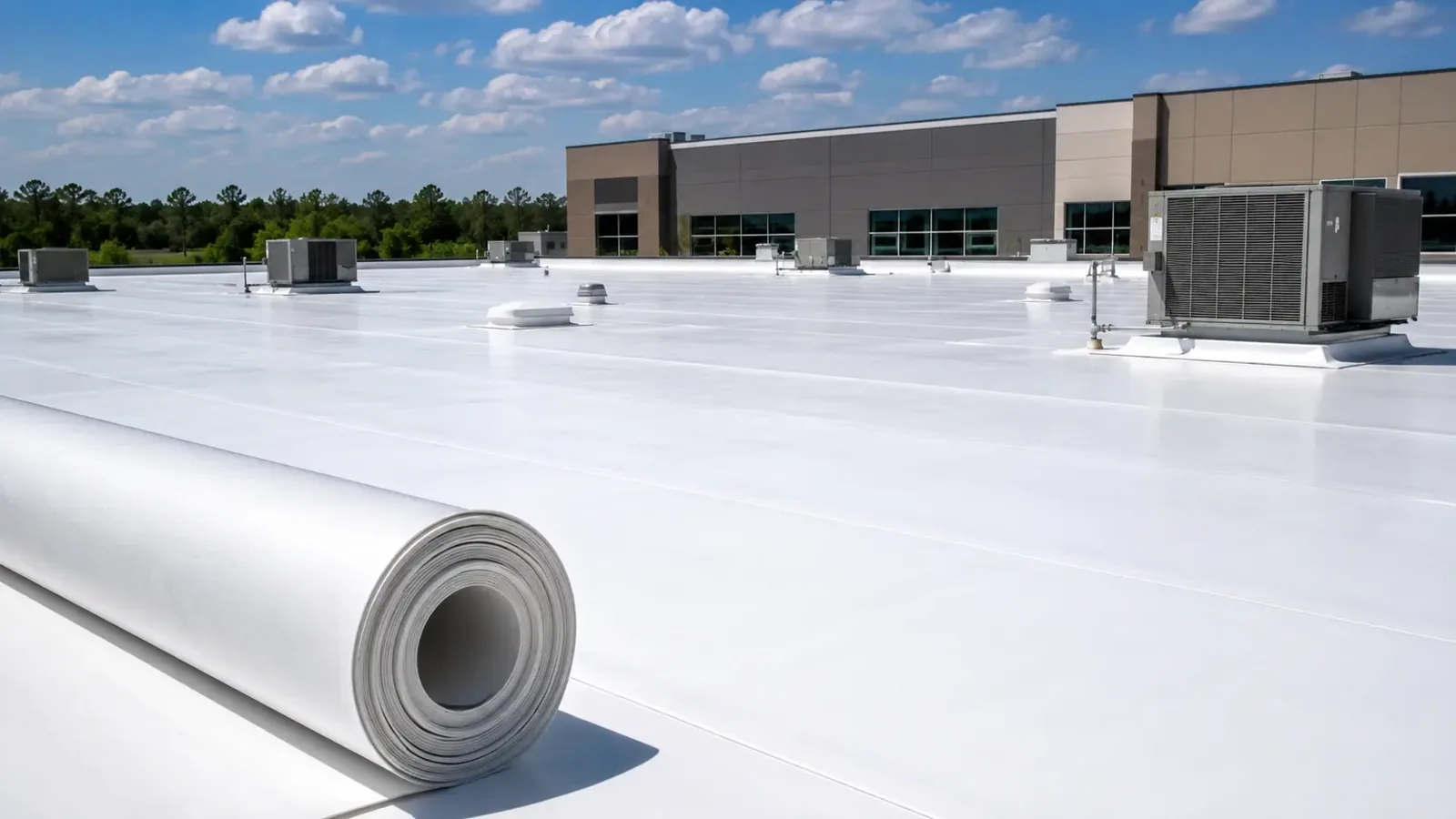
A grey film runs from the kitchen exhaust to the nearest drain. On most roofs that stain means trouble. On a PVC roof it usually means the sheet is doing its job. Grease and animal fat that would soften other membranes mostly sit on top of PVC until someone washes them off. That is why we look at PVC first when the roof sits under a vent, a fryer or a process line.
PVC roofing in Greenville, TX is a more specific choice than TPO. The sheet is polyvinyl chloride, heat welded at the seams, and it holds up where chemicals and oils are part of the daily load. It earns its higher price on roofs like that, and it asks for careful welding and a clean surface through the first few summers.
What makes PVC the pick over a grease-stained roof?
The chemistry. PVC resists animal fats, cooking oils and many of the airborne chemicals that eat through other single-ply sheets. A restaurant roof with a busy hood or a plant with a process exhaust sees that exposure every shift, not once a year.
Seams matter just as much. PVC welds with hot air into a continuous sheet, and a good weld is stronger than the field of the membrane. Grease cannot creep through a glued lap that does not exist.
None of this means a PVC roof never needs cleaning. A buildup of fat holds dirt and heat, and a periodic wash keeps the sheet bright. We build that into the maintenance plan so the roof is not ignored for five years and then blamed.
How is PVC different from the TPO next to it on the bid sheet?
Both are heat-welded white sheets, and from the ground they look alike. The difference is in the chemistry and the cost. TPO is a polyolefin blend. PVC carries plasticizers that keep it flexible, and that is both its strength and its long-term watch item.
Over time those plasticizers can leave the sheet, and PVC gets stiffer. Good formulations hold that off for a long time, and a thicker sheet gives you more margin. It is one reason we ask about the age of a PVC roof before we promise a repair.
On the bid, PVC usually costs more per roof than TPO. You are paying for fat and chemical resistance, and for a welded seam that stays tight under harsh exposure. If the roof does not see either, the extra money may be better spent on insulation or cover board.
Which Greenville buildings should be priced for PVC?
Start with anything that handles food. Brakebush Brothers built a 315,000 square foot chicken processing plant in the Park West Industrial Park, and any roof over processing, refrigeration and exhaust is a different animal from a dry warehouse roof. On a roof like that, process vents and condenser runoff both load the membrane.
Hospitals and clinics are the next group. Hunt Regional Medical Center is on Joe Ramsey Boulevard. Inspect each medical roof’s actual exhaust and equipment conditions before confirming chemical compatibility. A hospital roof needs a work sequence that protects occupied clinical areas and keeps the building weathertight.
At a plant on Shelby Avenue, verify actual exhaust conditions and the specified membrane’s compatibility before choosing a system. The exhaust, not the label on the roll, drives the call.
What does a repair look like on a PVC roof?
We clean the area, which means degreasing it when fat is involved, then hot-air weld a PVC patch to the sheet. The patch needs the right compatible material. Not every cover strip belongs on every roof, and mixing sheets is how a repair peels in a year.
Small tears and membrane punctures usually take a visit and a weld. Dropped tools, ladders and sharp equipment feet cause most of them. If there is wet insulation under the puncture, the repair stops being a patch and turns into a cut-and-replace job.
Older PVC can resist new welds if the surface has aged. We test before we commit. If it will not fuse cleanly, we tell you, because the next step is a bigger scope, not a bigger tube of sealant.
A repair starts by cleaning the sheet and identifying whether the damage reaches the reinforcement or insulation below. The crew makes a test weld in the field, sets the temperature and travel speed for the material and conditions, then patches with compatible sheet that extends beyond the compromised area. At terminations, the tie-in detail matters as much as the field weld. Record the repair location and method so a later inspection can tell a new seam from the original installation.
What does a PVC roof cost and how long does the job run?
Cost follows scope first, then material. Roof size, tear-off versus recover, insulation depth, cover board and the count of curbs and penetrations all move the price. PVC adds a premium for the sheet itself and for the extra care around vents and edges.
Schedule follows weather and access. Welding wants a dry sheet and a dry deck, so rain ends the day early and a wet week stretches the job. Tear-off sections get dried in the same day so the building is not left open overnight.
If the roof is a candidate for a recover, we confirm the insulation is dry first. Putting a premium sheet over wet insulation is a good way to buy the same leak twice. For PVC roofs in Commerce and Sulphur Springs, compare weld condition, walkway wear and curb flashing at each property rather than assuming one assembly across a portfolio.
Commercial Roofing Questions
Will grease from my kitchen exhaust ruin a PVC roof?
Not the way it ruins other sheets, though the roof still needs cleaning. PVC shrugs off fat and oil better than most membranes, so the sheet itself does not break down under a normal exhaust load. The dirty film does trap heat and grit, though, so we clean around the vents on a schedule and fit grease trays where the discharge is heavy. That small routine keeps the surface bright and the roof record honest.
Is a prefabricated PVC roof worth looking at?
Prefabrication helps on smaller, cut-up roofs. Companies such as Duro-Last make PVC panels cut to the roof plan before they reach the site, which means fewer field welds and faster dry-in. On a very large, open roof the savings shrink, because a field-rolled sheet can cover more ground per hour. We price both routes where the building allows it and show you the difference.
Why does PVC get stiff as it ages?
Plasticizer is the soft ingredient that keeps the sheet flexible, and over many summers some of it works out. Hot roofs lose it faster, which makes sun-baked, dark-surfaced and poorly ventilated roofs the first to show it. A stiff PVC sheet cracks at corners and wall bases. We test flexibility on older roofs before recommending repair, since a brittle sheet will not take a new weld.
How fast can a PVC roof be fixed after a hail storm?
Small fixes can go in within a day or two once we are on the roof. Emergency dry-in comes first, then a scan and walk to find which hits broke the sheet. Bruises that did not crack the membrane get documented for your adjuster. Fractures get cut out and welded. Any wet insulation under the sheet comes up before the new patch goes down.
Is PVC worth the higher price on my building?
Weigh it against what the roof actually sees. If vents dump fat, solvent or chemical vapor onto the roof, PVC earns its premium. If the roof is clean, a TPO or a KEE membrane may do the job for less or last longer in heavier chemistry. We name the exposure first and then pick the sheet.