Membrane Puncture Repair in Greenville, TX
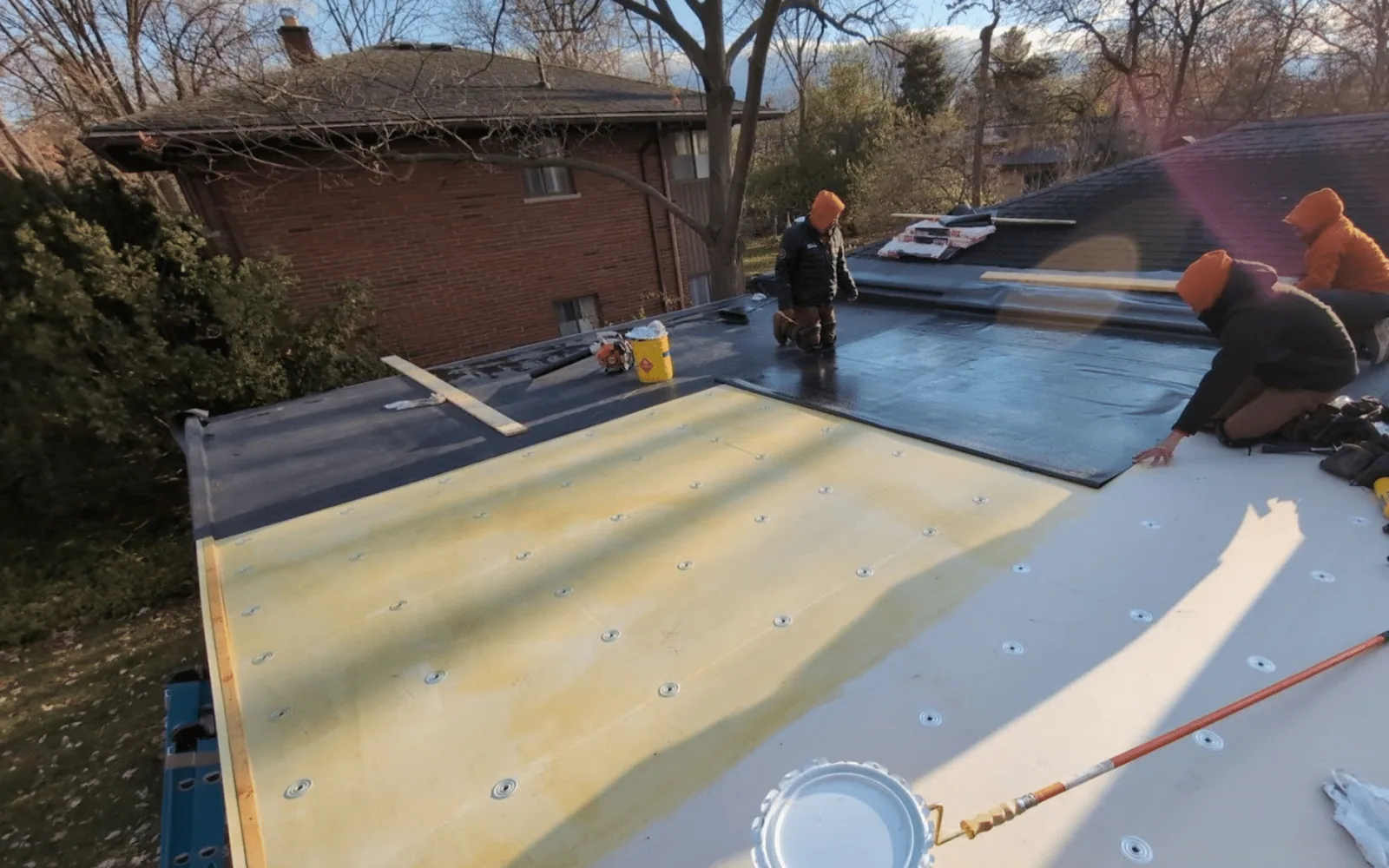
Somebody dropped a wrench up here last month. The gash is a few inches long, and the insulation under it is wet and gray.
A membrane is thin skin on a big building, and everything that walks, falls or blows across it leaves a mark. Puncture repair in Greenville, TX starts with finding every hole and every thin spot, not just the one that leaks. We probe around each cut to see how far the water went, patch it to suit the membrane, and then fix the reason it happened: a path nobody marked, a unit that needs service, a trade that left screws behind. It is cheap to repair this week. It gets costly once it has soaked a section of board.
Where do the holes come from?
Mostly from people. Service techs walk the same path to the same units a dozen times a year. Every trip crushes the insulation a little and wears the sheet at the turns. Then a tool drops, a ladder foot slides or a screw falls out of a pocket and gets stepped on.
Other trades add to it. Satellite installers, low-voltage crews and mechanical contractors drill through roofs and leave the details open. Sheet metal scraps, bundled wire and a pebble under a boot all cut. A fastener backing out from below pushes up and wears a hole from the inside.
Storms put branches and flung material onto the roof. Hail bruising is a different problem, and hail-bruised membrane gets cored and priced on its own. These are the cuts, tears and crushed spots that something left behind.
How deep did the hole go?
The hole in the top sheet is only the visible part. What matters is what lies under it.
We probe around every puncture and run a moisture meter across the area. Wet insulation looks gray or feels spongy underfoot. A cut over dry board is a quick patch. A cut over wet board means cutting out the damp material, drying the deck and rebuilding. If the puncture was a fastener working up from below, we check the deck for corrosion and the rest of that row for the same trouble.
We also look for thin spots that have not opened yet. Worn paths, crushed insulation and soft places under a thumb are next month's leak. On a big roof an infrared moisture survey finds the wet board under a lot of small openings in one pass.
How is each membrane patched?
The patch has to match the sheet. TPO and PVC take a hot-air welded patch with rounded corners, cut larger than the hole so the weld lands on clean material. EPDM takes a cleaned and primed patch set with splice tape or adhesive. Modified bitumen takes a heat-sealed cap sheet patch, with granules matched where we can. Built-up roofs get their layers rebuilt in the same order they came apart.
Rounded corners matter. A square patch lifts at the corners and starts a new leak. So does a patch set over dirt. We clean to bright material before anything is welded or glued.
On a spot that takes steady traffic, the patch is only half the repair. We also lay walk pads so the same path does not wear through again. If a puncture has already let water inside, we trace it the way we would any commercial roof leak and stop it at the source.
Which Greenville roofs take the most foot traffic?
The ones with the most machinery on them. Retail and specialty shops line Lee and Washington Streets in downtown Greenville. On any roof with mechanical service visits, mark the path to each unit and protect the membrane along it.
Hospital roofs call for tighter control. Hunt Regional Medical Center is in Greenville. At a medical property, coordinate roof access and temporary protection with the facility contact. In the I-30 and Joe Ramsey commercial corridor we keep the repair tight and the debris contained.
Plants carry their own traffic. Park West sits along SH 380 beside the big Brakebush Brothers chicken plant, and a roof that size gets service crews across the membrane on a regular basis. After hail, inspect the assembly and core suspect areas before deciding whether damage extends beyond visible surface marks.
How do you stop the next one?
Mark the path. Walk pads from the hatch or ladder to every unit set the route. They protect the sheet and tell a stranger where to step. In the busy zones, a hard layer under the membrane keeps a boot from crushing the board. That hard layer is a cover board over the insulation.
Then set rules for the trades. Anyone going on the roof signs in, reports any penetration they make and leaves the surface the way they found it. A general contractor running a tenant buildout knows how fast that slips. We can walk the roof before and after each trade so damage gets recorded against whoever caused it. A preventive maintenance visit twice a year catches new cuts early.
What does a puncture repair cost?
A single clean patch on dry board is a short visit and a small number. Cost climbs with the hole count, the wet insulation and the access. A roof with many small cuts costs less per hole than one big wet spot.
The real money is in what you cannot see. A hole left alone for a season soaks a section of board, and that board has to come out. The patch is cheap. The deck and the insulation are not. We give you the patch price and the cost of waiting side by side. If the inspection finds a seam opening rather than a puncture, scope seam failure.
Commercial Roofing Questions
Who pays when a service tech punches through the roof?
The party that caused it, usually, but your lease or service agreement answers that, not us. What we do is record the damage with dated photos so you know who was on the roof and what was found. Photos from the day of the visit are worth more than an argument months later.
Is a small puncture worth patching now, or can it wait for the next roof project?
Patch it now. A small hole over wet insulation spreads, and the water follows the deck to the nearest drain or seam. On a roof near the end of its life, we use a quick weld patch to buy time until replacement is in the budget. That keeps the damage from growing into a bigger scope.
How much foot traffic can a roof take before it wears out?
Membrane type and insulation matter more than any number. Soft insulation under a thin sheet crushes under steady traffic even when the surface looks fine. Walk pads spread the load, and a cover board adds a hard layer. We press-test the paths and tell you where a pad or a board would protect the roof.
A trade left screws all over the roof. What should I do?
Sweep them up and have the roof walked before it rains. Loose screws get stepped on and punch through the sheet. A magnetic sweeper picks up most of them. After the sweep we look for anything that has already cut the membrane and mark it for repair.
Will a patch show on the roof surface?
A little. Patch material is newer and brighter than weathered membrane, so you can see it up close. From the ground it should not show. What counts is the weld or bond and the rounded corners. The color fades in a season. A bad edge on a patch does not.