Seam Failure Repair in Greenville, TX
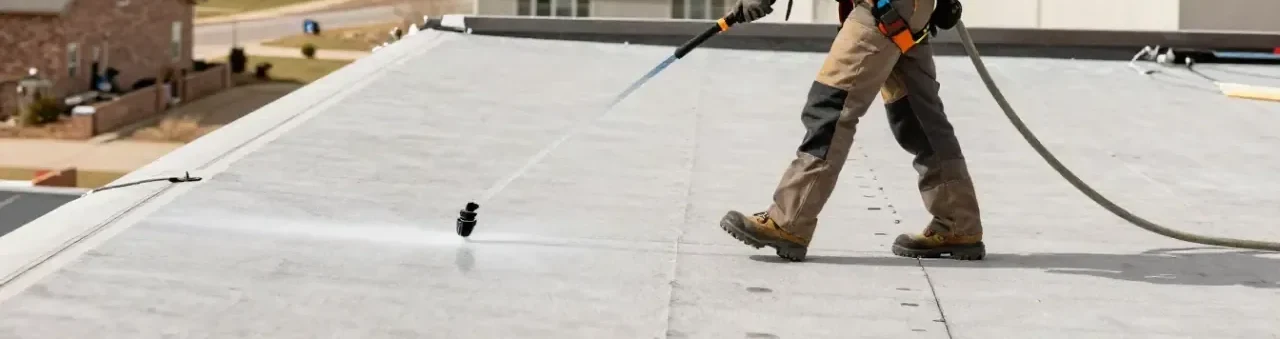
One seam on the roof has opened wide enough to slide a fingertip under the lap. You will not see it from the ground. You will see it on the ceiling below after the next hard rain.
Seams are where a roof is joined, so they are where a roof comes apart. Seam failure repair in Greenville, TX means finding every lap that has lost its bond, fixing it the way that system calls for and then checking the neighbors, because seams rarely fail alone. We probe the whole roof, mark the open ones and hand you a punch list with a price. Most of the time the repair is small. The skill is in finding all of it.
How do you find a seam that is about to open?
You probe it. A seam that looks fine from three feet can hide a loose edge you only find by running a probe tool along the lap. We walk every seam on the roof, every foot of it, and press the edge as we go.
Open seams give themselves away. A gap the probe slides into. A shiny or wrinkled strip where the weld lost contact. An edge that has curled up. A dark line of dirt where water has been working underneath. T-joints, where three layers meet, fail more than straight runs. So do seams beside curbs and seams next to ponding water, which get the closest look.
We mark each one in paint, photograph it and plot it on a roof sketch. You get the map along with the price.
What makes a welded seam let go?
Four things cause most of it: heat, movement, dirt and age.
Heat softens the membrane, and North Texas summers supply plenty of it. The roof expands in the afternoon and pulls back at night, which works the weld. Movement comes from the deck and insulation shifting underneath and tugging at a seam that crosses a joint. Dirt is the quiet one. A weld made over dust, oil or moisture looks fine on day one and was never truly bonded. Age does the rest. Thermoplastic sheets like TPO and PVC chalk and stiffen at the weld over the years.
The rubber systems fail another way. EPDM is joined with tape or adhesive instead of heat, and that tape dries out and releases as the sheet shrinks. Same symptom, different repair.
Is a cap strip a repair or a bandage?
Both, depending on how many. A cap strip is a piece of new membrane welded over the old seam. On a sound roof with one isolated open lap, it is a legitimate repair. On a roof where seams are opening all over, it is a bandage.
A handful of open seams on an otherwise good roof get reworked. We clean the lap, hot-air weld it again or cover it with a cap strip, and probe the result. On EPDM we clean, prime and set new splice tape. On modified bitumen we heat the lap and seal it with a bead. A metal roof is another job altogether, with new sealant, fasteners and sometimes whole panels. Scoping it is ordinary commercial roof repair: probe, mark and price every lap.
When seams are opening everywhere, the sheet has aged out. Money spent on cap strips is money that belongs in a recover or replacement. We tell you where your roof stands.
Why are long industrial roofs hard on seams?
They have so many. One roof section on a plant or distribution building can carry thousands of feet of seam, and a bad weld day during the original install shows up across the whole thing years later.
Buildings that big line the SH 66 and US 380 industrial area, where Orbis, Partsmaster and Fritz Industries operate. The Orbis plant alone is a building of roughly 1.03 million square feet. Whatever system sits on top of a building that size, the laps add up fast, and one bad weld hides easily among them. Over at Greenville Business Air Park, roofs take the same straight-line wind Greenville gets in a spring storm. Wind flutter works a seam the way you work a bent paper clip.
The June 2019 storm drove 85 mph straight-line wind through Greenville. Wind like that finds a loose lap and peels from it. When a seam opens in a storm, the edge and field of a wind-damaged roof get walked next.
What does a seam repair cost and how long will it hold?
Cost follows the linear feet of open seam and how hard the lap is to reach. Straight runs in the field go quickly. T-joints, seams at curbs and seams under equipment take time and cost more per foot. Cleaning is half the job, and it does not show.
How long it holds depends on why it opened. A seam that failed from a dirty weld, once cleaned and redone, can last as long as the roof around it. A seam that opened because the sheet is shrinking will open again right next to the repair. We note which kind you have.
Timing is simple. Hot-air welding needs a dry sheet and a decent temperature, and we do not weld in rain or heavy dew. One good weather window can close every open lap on a roof. After that, put the building on a preventive maintenance list so the next open lap gets caught while it is cheap.
Commercial Roofing Questions
How can a seam fail when professionals welded the roof?
Welds are only as good as the surface and the weather on the day they were made. A crew welding over dust, dew or a cold sheet can turn out a seam that passes a quick look and fails in three summers. Probing finds it. The fix is to reclean and reweld, and to probe a wider sample, since one bad seam often means a bad day.
Can a leaking seam be sealed with a tube of caulk?
Not for long. Sealant smeared over an open seam hides the gap and does not bond what is underneath. It cracks as the roof moves, usually inside a year. Caulk has its place at certain terminations. On a field seam, we reweld or set new tape so the two sheets are actually joined again.
How many open seams mean the roof is finished?
No magic number exists, but the pattern tells you. A few open laps in one corner is a repair. Open seams across the whole field and across several roof sections is a sheet that has shrunk or weathered past saving. We probe a test area on every roof section and give you a replacement number beside the repair number.
Do seams on a standing seam metal roof fail the same way?
Metal seams are mechanical. They are formed or snapped together, and they fail when panels move, clips wear or the sealant at the end laps dries out. We check the clips, the fasteners and the laps, then reseal or replace the bad sections. Panels bent by wind or foot traffic come out and get new ones.
Should a seam probe be on the punch list for a new roof?
Probing seams belongs on the list before final payment. A probe at turnover costs little compared with a leak in the first winter. We test a sample, flag any open laps and send the installer back to fix them while the crew is still on site and the acceptance paperwork is still open.