Wind Damage Roof Repair in Greenville, TX
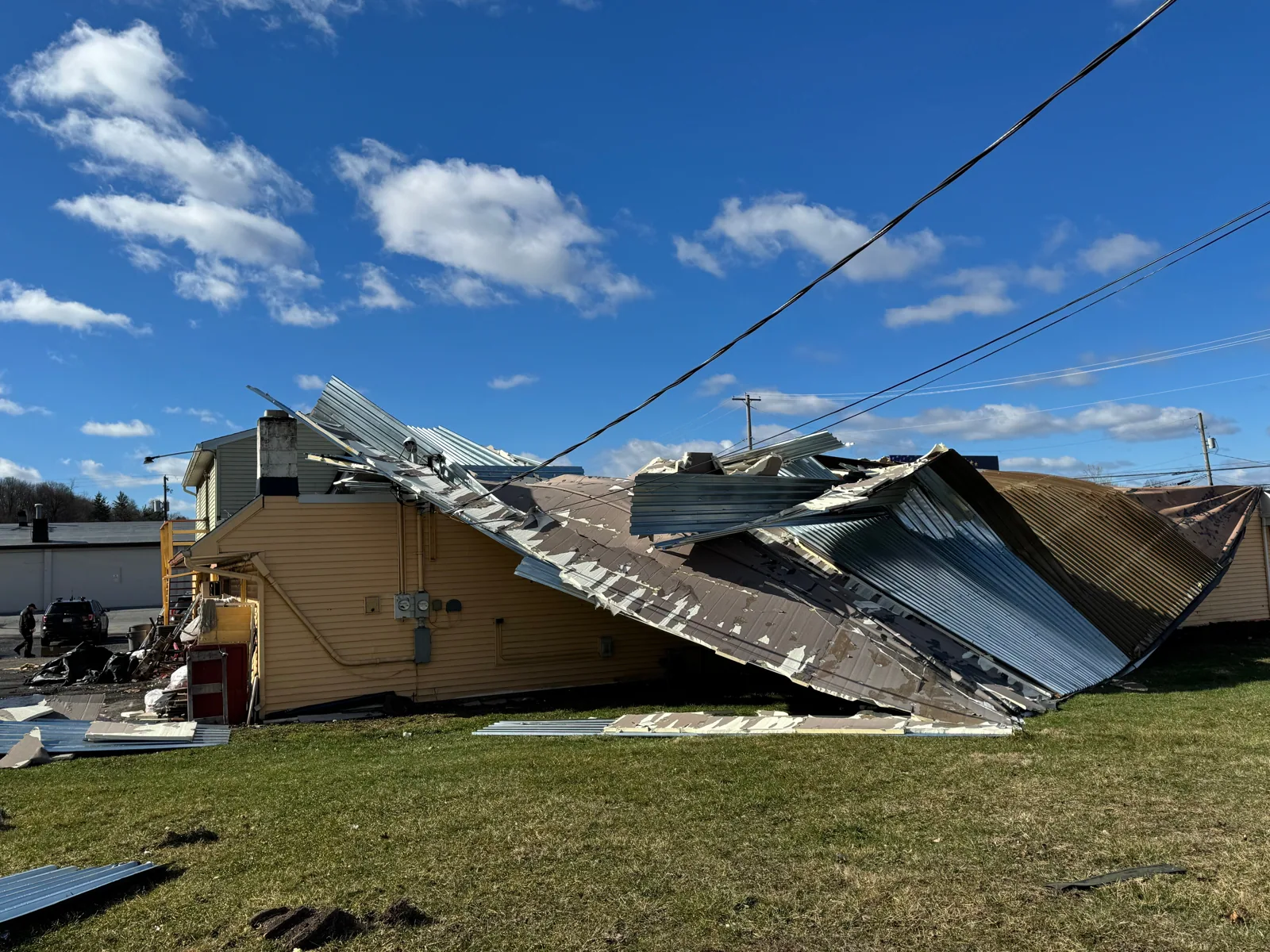
A corner of membrane is flapping like a flag. The edge metal hangs by one nail. That is wind damage, and it never stays small.
Straight-line wind finds the weakest edge and works at it with every gust. Wind damage repair in Greenville, TX starts with stopping that motion, then finding out why the roof let go. We walk the perimeter, check the deck and the fasteners, and hand you a scope with a price and a schedule. If the building is open to rain tonight, our emergency roof repair crew gets it dried in first. A lifted edge fixed this week costs far less than a sheet ripped loose next month.
Where does wind take a roof first?
The perimeter and the corners. Air piles against the wall, rolls up over the parapet and pulls on the roof edge. Corners get the worst of it. So that is where we start.
We look at edge metal, coping, gravel stops and the cleats that hold them. Then we look at the membrane next to them for billowing, wrinkles and stretched fasteners. After that we check the field for flutter, which shows up as pulled screws and torn plates in a straight row.
On a mechanically attached roof, a few popped fasteners let the sheet lift and slap. Every slap loosens the next fastener down the line. On an adhered roof the bond fails in patches and you find air pockets. Ballasted roofs lose stone at the edges first. Each type fails its own way, so each repair differs. When the lifted sheet tears along its welds, the work moves into seam failure repair.
What is hiding under a lifted edge?
Wet material. Once the membrane is peeled back, water runs in at the opening and soaks the insulation, rusts the deck and wets the wood nailers that hold the edge metal.
We pull the wet board and probe the deck. Rotted nailers come out, because new metal on a soft nailer fails again in the next blow. Rusted or bent deck gets cut out and patched before anything goes back over it. When a large area may be wet, an infrared moisture survey shows where the water traveled, so nobody tears out dry material.
This is where a quick patch goes wrong. Glue a flap back over wet insulation and you have sealed the water in. We dry in, then dry out, then rebuild. It takes longer and it is the only version that lasts.
What did 85 mph do to Greenville roofs?
Greenville has the proof. On June 19, 2019, straight-line wind peaked around 85 mph. A downtown building on Lee Street had a roof collapse and facade damage; a church sanctuary on Joe Ramsey Boulevard sustained extensive roof damage. The Weather Service surveyed the damage afterward and called it straight-line wind, not a tornado.
That storm also damaged a facade on Lee Street, in the part of downtown Greenville where the older masonry commercial buildings stand. Park West is an industrial park along SH 380. Inspect each property’s perimeter and corners before setting a wind-repair scope. A true twister is a different job, with debris impact and structural loss, and that is tornado damage repair.
After a severe-wind report, inspect the edge details even if the building has not leaked.
What does the repair cost and how long is the weather window?
Price follows what moved. A short run of coping and a few fasteners is a half-day for a crew. A torn field sheet over wet insulation is a bigger scope, with tear-off, new board and a new membrane tie-in.
Edge work costs more because it is slow. Every foot of metal is pulled, the nailer is checked, and the new metal is set and sealed. Wind-rated edge metal costs more than the plain stuff. It earns that back the first time a front comes through.
Timing is the weather window. We cannot weld or adhere membrane in rain or on a wet deck. After a regional blow the crews are booked and material runs short. Dry-in goes on in a day. The permanent repair follows the supply truck and the forecast.
Should the edge be rebuilt or just patched?
Patch when only one stretch moved and the remaining edge is sound. Rebuild when the metal is old, the nailer is soft or the same corner has let go before.
A rebuild means new edge metal with a heavier cleat, a continuous bar behind it and fasteners spaced for the wind exposure. Many blow-offs are not bad luck. They trace back to edge metal and attachment that were never built for the exposure. If the roof is nearly spent anyway, the money may go further in a full replacement, priced beside the repair so you can see both numbers.
Permits run through the city. Commercial repairs and reroofing go through Greenville Community Development, and the city has adopted the 2018 International Building Code family. Ask the department which permit applies to the project before scheduling work. After a wind event, compare documented edge and flashing conditions in Commerce and Caddo Mills; the repair scope still follows each roof’s observed damage.
Check whether the loosened perimeter detail is isolated or repeated around the building. A small section of detached coping may be repairable if the substrate and adjoining membrane remain sound; widespread uplift, wet insulation or deck movement calls for a broader scope. Photograph the direction of the lifted material and inspect the transition where the load transfers into the roof assembly. The estimate should identify what was opened and what remains concealed so the owner can choose between targeted repair and additional testing.
Commercial Roofing Questions
Can wind damage a roof that is only a few years old?
It can, and the cause is usually attachment, not age. A new roof with too few fasteners at the perimeter, or edge metal set on a weak cleat, will lift the first time a strong gust line crosses it. We check the attachment pattern against what the roof needed. If the install fell short, the repair should fix the pattern, not just the torn spot.
Should I tarp a lifted corner myself or wait for the crew?
Stay off the roof. A loose flap can drag a person across the surface or off the edge, and wet membrane is slick. Call us, photograph the damage from the ground or a window, and move anything valuable away from the leak. Our crew secures the corner with temporary dry-in, then the permanent scope gets written once the weather clears.
Does a metal roof lose panels the same way a flat roof loses membrane?
Metal fails differently. Panels come loose at the eave and rake first, where the clips and trim take the load, and a lifted panel can open a seam the full length of the roof. We check clips, fasteners and trim before we touch a panel. Standing seam usually needs panel and clip replacement, not a patch.
How do I show the claim covers the whole edge and not only the damaged corner?
Photos and pattern. We map every lifted fastener, bent flange and stretched section around the full perimeter, and write down which parts moved in the same event. That record lets the adjuster see the damage was part of one storm. We document the facts and the scope. We do not negotiate your policy.
Will the new edge hold up in the next blow?
A properly rebuilt edge should hold better than what failed, because we correct the weak point instead of copying it. That means a stronger cleat, a continuous retainer and tighter fastener spacing. No roof is storm-proof. What you want is a perimeter built so the next gust line has to work much harder to get under it.