Tornado Damage Roof Repair in Greenville, TX
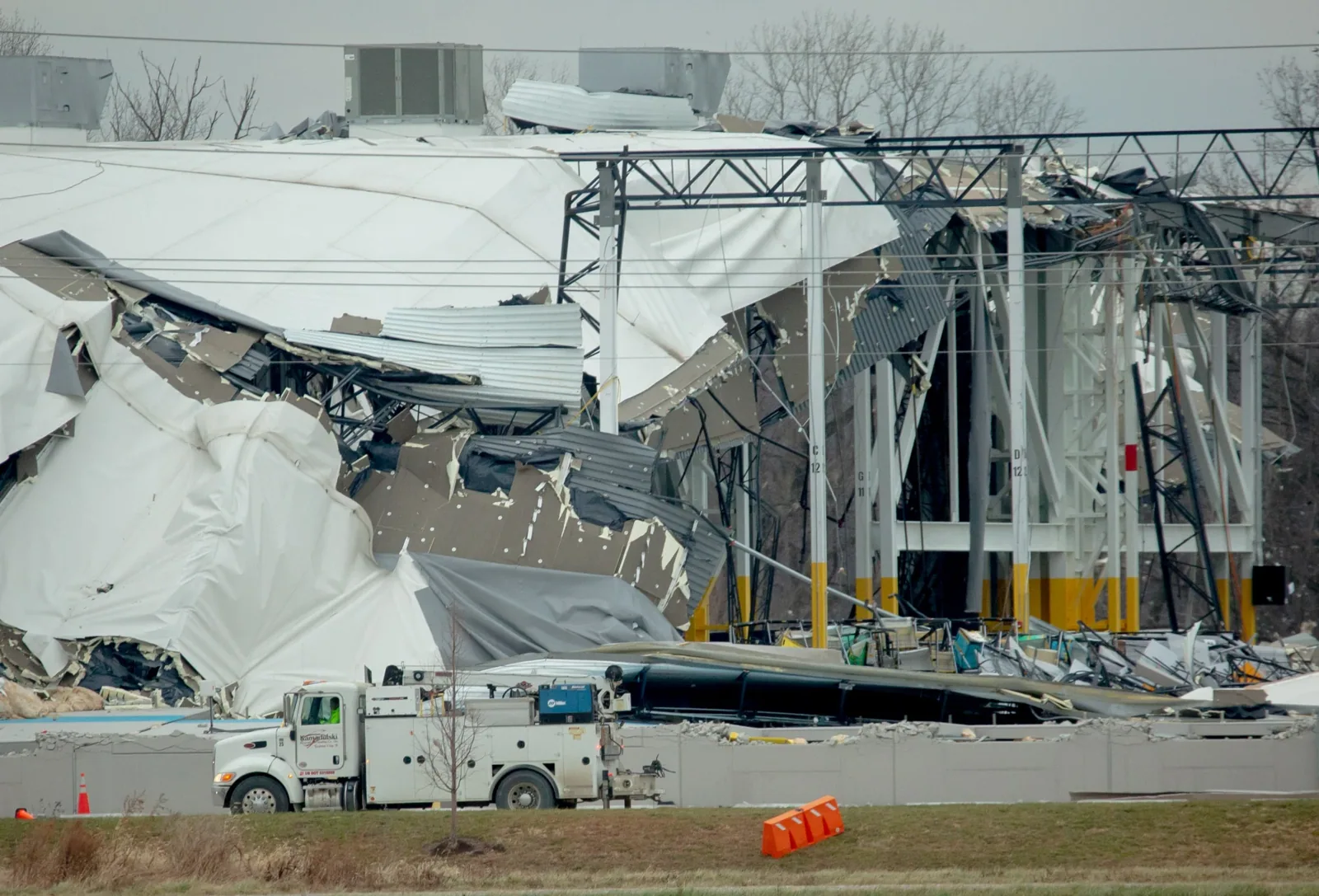
A tornado does not leave much roof to inspect. Sometimes it takes a whole section down to the deck. Sometimes it takes the deck.
Tornado damage roof repair in Greenville, TX is a different job from ordinary storm repair. First we find out whether the building is safe to enter. Then we secure what is left. Then we sort a mess of torn membrane, bent steel and flung debris into a scope that a carrier and a contractor can both work from. The numbers are big and the schedule is tight, so the order of work matters more than anything else.
Is the building safe enough to put a crew on?
Not until somebody checks. A tornado shifts walls, bends joists and loosens connections in ways you cannot see from the ground. A roof can look flat and carry far less than it should.
We walk from the edge inward, test the deck as we go and stay off anything that moves. On a larger loss we want a structural engineer's say-so before heavy equipment goes up. That means tarps and temporary decking go on first, set from safe ground and held down with real fasteners. A crew should never be the test load.
Power lines, gas lines and broken glass share the site. Utilities get shut off and fencing goes up before the roofing starts. The first emergency roof repair call is about making the site safe, not about membrane.
What does a tornado take off a roof?
Everything it can lift. The strong uplift around a vortex pulls on the roof, and the deck lets go in sheets, taking membrane, insulation and edge metal along. Flying debris punches holes, rips flashing and dents everything else.
On metal buildings the panels peel from the eave and rake, and the purlins may bend. On low-slope roofs the damage looks like a torn-back sheet, missing sections, a collapsed parapet or equipment shifted off its curbs. Then rain comes through every opening into the building.
We look at the whole structure: deck, framing, fasteners, parapets, rooftop units, drains and flashing. Each gets photographed from several angles before anything is moved, so the record shows how it looked when we arrived. For a lighter blow, wind damage repair may be all the building needs.
How is a tornado loss sorted from a wind loss?
By pattern. Wind damage is directional and concentrates at corners and edges. Tornado damage is chaotic: pieces gone in odd places, debris from other buildings on the roof, structure shifted in more than one direction.
The difference matters for the claim. Some policies treat the two differently, and a tornado loss is usually bigger and more complex. The June 2019 Greenville storm was straight-line wind, not a tornado. Keep that classification separate from the damage at the building being repaired. We document edge failures, membrane tears and impact marks with photos and a roof plan for the roof insurance claim.
What does the Hunt County tornado record mean for a roof?
It means this is not a once-in-a-lifetime risk. Hunt County has 75 recorded tornadoes since 1680, and May is the peak month. Recent years brought an EF2 in early April 2012 and an EF1 in late May 2024.
On April 3, 2014, an EF1 with winds near 105 mph struck east of Merit, near FM 1569 and FM 903, partially removing metal roof and wall panels from one structure. The Wolfe City area also saw an EF1 in that outbreak. Those were specific damage locations; inspect every other building independently.
Elsewhere in the region, the scale is worse. The December 26, 2015 EF4 cut a 13-mile path through Rowlett, and a 1919 F4 ran 30 miles through Blue Ridge. Those tornado paths show the range of regional wind damage; roof assembly and attachment details still need to match the specific building.
What gets rebuilt first when the roof is gone?
Dry-in, deck, then roof. Temporary protection goes on the open areas. Then the deck is inspected and replaced where it is bent or torn loose. Insulation and membrane follow once the deck can carry them and the weather allows.
Rebuilding is a chance to fix what failed. Permits come from Greenville Community Development, and a tornado repair may trigger code upgrades under the 2018 code family the city has adopted, and we find that out before we price. Attachment, edge metal and parapet bracing get a harder look. On a metal building, a standing seam metal roof with the right clips and panel gauge is one way to rebuild stronger.
General contractors running a rebuild want one schedule for deck, framing and roof. That is the right instinct, and the roof sequence follows it.
What does a rebuild cost and how long will it take?
It runs larger than any other repair on this list. Cost follows how much deck and framing has to be replaced, not only membrane. Temporary protection, debris haul-off, engineering review and permits all add up before the first new sheet goes down.
Timing follows supply. After a regional event roofers fill up fast, and metal panels and membrane can back up. The weather window sets when new roofing can go on. We give you the sequence and a realistic range as early as we can, and update it when the supplier does. Dry-in goes on in days. Permanent roofing follows the material. Where the roof shows wind effects beyond the reported path, record and scope wind damage. Before debris moves, photograph the roof plane, perimeter and openings from safe positions. Record which sections remain attached, where insulation is exposed and whether water reached the interior. Those observations define the repair boundary and help the engineer assess the supporting structure.
Commercial Roofing Questions
The tornado hit a neighbor, not us. Do I need to check my roof?
Check it. Debris travels, and so does wind damage. A piece of flung metal can cut a membrane a long way from where the funnel touched down. Look over the roof for debris, torn flashing and dents, then walk the ceilings below for stains after the next rain.
How soon can a tarp go on after a tornado?
Usually within hours once the area is safe. Utilities, downed lines and an unstable structure come first. After that the crew sets temporary decking and tarps. Fast matters, but a safe, well-fastened cover matters more, because a bad tarp blows off in the next storm and lets in more water than before.
Will the carrier pay for upgrades the old roof never had?
Policies differ, and some carry an ordinance or law provision that helps with code upgrades. Read yours or ask your agent. What we do is price the code-required work as its own line item, so the carrier sees what is repair and what is upgrade. We do not promise what any policy will pay.
Is it better to repair or replace a roof that lost a large section of membrane?
Start with the inspection findings. A large opening can leave damage to attachment, insulation or deck beyond the visible tear. We measure the repair boundary and price a section rebuild beside full replacement. If soft insulation or bond loss extends farther, the broader scope may be the stronger choice.
How do I protect tenants and contents while the roof is open?
Move what you can and cover what you cannot. Plastic sheeting over equipment and stock buys time, and we can stage temporary protection over the critical areas first. Tell us which rooms hold servers, product or patients, so those spaces get covered first and the work is sequenced around them.