Roofing for General Contractors in Greenville, TX
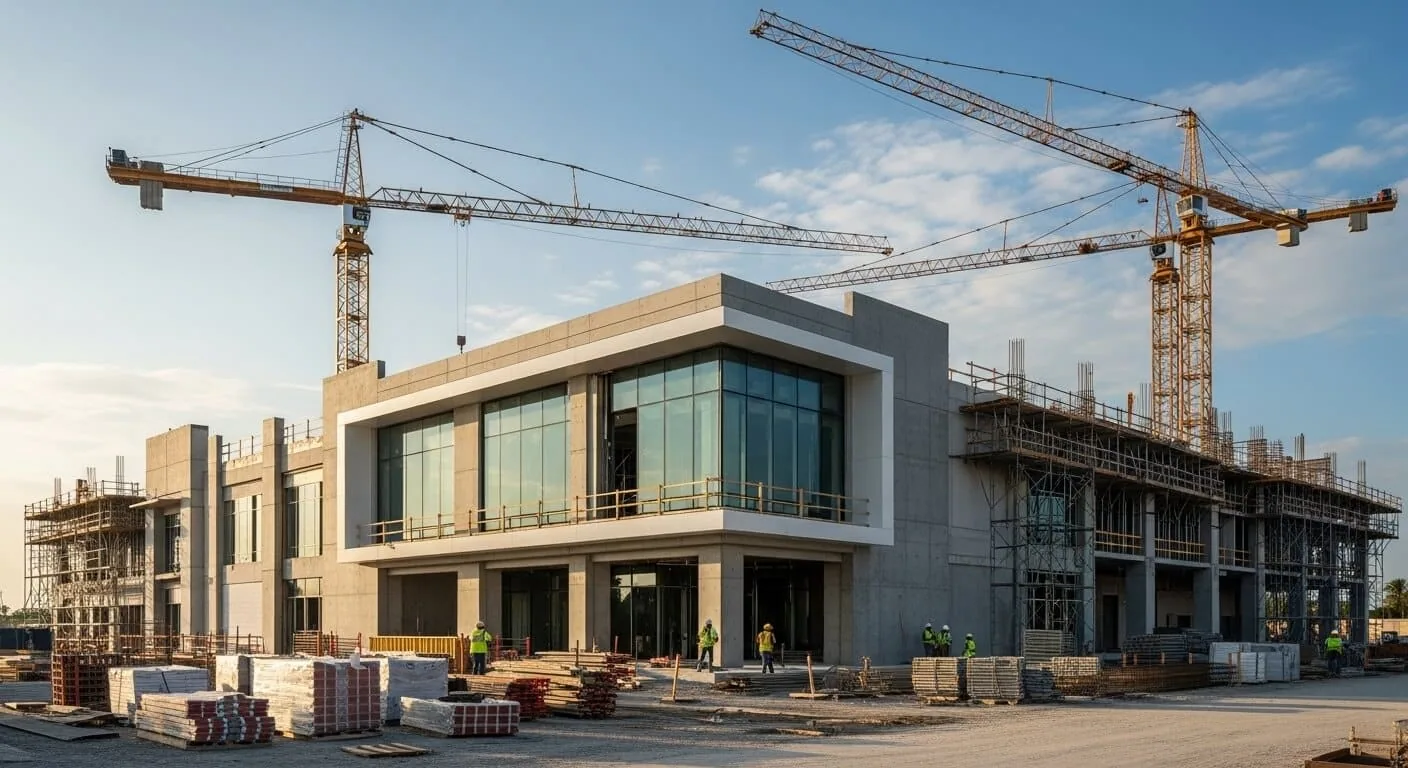
A stack of cover board sits soaked under a tarp that blew off overnight. That is half a day of material and a day off the dry-in date. Schedule suffers first.
General contractors in Greenville, TX need a roofing sub who shows up on the date, reads the drawings and keeps the roof off the critical path. We bid the scope you wrote, price the unknowns on their own lines, and tell you early when the deck or the details do not match the plans. Then the crew mobilizes, finishes and leaves a short punch list.
What goes into a roofing scope before you lock the bid?
Start with what the drawings call for, or what is on the roof now. Deck type, insulation thickness, cover board, membrane, edge metal, drains and every curb. If the drawings say one thing and the roof says another, we flag it before the number goes out. A bid built on the wrong deck is a change order waiting to happen.
Walk the roof with us before you level bids. We photograph the equipment, measure the curbs and note anything the mechanical sub plans to add or move. Alternates matter here. A tapered insulation option or a thicker cover board can swing the price more than the membrane does, and you want those numbers side by side.
Ask every roofer for the same list: mobilization, staging, crane or hoist, tear-off and disposal, permits and fall protection. A low bid that leaves out two of them is not low. Our commercial roof replacement scopes spell out each line.
Who owns the tie-ins when three trades share the roof?
Name one owner for each, in writing. Mechanical sets the units. Electrical runs conduit across the field. The mason or framer builds the parapet and the wall. Roofing flashes all of it. When nobody owns the curb heights, the roofer pays for the fix on the last day.
Curbs need enough height above the finished roof to flash properly. Pipe supports need pads or sleepers rated to sit on the membrane. Walls need counterflashing the crew can reach before the siding goes up.
We send questions early, not on the day the sheet is rolling. A one-page sequence of who sets what, and when, saves more schedule than overtime ever will. Rooftop equipment curbs and supports need their heights settled before the unit arrives, and the parapet side finishes with edge metal and coping cut to fit.
What does a bad deck cost a job that is already priced?
More than the roof. On a reroof, wet insulation and rusted deck show only after the old roof comes off, and a bid cannot see them. What a bid can do is set a unit price for deck repair and for wet insulation before the job starts. Then the change order is arithmetic, not an argument.
Ask for cores and an infrared moisture survey during the bid, not after tear-off. A scan marks the wet areas on a plan, so your allowance rests on a map instead of a guess.
Fasteners count too. Steel deck rusted at the flutes will not hold a pullout test, and the spec may need new fasteners or a different attachment.
Where does the roof sit on your critical path?
On new work, the roof is the dry-in. Drywall, paint, flooring and millwork all wait on it. A week lost on the roof is a week lost on every trade behind it, and the owner is still counting days to opening.
So we talk about mobilization and the weather window early. Insulation and metal carry lead time, and the order has to go in before the deck is ready. We need a dry deck, clear access, a staging area and a hoist date.
On a reroof inside an operating building, the sequence flips. Tear-off runs in sections that dry in the same day, no open deck sits overnight, and your superintendent gets a daily handoff. Our crew keeps out of the other trades' work areas.
Which roof systems clear the spec without blowing the budget?
A low-slope project may specify TPO or PVC, depending on the assembly and design requirements. TPO is the volume choice: white, welded seams, quick to install, easy to patch. PVC costs more but handles grease, chemicals and exhaust. Standing seam metal fits a sloped roof or an owner who holds the building a long time.
Value engineering usually aims at insulation or sheet thickness. Be careful. Greenville adopted the 2018 International Energy Conservation Code. Confirm the insulation requirements for the specific reroof with the permitting authority and project design team. We price the spec as drawn, then show where a change really saves money and where it only moves the cost to year five.
What do Hunt County storms do to a job in progress?
A half-finished roof is the most exposed roof there is. The June 19, 2019 storm hit Greenville with 85 mph winds and baseball-sized hail, and it brought a roof down in downtown Greenville. An open edge, a loose sheet or an uncovered stack of insulation turns into damage and flying debris. An EF1 tornado in April 2014 east of Merit, near FM 1569 and FM 903, pulled part of the metal roof and wall panels off a structure. Wind goes after open panel edges first.
So we plan the dry-in every day. Edges get temporary seals, material stays covered or tied down, and the forecast sets the size of the day's tear-off.
Big roofs in Greenville cluster in a few places: Park West along SH 380, the plants on Shelby Avenue, and the business air park beside Majors Field. Manufacturers hire builders for big roofs they want finished fast. Healthcare systems, like Hunt Regional Medical Center on Joe Ramsey Boulevard, hire them for occupied space and tight windows. Greenville Community Development issues permits for commercial repairs and reroofing. Confirm the permit sequence and inspection timing with the department when building the schedule. For contractors managing work in Commerce and Sulphur Springs, a roof walk before mobilization helps separate weatherproofing repairs from later trade damage.
Commercial Roofing Questions
Can you hold a start date when our dry-in milestone has no float?
Only if the dependencies line up first. We hold a crew and a start once material is ordered and the deck is clear. We cannot control rain, so we price a weather allowance and say plainly how many days it covers. If your milestone is hard, tell us at bid and we will build a second crew or extended hours into the number rather than promise a date we cannot protect.
How should we handle the manufacturer warranty on a new roof?
Settle it at bid. The spec names a warranty type and a term, and the manufacturer sets the installation details that go with it. We install to the manufacturer's published details and carry the inspection steps the warranty needs. Warranty terms belong to the manufacturer, so confirm them in the spec and ask the manufacturer for its requirements before the award.
What belongs on the roofing punch list at closeout?
Keep it to what can be seen and tested. Seams probed, flashing sealed, drains clear and flowing, edge metal fastened, debris gone, and a photo of each penetration. We walk it with your superintendent, close each item in writing and hand back the photos. A short list closed in a day beats a long one that drifts into the owner's first month.
A leak shows up six months after turnover. Who do we call?
Call the roofer who installed it first, then the manufacturer's contact if the roof carries a warranty. Do not let the owner patch it with caulk before anyone looks, because that muddies the cause. If the roof is not ours, we will still go up, trace the water to the seam, flashing or drain, and give you a written description you can hand to whoever owns the fix.
Will you bid a reroof from drawings alone?
We would rather be on the roof. Drawings of older roofs are often wrong about layers, insulation and deck, and each error is a change order later. A site visit with cores and a moisture scan takes a day and puts real numbers under the bid. If the schedule is too tight for that, we will bid from the drawings with clear unit prices for every unknown.