Preventive Roof Maintenance in Greenville, TX
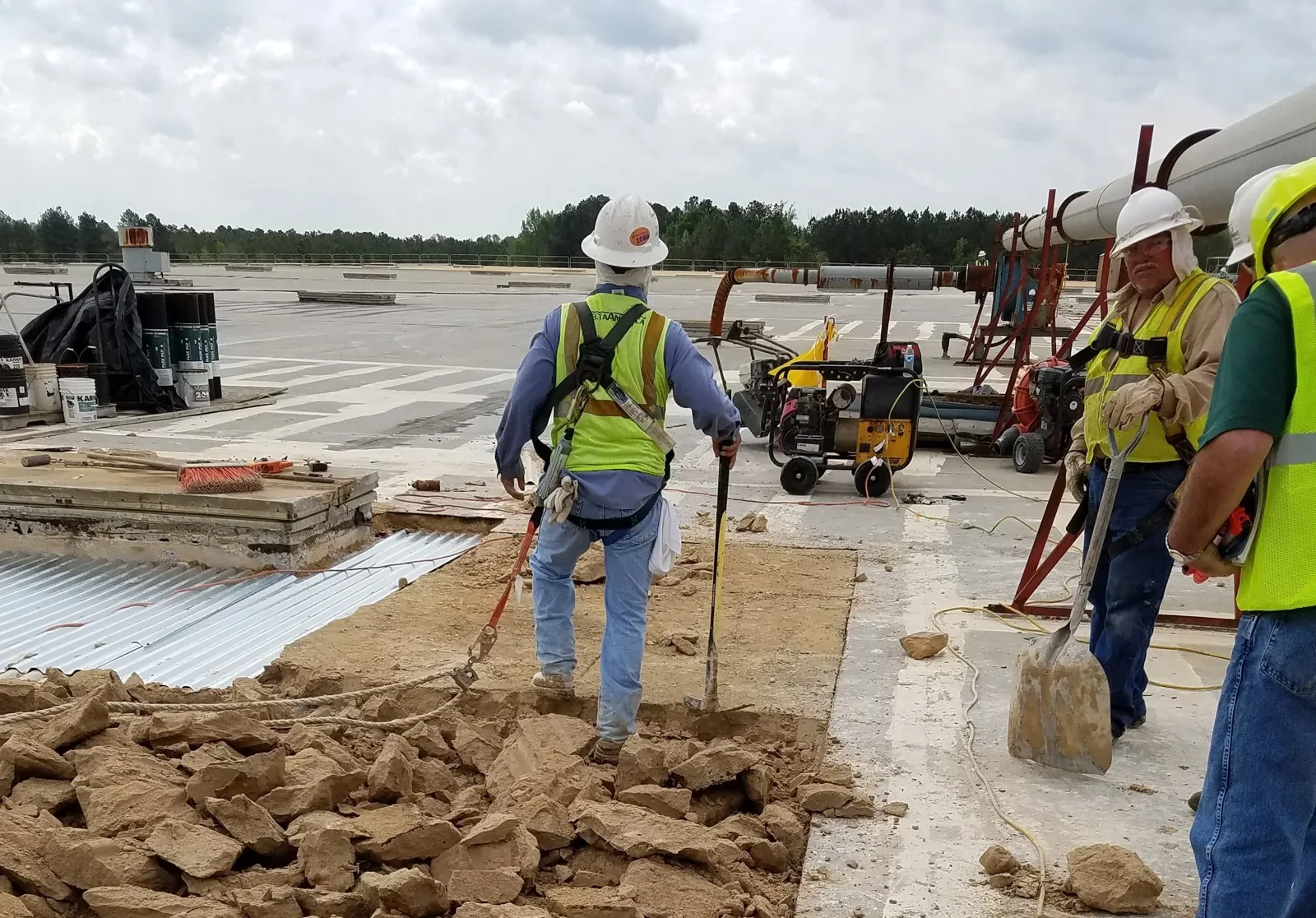
Gravel and leaves pack into a drain sump long before anyone looks up there. The next storm backs water across the field of the roof, and a ceiling tile below tells you about it. That is a maintenance problem, not a roofing problem, and it costs a fraction of a repair if someone catches it first.
A preventive maintenance program puts a crew on your roof on a schedule, with a punch list at the end of every visit. For buildings around Greenville, TX the schedule follows the weather: a walk after spring hail season, a walk before winter and a visit after any hail or wind event. Small defects get fixed on the spot. Larger ones get a number and a date.
What does a maintenance visit actually cover?
We walk the roof end to end. The crew starts at the drains and edges, then works the field, every seam, every lap and every penetration. Nothing gets skipped because it looked fine from the ladder.
A typical visit covers:
- Drains, scuppers and gutters cleared and tested for flow
- Seams and laps probed for lifting, shrinkage or open edges
- Flashing at walls, curbs and pipes checked for cracks and pulled sealant
- Fasteners and edge metal checked for backing out or movement
- Surface checked for blisters, ponding, punctures and hail bruising
- Rooftop equipment checked for loose supports and worn walking paths
Every finding is photographed and logged. Trades who service HVAC units leave a trail of damage between the curbs, so we read those paths too. When a roof needs a deeper look than a visit allows, a full commercial roof inspection sets the baseline.
Why does Greenville weather call for a schedule?
Spring is the hard part. Gulf moisture meets cooler air from the north, and North Texas storms can throw hail up to softball size. Greenville took 85 mph straight-line winds and baseball-sized hail in June 2019. A roof that was fine in May can be bruised and loose by June.
Then summer takes its turn. In July 2022 the DFW area stacked up 27 days of 100-degree heat. A sun-baked dark membrane swings hard between afternoon heat and a cool night. Sealants dry out. Laps shrink. Flashing pulls away from the wall.
A schedule that matches those seasons catches the damage while it is still a patch. Industrial properties in Park West along SH 380 and the SH 66 and US 380 industrial area need maintenance intervals set from each roof’s size, assembly and observed exposure.
Which small problems get fixed on the spot?
Anything the crew can fix safely with the material on the truck. The list is a long one.
We reseal open laps and re-bed lifted flashing. We replace failed pipe boots and pitch pockets. We clear and secure drains, reset loose fasteners, patch small punctures and touch up bare spots on a coated surface. Each of those is a short job done during the visit, not a return trip.
What we do not do is patch over something that needs a bigger answer. If a seam is open because the membrane has shrunk, a bead of sealant buys a month. We say so, then put it on the list with a recommended fix. A defect that outgrows the visit goes to a commercial roof repair crew with the same photos in hand.
What does a program cost and what moves the number?
Price follows roof area, the number of roofs, the system on top and how often you want us there. One small roof on a strip center is a short visit. A plant with several roof levels and a long penetration list takes longer.
Access matters too. A roof with a fixed ladder and a good hatch goes faster than one that needs a lift. Heavy equipment slows the walk.
Compare the program to what it prevents. A leak that runs for weeks soaks the insulation, and wet insulation means a deeper repair and sometimes a tear-off. A lifted lap or a loose coping cap costs little this month and a lot after a wet winter. We lay the program price beside the likely repair history so you can see the trade.
What do I get on paper after each visit?
A report you can file. It carries dated photos of every finding, a punch list sorted by urgency and a plain line on what was fixed on site. The list has three piles: done today, schedule soon and watch.
Those records do real work. A lender wants proof the roof was kept up. A buyer running due diligence on a roof wants the history. Many manufacturer warranties expect routine upkeep on file, and an adjuster after a storm wants to know what the roof looked like before it. A log of visits answers all of them without a scramble.
Own more than one building? The same reports feed roof capital planning, so replacement money gets budgeted before a roof fails instead of after.
Is a program worth it on a newer roof?
Often more so than on an old one. A new roof has the most life to protect. The first seasons show what the installers missed, where a detail settles and where foot traffic starts wearing a path.
Older roofs need the visits too, but the goal shifts. Near the end of a roof life, we track the failures and help you time the next move. The visit log shows when repairs have stopped paying and a replacement costs less than another patch. A coating system can stretch a sound roof, but only when the record shows the deck and insulation are dry.
Commercial Roofing Questions
How often should a roof get a maintenance visit?
Plan on two visits a year as the minimum, one when hail season ends and one ahead of the first cold snap. Add a visit after any hail event or straight-line wind. Roofs with heavy rooftop equipment, trees nearby or a history of ponding do better with a third. We set the first schedule after the baseline walk and adjust it as the roof tells us what it needs.
Can a program help protect my manufacturer warranty?
Most manufacturer warranties expect routine upkeep and records, and some limit coverage for neglect or for repairs made with the wrong materials. Send us the warranty terms. We write the visit log and the repair methods to match, so a claim does not stall on missing paperwork. We cannot promise a manufacturer will accept any claim, but we can make sure the file is complete.
Do you service roofs somebody else installed?
We do. Most of the roofs we look after were laid by other crews, and the baseline walk is how we learn what is up there. We identify the membrane, check laps and flashing, and write down what the earlier crew did well and what it skipped. The program is then priced to that roof, not to a generic one.
Will the visits disturb my tenants?
Almost never. The crew works on the roof with a small footprint, and the truck stays outside. Tell us about quiet hours, production shifts or sensitive rooms below and we schedule around them. At an occupied property, confirm roof access and any clinical or operating limits with the facilities contact before work begins.
What happens when a visit turns up serious damage?
You hear about it the same day. We call with photos, dry in anything actively leaking and send a scope for the permanent fix. You are not billed for a large repair without a written number first. If the damage came from a storm, photos from earlier visits help show what changed.