Due Diligence Roof Surveys in Greenville, TX
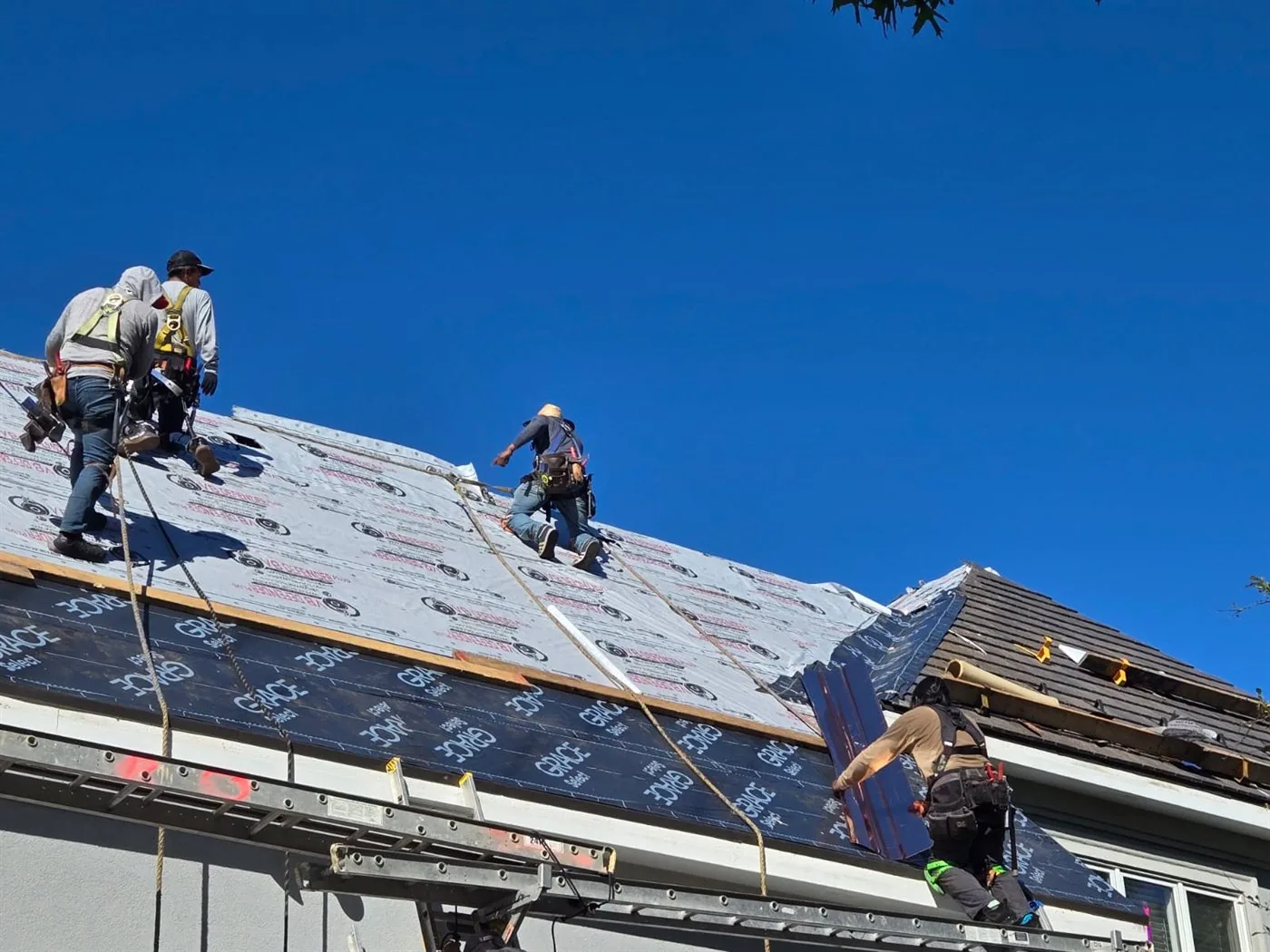
A brown stain runs from the parapet cap to the wall base, and the offering memo says roof in good condition. Both cannot be right. Better to learn which one is wrong before the earnest money goes hard.
A due diligence roof survey in Greenville, TX answers the roof questions a buyer or lender has inside the window they have. How old is each section. What is wet. What needs money in the first year. What it costs to replace.
We deliver numbers you can put in front of an investment committee. Not a sales pitch for a new roof. If the roof is fine, the survey says it is fine.
What does a buyer need to know about a roof before closing?
Four things. The age of each roof section. The condition today. The money needed in the first few years. And whether any warranty is real and transferable.
Roof age shapes price. A new owner who learns about a failing roof after closing pays for it on top of the purchase. A buyer who learns it before closing can push for a credit, a repair or a lower price.
Roofs also decide how a deal pencils. Reserves, lender holdbacks and insurance terms all lean on what the roof looks like. We write the survey so each of those readers can find their answer on one page.
For real estate investors and REITs that hold many buildings, the same survey format lets you compare targets side by side.
What does the survey find that a walk-through misses?
A broker walk-through looks at the ceiling and the roof hatch. A survey goes on the membrane. We check seams, laps, wall bases, drains, curbs, edge metal and every penetration, and we write down what we see.
We also look under the surface. An infrared moisture survey flags wet insulation that no one can see from above. A few cores confirm it and show the layers: how many, how old, what type. That tells you whether a recover is even possible.
On a large property, a drone flight covers ground fast and shows ponding, staining and blown-off ballast. It also keeps people off a roof that is not safe to walk.
The findings go into a condition report built for outside readers: sections, ratings, photos and prices.
Can the survey fit inside a closing clock?
Usually, yes. Most buildings take a short field visit and a few days to write. Tell us the dates and we work backward from them. If the contract gives a short inspection window, we schedule the roof walk first, before the other inspectors.
Access is the usual hold-up. We need the hatch key, any alarm codes, and a contact for tenants who may be on site. Get those to us early and the walk goes smoothly.
Weather can slip a drone flight or a moisture scan, since infrared work wants dry roofs and a clear sky. We plan a backup day when the forecast looks shaky. Spring inspection timing can help buyers document roof condition before a transaction closes.
Where a seller or tenant limits access, we say what we could and could not see. A survey with a stated limit is still more useful than none.
How do the numbers get used in price and loan talks?
Each roof section carries a repair price and a replacement price, plus a rough remaining life. A buyer turns those into a reserve or a price adjustment. A lender turns them into a holdback or a condition of the loan.
We give ranges, not a single point, since final bids depend on deck condition and what is under the membrane. Cost drivers get named: tear-off of layers, wet insulation, deck repair, new insulation to code, edge metal and access.
Buyers often use the survey to ask the seller for a repair before closing. Where a full replacement is likely, the capital plan shows when the money lands and what a replacement will involve.
The survey price follows roof area, access and testing. It is a small number next to a surprise reroof in year one.
Keep the current inspection, prior repair invoices, available warranty documents and any test results together. Separate confirmed conditions from seller statements and flag areas that could not be inspected. When a moisture scan or core is recommended, state the decision it would answer and the location chosen for the test. A buyer can then distinguish a priced repair from an unresolved risk and decide whether to negotiate scope, request access or plan a follow-up inspection after closing.
Which Greenville roofs deserve a second look before a deal?
The June 2019 storm route included Greenville and Campbell. On a roof of any age, compare the inspection findings with maintenance records before closing.
Retail is next. On shopping centers and the older masonry storefronts along Lee Street, we look hard at tenant patches, added penetrations and parapet wall bases, because multi-tenant roofs collect them. Greenville’s development figures include about 8,000 residential lots under development, alongside new retail, medical and school construction. A survey scope still starts with the property and transaction requirements. A young roof on a new center still gets the full walk, because a skipped detail on a two-year-old roof becomes the buyer's problem after closing.
Rockwall, on I-30, grew 26 percent from 2010 to 2020 and shares Greenville’s humid subtropical climate. Greenville’s industrial parks include Park West and the Business Air Park beside Majors Field. Orbis operates a roughly 1.03-million-square-foot industrial building in Greenville. For a transaction, start with measured roof area, safe access, representative testing and a documented condition report.
Commercial Roofing Questions
Who orders the survey, the buyer or the lender?
Either one can, and the answer changes who owns the report. A buyer usually orders it to guide price and reserves. A lender orders one to protect the loan. When both are in play, we write to the lender's template so one survey serves both.
Tell us who needs to rely on it, and we will word the findings with that reader in mind.
What if the seller will not let us core the roof?
Then we work with what is allowed and state the limit. Visual walks, drone photos and infrared scans do not need to cut the membrane. Cores do, and each one needs a patch.
Many sellers agree once they know we repair every core on the day. If they still refuse, the report notes it, and you can price in the unknown.
Can a survey tell me how many years the roof has left?
It gives a reasoned range, not a promise. We combine membrane condition, seam performance, moisture, repair history and local weather. A dry roof in good shape on a well-drained deck may run a long time. A bruised, wet roof may have a single season.
Ranges are useful because they match how reserves are set. A tight single number would be fiction.
We are refinancing, not buying. Does the lender still need this?
Often they ask for it, especially on older buildings or after a storm. A recent report that rates each roof section can keep a loan on schedule. A missing one can add a holdback.
If your last report is old, ask us for a refresh instead of a full redo. Walking the roof again takes less time than starting from zero.
Do you give a view on the price of the building?
No. We cover the roof only. Your broker and attorney handle price. What we hand you is the roof's age, its condition and what it will cost to fix or replace, so they have real numbers to work from.
If a roof item is large enough to move the price, we mark it on the first page.