Commercial Roofing in Campbell, TX
Hail leaves a pattern, not always a hole. Dimples can cross the sheet along the storm path, and a soft spot may signal crushed insulation.
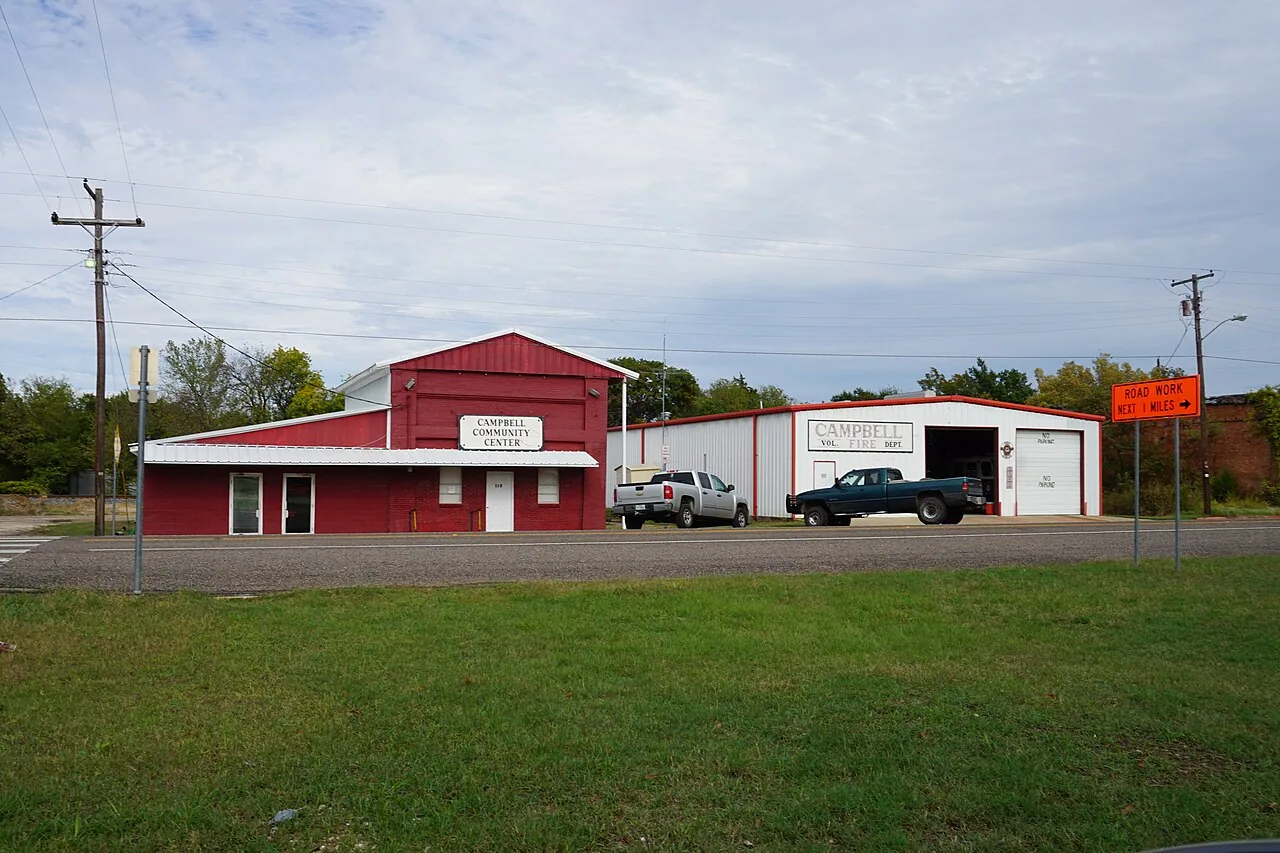
Commercial roofing in Campbell, TX is storm work first. The June 2019 storm path ran through Greenville and Campbell, producing roof damage and baseball-sized hail. The town sits ten miles east of Greenville on Interstate 30, at exits 101 and 104, with State Highway 24 crossing its northwest side. Commercial roofs near the exits and along the highway need a roof walk after a storm.
We photograph what the storm did and put a price on repairing now beside a price on waiting.
What did the 2019 storm leave on Campbell roofs?
In June 2019, Greenville and Campbell were both in a storm path that brought baseball-sized hail; Greenville’s measured straight-line gusts reached about 85 mph. The June 2019 Greenville damage came from straight-line winds near 85 mph, not a tornado. Wind can lift edges, bend coping and loosen panels; hail can bruise membranes and dent metal. An inspection records damage at each property rather than assuming every roof along the path was affected.
The trouble with bruising is that it hides. A sheet can look fine from the lot and still hold soft spots where the insulation has crushed. Those spots leak a year later, long after the claim window has shut. A building with known exposure and no post-storm inspection record warrants a roof walk.
After a storm, a commercial roof inspection records that property’s observed conditions. We mark every bruise on a roof plan, core the worst ones and tell you how much of the roof is still sound.
How can you tell hail damage from age?
By pattern. Age wears a roof evenly, with chalking, crazing and shrunken seams everywhere. Hail strikes in a scatter. It leaves round bruises, cracked coating and dented flashing, and those marks tend to cluster on the slopes that faced the storm.
We look for these signs.
- Soft, round spots in the membrane that give under a thumb.
- Fractured coating or exposed fabric in a circle.
- Dents in vent caps, drip edge and rooftop unit panels.
- Granule loss in bright rings on modified bitumen sheets.
- Cracks at laps that were stressed by a sudden impact.
Ten bruises across a roof may be a repair. A hundred may be a replacement. A hail damage roof repair scope should carry a count, a map and a price for each path, so you see the numbers instead of a sales pitch.
Who handles the insurance paperwork when a storm hits?
You file the claim, and we build the file. The adjuster needs a clear record of where the damage is, how it got there and what the repair costs. We bring photos, a marked roof plan, core samples where needed and an itemized scope. That makes the conversation shorter and the number closer to the real one.
We do not promise a claim result. Policies differ, and an adjuster makes the call. What we can do is show them what is on the roof. Help with a roof insurance claim starts at the first walk and runs through the final punch list.
Timing matters. Policies set windows for filing, and a second storm can muddy which damage came from which. Do not wait for a second hailstone to call.
What does a storm repair look like on a small commercial building?
Fast and in a set order. First the dry-in. If the roof has an open hole or a lifted panel, the crew tarps or panels it the same day. Second, the walk, with photos and a damage map. Third, the scope and price. Last, the weather window.
Work on a small roof can often finish in a few days. A shop or storefront might see a section of membrane replaced, flashing re-set, penetrations re-sealed and edge metal re-secured. Bigger damage means tear-off, insulation replacement and a new sheet.
When the roof is leaking now, call for emergency roof repair. Our crews answer around the clock, holidays included, and a temporary repair is usually in place before the next rain.
What does storm repair cost, and what drives the price?
Four things move it. How much of the sheet is bruised or torn. How much insulation is wet or crushed. How many penetrations, curbs and edges need new flashing. And how far the crew has to carry material to the roof.
A small building with a patchable roof may be a short job. A flat roof with widespread bruising and wet board is a replacement. The gap between those two outcomes is why we give you both numbers up front, with photos for each.
Do not forget the cost of waiting. A bruised roof that is left alone leaks through the next season, wets the insulation and turns a repair into a tear-off. A storm damage roof repair done now usually costs less than the same job next spring.
Does a highway location change how a roof ages?
Yes, in small ways. For a roof near a busy access road, check drains and membrane condition during maintenance; debris on the roof can restrict drainage regardless of where it came from.
Edge metal on exposed corners takes the first wind. Heat adds its own wear. In July 2022, the DFW record logged 27 days at or above 100 degrees. On each roof, inspect the membrane and sealants for heat-related wear before the next storm.
A yearly cleaning, a check of the edges and a quick look at the drains handle most of this. I-30 connects Campbell with Sulphur Springs to the east and Greenville to the west. For a roof in downtown Greenville, use its own inspection findings to set the repair scope, just as you would in Campbell.
Commercial Roofing Questions
The roof looks fine from the parking lot. Should we still check it after a hailstorm?
Yes. Bruising is felt, not seen. The sheet can look smooth while the insulation under it has crushed. A walk takes a few hours, and a thumb test across each slope shows whether the damage is there. Better to find out now than in a year when the ceiling stains.
How long do we have to file a storm claim after the hail?
Check the policy, because windows vary. Many carriers set a deadline, and a second storm can blur which damage belongs to which. We recommend a walk within days of any big hail event, and we write a dated condition report you can attach to the claim.
A panel on the shop roof lifted in the wind. Is that a repair or a replacement?
Often a repair, when the fasteners and the panel are sound. We re-set the panel, add fasteners, re-seal laps and check the edge metal. If the panel is bent, the deck is rusted or several panels have lifted, the scope grows. We tell you after the walk, with photos.
Why does a roof with only a few leaks need so many cores?
Because the leaks you can see are not the whole story. Cores show whether insulation is wet, how thick the layers are and whether the old sheet can take a recover. Four or five cores save you from pricing a patch that fails or a replacement you did not need.
Can you work around a store that stays open?
We plan for it. Staging sits away from the entrance, loud tear-off goes in the quiet hours and dry-in happens daily so no open section sits over the sales floor overnight. A short call with the manager before mobilization sets the schedule and the access.