Roof Capital Planning in Greenville, TX
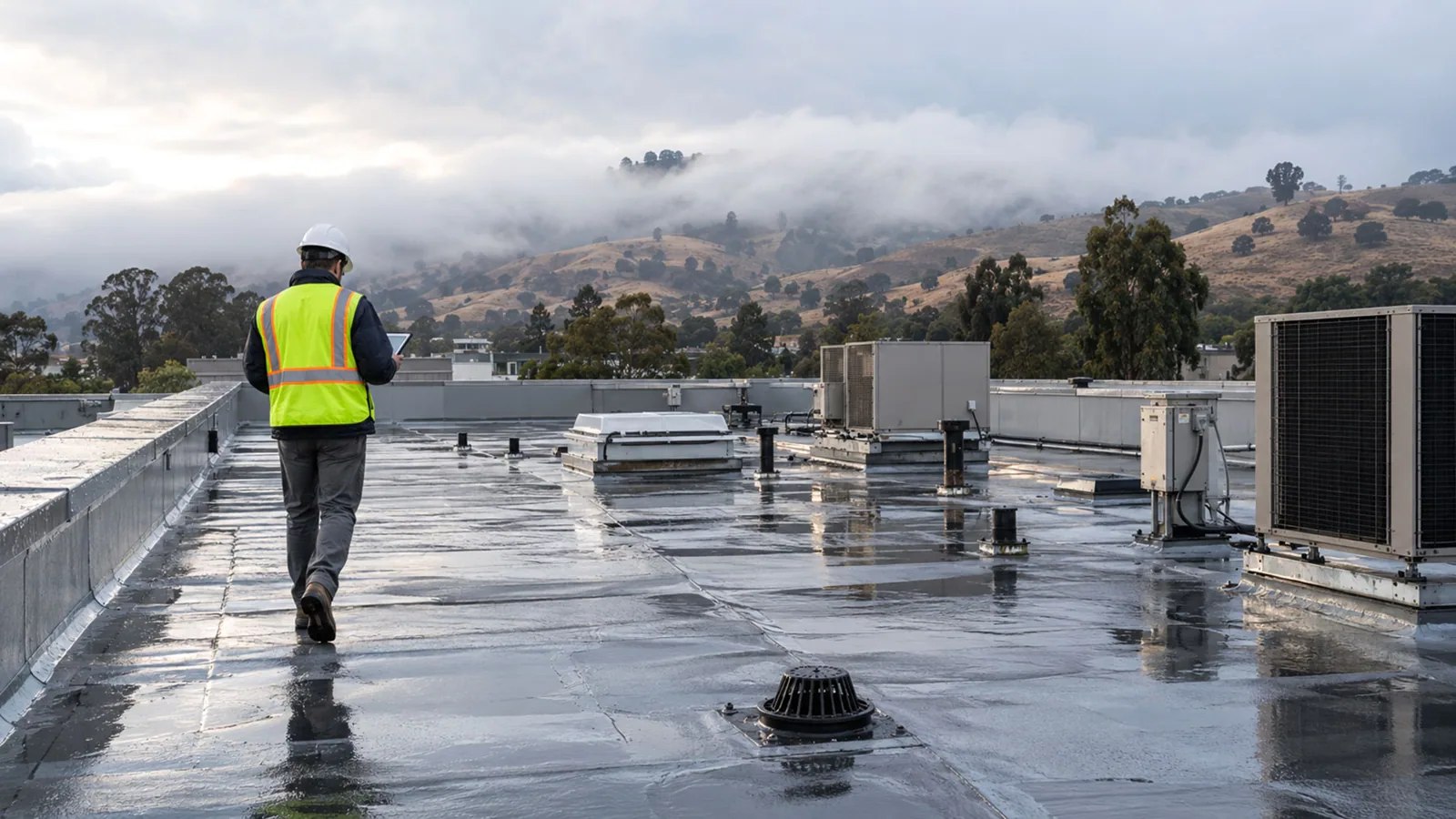
Blisters the size of dinner plates, spread across the south slope. The roof is not leaking yet. The budget does not have a line for it either. That gap is where an emergency replacement can begin.
Roof capital planning in Greenville, TX closes the gap. We look at each roof, say how many seasons it has left, and price the work that comes next. You get a schedule you can hand to a CFO or an ownership group.
Plans are only worth the walk behind them. A number pulled from roof age alone is a guess. A number built from a thumb in the membrane and a few cores is something you can spend against.
When does a roof stop being a repair and become a capital item?
When repairs stop buying time. One leak patched and holding is maintenance. Three patches in one area, each failing a year apart, is a roof telling you the membrane is done.
We watch for four signs. Wet insulation that keeps spreading. Laps and seams opening across the field. Membrane that has gone brittle or chalky. Repairs costing more each year than the last. Any two together usually means the roof belongs on the capital schedule.
Moisture is the deciding test. A dry roof with surface wear can often be restored. A wet one cannot be coated over. We confirm with an infrared survey and a few cores before anyone commits a number.
What moves the replacement number?
Size, first. Then everything on top of it. Tear-off of old layers, wet insulation that has to come out, deck repairs, new insulation to meet code, edge metal and the number of penetrations all push the price up or down.
Access can change the schedule as much as roof condition. A roof with a loading dock and a crane pad is quick to stage. A roof surrounded by tenants, parked cars and a school bus lane takes more care and more crew time.
System choice moves it too. A white TPO or PVC sheet costs differently than a modified bitumen build-up or a standing seam retrofit, and the cost curve changes with deck condition. We give you ranges by system on the same roof, so you can see the trade.
Greenville adopted the 2018 International Energy Conservation Code. Confirm which requirements apply to a planned reroof with the permitting authority before pricing insulation work. Ask the permit office, and we will price the insulation line at the same time.
How far ahead should a roof budget look?
Five years is the useful window. Beyond that, too much changes. Inside five years, you can see which roofs are near the end and spread the spend.
We write the plan in three bands. Year one holds the roofs that cannot wait: open leaks, bruised membrane, wet insulation. Years two and three hold roofs that are failing slowly. The rest hold roofs that are healthy and on a maintenance plan.
The plan updates every year from the roof files we keep. When a storm moves a roof from one band to another, you hear about it right away, not at the next budget meeting.
Replacements run best in a clear weather window. Set the work window from the project schedule, roof condition and forecast, with dry-in protection planned before tear-off. We book crews against that window, so the plan has dates and not just dollars.
Repair, recover or tear-off: which fits the plan?
All three have a place. A repair buys a season or two on a roof that is mostly sound. A recover adds a new membrane over a dry roof and skips the strip-off. A tear-off resets the clock, and it is the only choice when insulation is wet or the deck is soft.
A coating restoration sits between repair and recover on some roofs. It works when the membrane is dry, the seams are sound and the surface is just tired. It does not work over wet insulation, and we will say so before you sign.
The plan shows each option's price and what it buys in years. Owners pick on cash timing. Some want the lowest outlay this year. Others want the longest run before the next big spend. Both are fair, and the plan shows both.
What do Greenville storms do to a long-range plan?
They throw it off. The June 2019 storm brought 85 mph straight-line wind and baseball-sized hail, and a roof came down at a building in downtown Greenville. Any plan that assumed five more quiet seasons needed a rewrite after it.
So we build a storm reserve into the schedule. The review records measured area, observed edge condition and equipment exposure at each property, including roofs near Shelby Avenue, Majors Field and Park West.
Owners of occupied buildings plan against the same weather. School districts and Hunt Regional Medical Center on Joe Ramsey Boulevard hold roofs that cannot go offline in the middle of a term or a surgery schedule. Their plans work backward from the dates the building can give up. For a hospital roof, set the work window from the facility schedule, then fit the budget around it. For a local capital review, the roof record should identify the actual site, including properties in the Park West industrial area. For portfolios with buildings in Commerce and Sulphur Springs, a shared condition scale makes replacement timing easier to compare across roofs.
Commercial Roofing Questions
How do I know which roof to replace first when I own several?
Rank them by what a failure would cost you, not by age. A mid-life roof over a tenant who cannot move out outranks an older roof over an empty storage bay. We grade each roof, then sort by consequence, condition and how much a repair still buys.
The first roof on the list is rarely the oldest one. It is the one where a leak would hurt most this year.
Should we spread replacements evenly across the next few years?
Try to, but let the roofs set the pace. Even spending is easier on a budget, yet a roof that is failing in year one does not wait for year three. We shift the order, then pull healthy roofs forward only if a contractor discount or a weather window makes it sensible.
Big-box and distribution center roofs are the biggest line items, so they usually drive the schedule.
What does a plan cost, and what do we get in writing?
The plan itself costs far less than one emergency tear-off. Price follows the number of roofs, their size and how easy they are to reach. You get a roof-by-roof schedule, repair and replacement prices side by side, and the reasons behind each rating.
It builds on our condition reports, so each line points back to dated photos.
Can a coating push a replacement back a few years?
On the right roof, yes. The membrane has to be dry, the seams sound and the deck solid. We test first. If water has gotten into the insulation, a coating traps it and the roof gets worse under a pretty surface.
When it fits, a coating is one of the cheapest ways to stretch a plan. When it does not, we say so before you spend a dollar.
How do I pitch a roof budget to an owner who sees only a dollar number?
Show the cost of waiting beside the cost of acting. A repair done now has one price. The same repair next spring, after a wet winter and one more hail season, has a higher one. Photos of the failing area make the case better than any argument.
We hand you both numbers and the pictures. The photos put the condition beside the cost, so the owner can make the decision from the same record.