Roof Asset Management in Greenville, TX
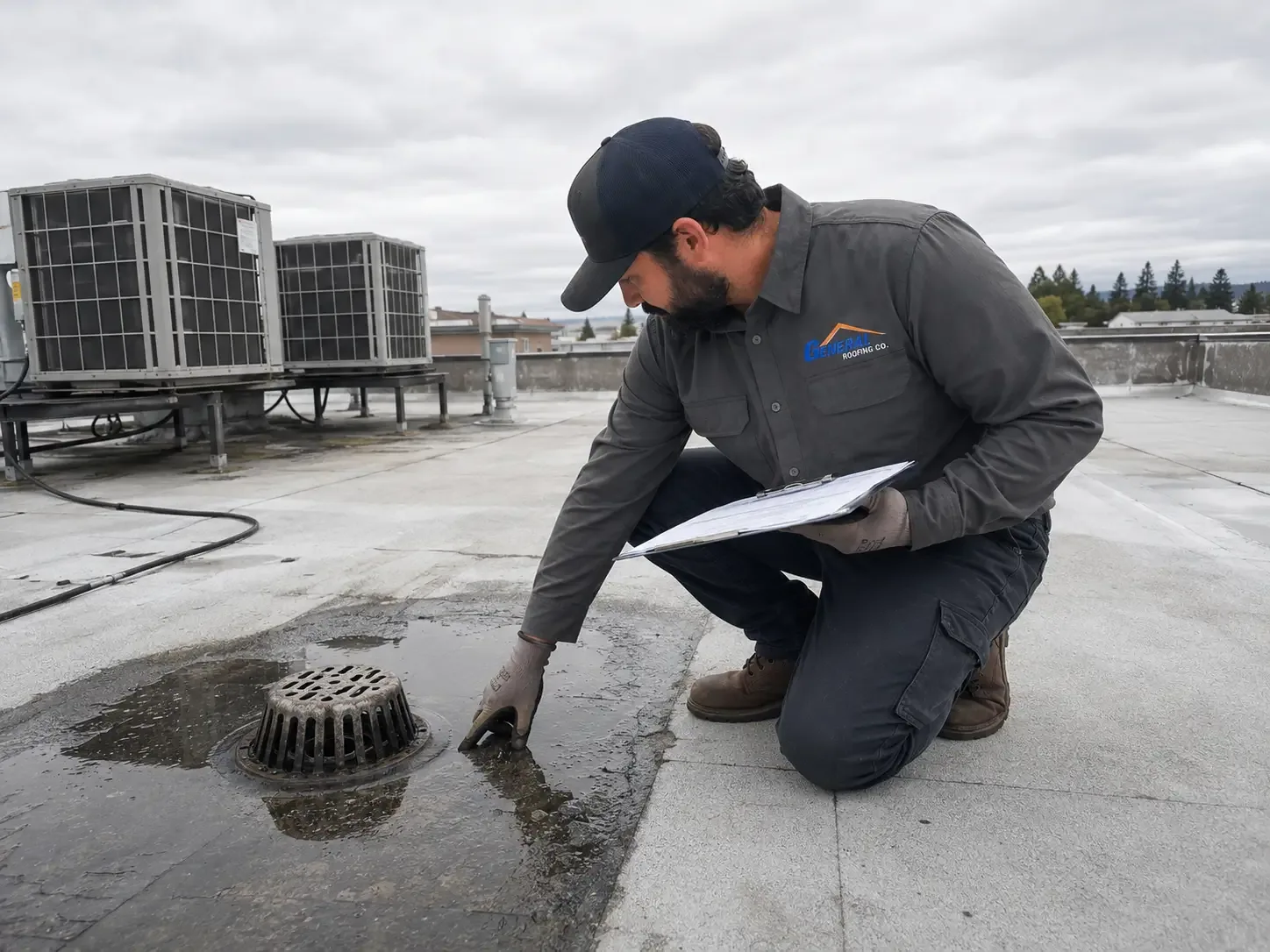
Three undated patches leave the roof’s repair history scattered through invoices, texts and staff memory.
Roof asset management in Greenville, TX fixes that. Each roof gets a file: age, system, repairs, photos, last walk date and a condition grade. When someone asks what the roof needs, you open the file. You do not guess.
The payoff is timing: a visible need can be budgeted before a leak forces emergency replacement.
What goes into a roof file?
The basics first. Address, building use, roof area, system type and the age of each roof section. Many buildings carry two or three sections from different years. A built-up wing beside a newer TPO addition is common, and each section gets its own line.
Then the history. Every leak call, every repair, every contractor who touched it. We pull what exists and fill the gaps by walking the roof. Old patches tell you plenty. A fresh patch beside a failed one means the first fix missed the cause.
The file also holds:
- Dated photos of seams, wall bases, drains and curbs
- Moisture scan or core results, where they were run
- Rooftop equipment and who services it
- Warranty terms and the dates they run to
- Open punch list items and who owns them
It is paper and photos. No login required. You can hand it to a lender, a buyer or an adjuster.
How do you grade the condition of a roof?
We walk it. Thumb on the membrane, eyes on the laps, a probe at every wall base. Software cannot press a thumb into a hail bruise. The grade comes from what the crew finds, not from the age of the roof alone.
Each section lands in one of four bands: sound, watch, repair soon, replace. The bands stay plain on purpose. A facility manager reads them in ten seconds.
Age lies. A ten-year-old roof with ponding water and split laps grades worse than a twenty-year-old roof that was kept clean and patched on time. Two roofs of the same age can sit in different bands, and the file shows why.
Where the surface hides the answer, we add testing. An infrared moisture survey finds wet insulation under a membrane that looks fine. A core confirms it. Then the grade rests on evidence.
What does it cost to keep roofs on file?
Less than one surprise replacement. That is the right answer. The price of a first pass follows roof area, access and the number of sections per building. Many small roofs take more crew time than one big plant. Roofs crowded with equipment take longer to walk.
After the first pass, updates run light. We re-walk, re-photo and change the grades that moved. Most of the cost sits in the first visit. A preventive maintenance visit can double as the yearly update, so you are not paying for two trips.
The savings are harder to price but easy to see. Early repairs stay small. Replacements get scheduled in a weather window instead of forced by a storm. Bids come in cleaner because the scope is already written down.
Which roofs get the money first?
The file ranks them. We sort on three things: how close the roof is to failing, what a leak would hit inside, and how long a repair buys you. A leak over a server closet outranks a leak over an empty bay, even on a younger roof.
Then the work falls into three piles. Repair now, repair this season, plan a replacement. Each roof carries a rough repair price and a rough replacement price. You see both numbers side by side.
That list feeds your capital planning. Owners with many buildings use it to spread replacements across several years instead of eating them all at once. A property manager uses it to answer an owner who asks why the roof budget moved. Our written condition reports carry the same grades in a form you can print.
How does Greenville weather move a roof's grade?
Fast, when a storm comes through. Baseball-sized hail and 85 mph straight-line wind rode through Greenville in June 2019. A roof graded sound in May could carry bruising by June. So we re-walk after any big storm and update the file that same week.
Heat does the slow work. DFW hit 100 degrees on 27 days in July 2022 and on 31 in July 1980, and a big flat roof bakes through every one of them. Membranes age, sealants dry and laps open at the walls. Orbis operates a roughly 1.03-million-square-foot plant in Greenville. Measure the roof and record its materials and condition before setting a maintenance program. The file tracks that drift year over year, so you see the slope before the failure.
Hunt County tornado history adds a different risk. In April 2014 an EF1 east of Merit damaged one structure close to FM 1569 and FM 903, pulling away metal roof and wall panels. Metal edges and fasteners lift first, so they get their own line in every file.
Who walks the roofs, and how often?
A small crew with a camera and a probe. Two visits a year is the working rhythm: one after storm season, one before winter. Add a visit after any hail or wind event. We schedule around tenants and plant shifts, and we stay off occupied space where we can.
A single building takes a short first visit. A campus or a string of warehouse roofs goes building by building, usually in the order of your leaks. Big industrial buildings take the longest to walk. The 315,000 square foot Brakebush Brothers plant in the Park West Industrial Park shows the building scale there; we measure each roof separately before setting its inspection sequence.
Owners who hold many buildings through a property management company usually want one file format across all of them, whether the buildings sit in Greenville or out in Rockwall and McKinney. We build it that way from the first roof.
Commercial Roofing Questions
Our roofs went on in different years and nobody kept the papers. Where do we start?
Start with a walk, not the paperwork. Roofs show their age. Layers, patch styles, fastener heads and membrane color all give a rough date, and the building owner's files can confirm it later. We build the file from what is on the roof and add records as they turn up.
Do the worst-looking building first. A fresh grade there usually pays for the rest of the exercise within one budget cycle.
Do we need special software to track this?
No. A spreadsheet and a folder of dated photos will do the job, as long as every roof section has its own row and every visit adds to it. Software helps once you hold many roofs. It does not replace the walk.
We hand over a file you can open on any computer. If you already run a work order system, we match its building names so the two line up.
What about a roof still under manufacturer warranty?
Put the warranty page at the front of that roof's file. The terms say what maintenance is required, who may repair the membrane and what has to be reported. Miss one and the coverage can lapse without a word.
We read the document and mark the dates and conditions in the file. Keeping those dates straight is the core of warranty management, and the roof file carries them.
When should the grades be redone after a hail storm?
Within days, while the bruising and fresh debris are still easy to read. Hail marks fade into general wear after a season of heat, and an adjuster will ask what changed. A file with a spring photo set from before the storm answers that question fast.
Dated before-and-after photos also support a claim, and insurance claim assistance goes faster when the adjuster can see what the roof looked like in spring.
Can a roof file help when a buyer or lender asks about roof age?
It is the first thing they want. A buyer wants age, condition and a plan, in that order. A file with photos and two repair-or-replace numbers per roof cuts a week of back and forth.
Pull the file before the question lands. A roof with a clear history sells easier than a roof with a mystery.