Soprema Roofing Systems in Greenville, TX
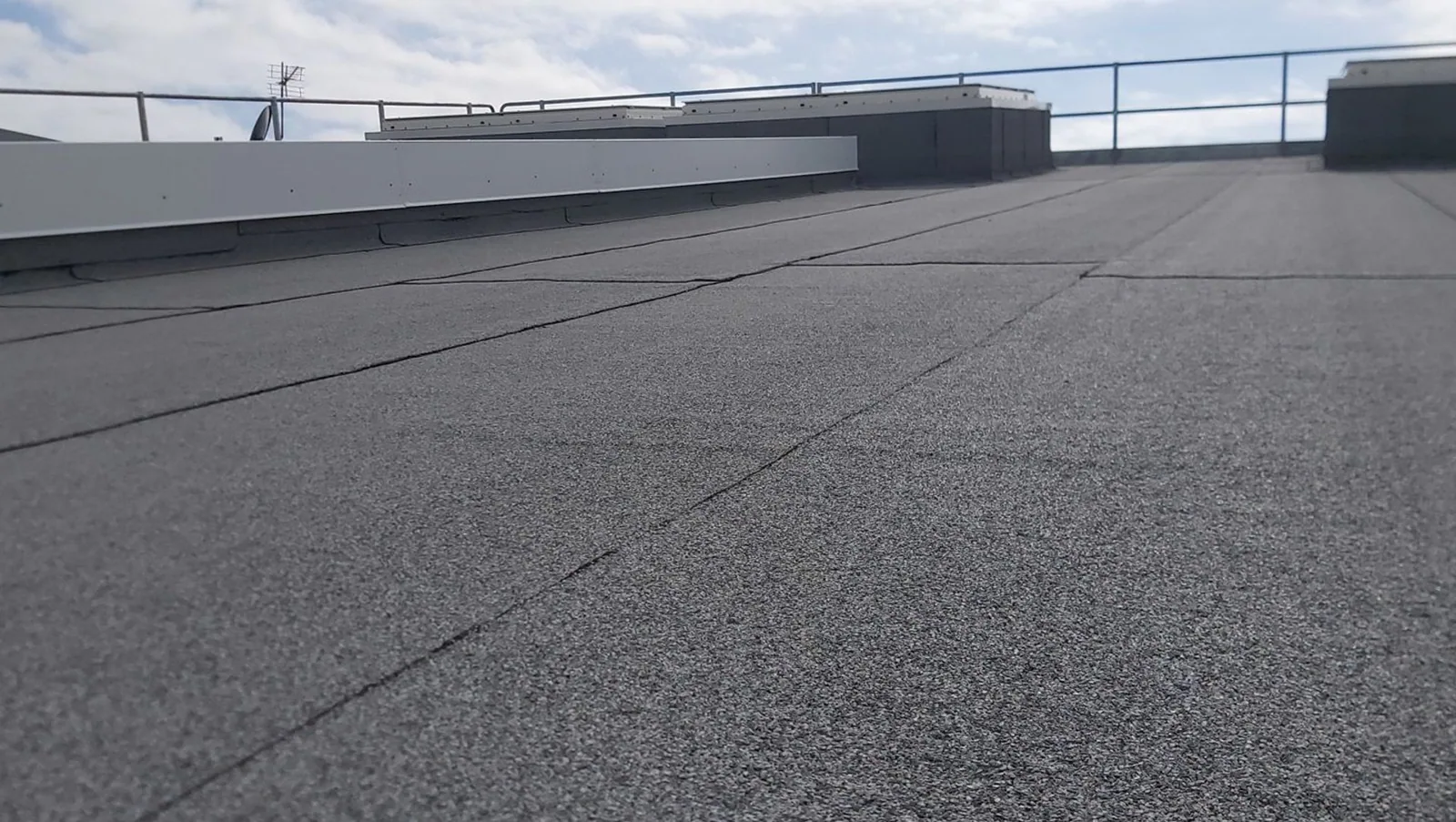
A dark crescent of old mastic around a pipe tells you a flashing was rushed. The tar has slumped, cracked and pulled away on the uphill side. Water follows that crack straight into the deck.
Most leaks start at a detail, not in the open field. Soprema makes modified bitumen sheets, liquid-applied flashing resins and polyiso insulation, and we install, repair and maintain them around Greenville, TX. Each one reacts differently to Greenville sun, hail and the shape of the details, and each moves the price and the days on the roof.
What does Soprema make, and where does it fit?
Three product groups matter on a flat roof. Sopralene is the SBS modified bitumen sheet, sold for torch, self-adhered and hot-applied installs. Alsan RS is a liquid-applied resin used for flashing and waterproofing at tricky spots. Sopra-ISO is the polyiso insulation that sits under the surface.
It is a layered, redundant way to build a roof, the same logic as any modified bitumen roofing system. The same sheet type is sold by Johns Manville and GAF, so we can price one roof under all three.
Warranty terms belong to Soprema. Ask for the current requirements in writing before award, and hand the same paper to every bidder so the numbers compare.
Why does a flashing fail before the field of the roof does?
It moves more. Curbs, pipes, drains and walls flex with heat and wind, and the field of the roof mostly does not. Sealant dries out, caulk shrinks and laps open. The sun does the rest.
A roof with many penetrations has many chances to leak. On an industrial roof with rooftop units, conduit runs and exhaust stacks, the detail count drives the repair bill more than the square footage does.
Skylight and penetration flashing work and flashing failure repair start at those spots first. A day on flashing often buys another season for the whole roof.
We check the sealant at each one, press the base flashing for movement and look for pitch pockets that have sunk. Anything that has cracked gets cut out and rebuilt, not painted over.
When does liquid-applied flashing beat a prefabricated boot?
When the shape is odd. A boot fits a round pipe. It does not fit a bundle of conduits, an angled support or a curb with six corners. Liquid resin flows around the shape and cures into one continuous layer. No lap, no gap.
It also cures faster than most mastics, which helps when the forecast turns. We still need a clean, dry surface and a primer where the maker calls for one.
Where a pipe is simple and the boot is new, we use the boot. We pick the tool that fits the detail, not the one that makes the invoice bigger.
Either way, the finished flashing gets a photo and a spot on the roof map, so the next crew knows what went where.
Torch, self-adhered or hot-applied: which fits a building that stays open?
Self-adhered is the quiet option. No flame, less smoke, fewer permits to chase. It needs a dry, primed deck and mild weather. Torch work moves faster on a big roof and gives a firm bond, but demands fire watch and care near combustibles.
Institutions raise the stakes. Terrell State Hospital in Terrell is a 316-bed psychiatric campus. At institutional or military properties, confirm the owner’s access requirements before planning delivery or roof work. The system and work sequence still depend on the roof assembly and facility schedule.
On National Guard armory roofing, escorts, badge checks and set work hours are worked out before the first material goes up.
What do Greenville storms do to a layered roof?
Hail strips granules and bruises the top ply. The June 19, 2019 storm brought baseball-sized stones and 85 mph wind. A modified sheet takes that better than a thin single-ply, but not for free. Bare spots show through and the asphalt below ages in the sun.
Heat finishes what hail starts. Granule loss and crazing speed up when the mat is exposed, and July 2022 handed DFW 27 triple-digit days to prove it.
After a storm we walk the roof, mark every bare spot and bruise and photo it. Then storm damage roof repair starts with the worst, and your adjuster gets a clean write-up.
How much does the job run, and how long is the crew on the roof?
Cost follows scope. Tear-off or recover, insulation, deck repair, flashing count and staging all move it. A multi-ply system takes more crew hours than a single-ply, so labor is a larger share of the invoice. In return you get layers that cover each other.
Timing follows the weather window. We open small, dry in the same day and check radar before we start. Fall is often the cleanest season for hot work and adhesive curing.
On a big plant roof like the ones along Shelby Avenue and in Park West, a long run of sheet goes down fast once the deck is dry and the details are laid out. The slow part is the flashing. We budget more crew hours there, and we do the details as the field goes down so no corner sits open overnight.
Build the estimate from measured areas and the number of transitions, drains and penetrations, not from a system label. Hot-applied work also needs a defined material route, fire-control plan and weather window; self-adhered details have different surface and temperature requirements. Identify those assumptions with the schedule, then include a daily tie-in plan so the owner knows how each section will remain watertight if weather interrupts production.
Keep that record current.
Commercial Roofing Questions
Can Alsan liquid flashing go over my old mastic?
Only after prep. Old mastic has to be cleaned, cut back where it has failed and primed if the maker calls for it. We test a small area first. If the old material is soft or oily, we remove it. Painting resin over a dirty surface looks neat for a month and fails by the next summer.
Do I need a torch on a Soprema modified bitumen roof?
No. Self-adhered and hot-applied installs skip the open flame. A torch moves fast and bonds firmly, but it needs fire watch and extra permits near occupied space. On a hospital or school roof we usually choose the quiet option. On an empty warehouse with clean access, a torch may save days.
How do I find a small leak on a layered roof?
Start at the details and work outward. Most leaks begin at a curb, drain, pipe or wall base. We mark the area, run a moisture scan and probe the flashing. On a roof with old patches, the leak often sits one patch away from where the water drips inside. We trace it before we cut.
Will hail in Terrell or Kaufman damage a modified bitumen roof?
It can, mostly by stripping granules and bruising the top ply. Larger stones crack the surface. Spring storms across North Texas can throw softball-sized hail, so a roof in Kaufman or Terrell is exposed too. We check after every storm and document the damage before the next rain.
What can I do before a Soprema roof job starts?
Tell your tenants and your shipping lead the dates, and clear the ground below the work area. Move parked vehicles away from the lift and the hoist. Give us a point of contact who can answer the phone. We handle the roof, the staging and the cleanup, and we go over the punch list with you before the crew leaves site.