Acrylic Roof Coating Systems in Greenville, TX
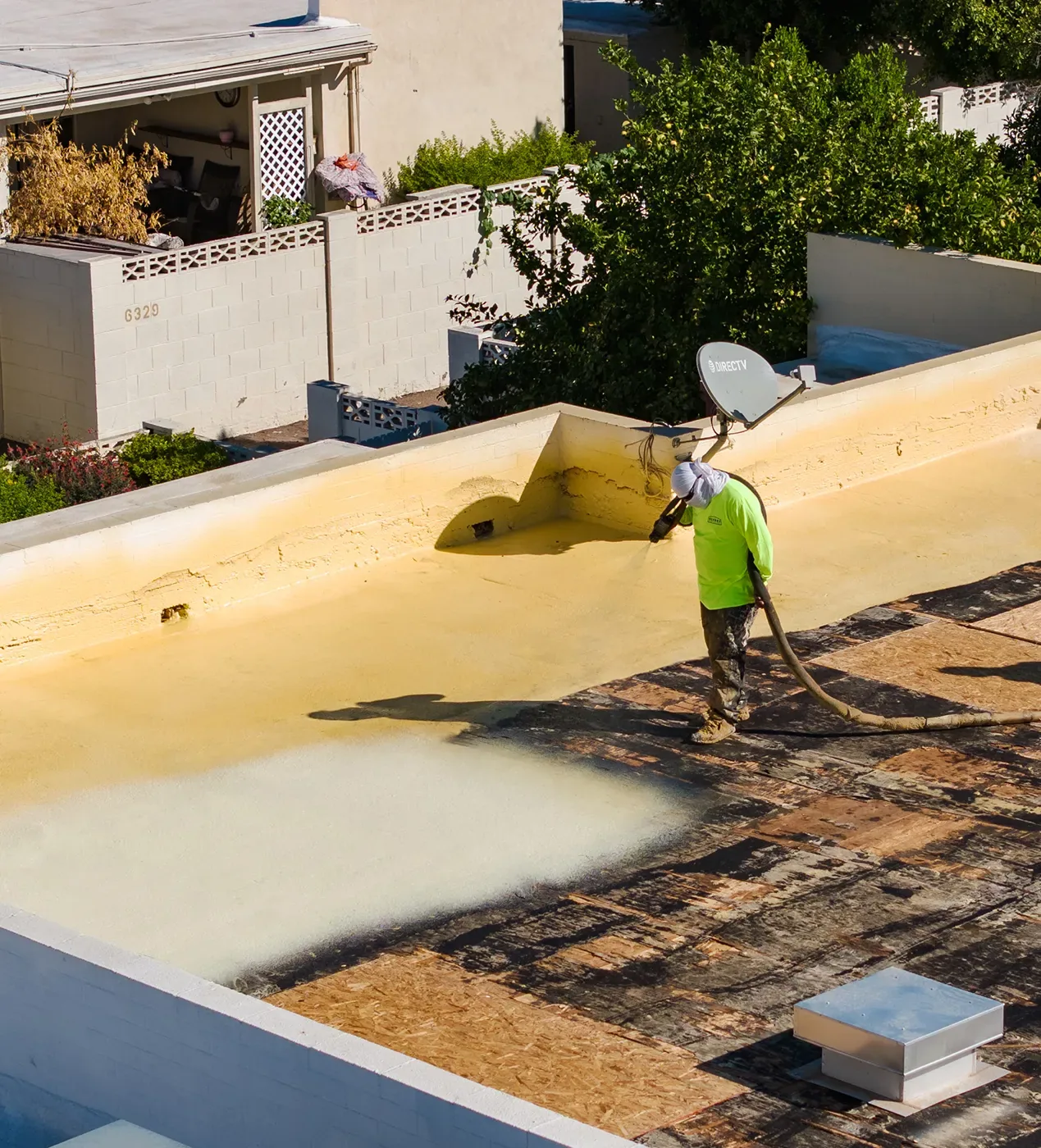
Cream-colored patches on a once-white roof mean the coating is thinning. The color is the clock. Catch it while the film still covers the membrane and a fresh coat resets that clock for far less than a replacement.
An acrylic coating system in Greenville, TX is a water-based film rolled or sprayed onto a roof that is still sound. It dries into a bright, reflective skin that cuts heat and seals small defects. It costs less than the other coatings and it is easy to maintain. It also has a hard limit on standing water, and we tell owners about that limit first.
Where does acrylic make sense, and where does it not?
Acrylic fits roofs that drain. A sloped metal building, a well-pitched modified bitumen roof or a built-up roof with working drains all suit it. The film is water-based, so it dries by evaporation and cleans up with water.
It is a poor choice where water stands for days. Ponded water can soften an acrylic film and wash it out. If a roof ponds, either we fix the slope and drains first or we move to silicone coating systems, which hold up under standing water.
Acrylic also shares ground with spray polyurethane foam roofing, where it can serve as the protective topcoat on foam that drains properly. The choice there is all about drainage and traffic. We look at both before we say which one belongs on the foam.
What does the roof need before acrylic goes on?
A clean, dry, sound surface. Acrylic will not hide dirt, loose laps or wet insulation. It will stick to the dirt and then peel off with it.
We start with a commercial roof inspection. We walk the roof, mark every open seam, split lap and failed flashing and check the fasteners on metal. A few cores tell us whether the insulation is dry. If the deck or insulation is wet, the coating is the wrong tool and we say so.
Then comes the wash, the repairs and the seam work. Seams and penetrations are reinforced with fabric and mastic. Rust is treated. Old, chalky coatings are cleaned to bare, sound film. Some surfaces need a primer, and we run a bond test before we buy material.
What does acrylic cost, and why is it the lower number?
Acrylic material is the least expensive of the common coatings, and the labor is simple. That is why it is the usual pick for a roof that drains and needs a reset. The things that move the final number are:
- How much seam and flashing repair comes before the coating.
- How many coats the film needs to reach full thickness.
- Whether a primer is required on that substrate.
- Roof size, access and how many curbs and pipes there are.
- How much time the weather takes out of the schedule.
Acrylic goes on thinner per coat than some systems, so it often takes more than one pass. We put coats and dry-film thickness on the written scope. That lets you compare our price with another bid line by line, and it keeps a cheap bid from hiding a thin film.
Cost also includes the next recoat. Acrylic bonds to itself, so a maintenance coat later is straightforward. A lower first price plus a simple recoat is the whole case for it. That is the same logic as a preventive roof maintenance program: small, regular work in place of a large repair.
How many coats does it take, and how big is the weather window?
Most acrylic jobs go on in two or more coats, with dry time between them. A crew can move through a large deck quickly, but the window is the hard part. Acrylic needs a dry surface, no dew, no rain on the way and temperatures in the range the maker allows. A cloud that shows up at two in the afternoon can wash a fresh film right off the deck.
North Texas spring storms can narrow the workable weather window. We check the forecast, surface temperature and substrate conditions before mobilizing. July heat can flash-dry a film and leave blisters if application runs in the wrong hours, so crews start early and follow the product’s application range. September and October often provide more workable stretches, but the day’s conditions still decide.
Near Greenville Business Air Park, confirm property access and staging requirements before coating work begins. Keep material and equipment in the approved staging area, and protect active travel routes while the surface cures.
What do Greenville storms and summers do to an acrylic film?
Sun is the daily load. DFW recorded 27 days at 100 degrees or higher in July 2022. A bright acrylic coat reflects much of that heat and slows aging of the membrane below. Greenville’s Partsmaster warehouse sits in the industrial area south of Highway 380. A coating estimate starts with measured roof sections and adhesion tests.
Hail is the weak spot. In June 2019, baseball-sized hail and strong straight-line wind damaged a church sanctuary on Joe Ramsey Boulevard and collapsed a roof on Lee Street in Greenville. A thin acrylic film cannot take that kind of impact. After a storm we check for ponding water and low spots too, because standing water can break acrylic down.
Downtown, older masonry commercial buildings line Lee Street and Washington Street. Where a low-slope roof has a sound, dry substrate and working drainage, a coating may fit. The drains and scuppers come first, since a roof behind a parapet can hold water.
How do you keep an acrylic roof going year after year?
The film wears from the top down, so we check it once a year and after every big storm. We look for chalking, thin spots, cracked seams and anywhere the coating has pulled back from a curb. Small repairs are quick. A neglected film turns into a replacement.
When the coat gets thin, we clean the roof and recoat. Because acrylic bonds to itself, that recoat is simple and cheap compared with starting over. A roof coating and restoration cycle runs that way, and the next inspection date goes in your records so it does not slip.
Commercial Roofing Questions
How long does an acrylic coating last before it needs another coat?
The film wears from the top down, and the rate depends on how thick it went on, how much sun it takes and how well the roof drains. We do not promise a number. We check the film each year and recoat while it is thin but intact. That is cheaper than waiting until the membrane underneath is exposed and damaged.
Can acrylic go on a roof that ponds water?
Not where water stands for days. Ponding softens the film and it peels. If the ponds come from clogged drains, we clear them and coat. If they come from a sagging deck or flat spots, we either build up the low areas or choose silicone, which handles standing water. We decide that on the roof, not from the office.
Do I have to clean the roof first, or will the coating cover the dirt?
Cleaning comes first. Acrylic bonds to whatever is on the surface, and dirt makes a poor base. We pressure wash, let it dry and then spot-check adhesion. Skipping that step is a common reason a coating fails early, and it is the easiest one to prevent.
What temperature and weather do you need on coating day?
Mild, dry, with no rain coming and no dew on the deck. Very hot surfaces can blister the film. Cool, damp mornings slow the cure. We watch the forecast, test the surface and start early in summer. When conditions slip, we stop and finish the next day instead of pushing a bad application.
Can you recoat an old acrylic job that another company did?
Yes, after a bond test and a close look at what is left. If the old film is sound, we clean it and add a new coat. If it is peeling or sitting over wet insulation, we strip the bad areas and fix the roof first. We photograph the condition so you can see what we found.