Spray Polyurethane Foam (SPF) Roofing in Greenville, TX
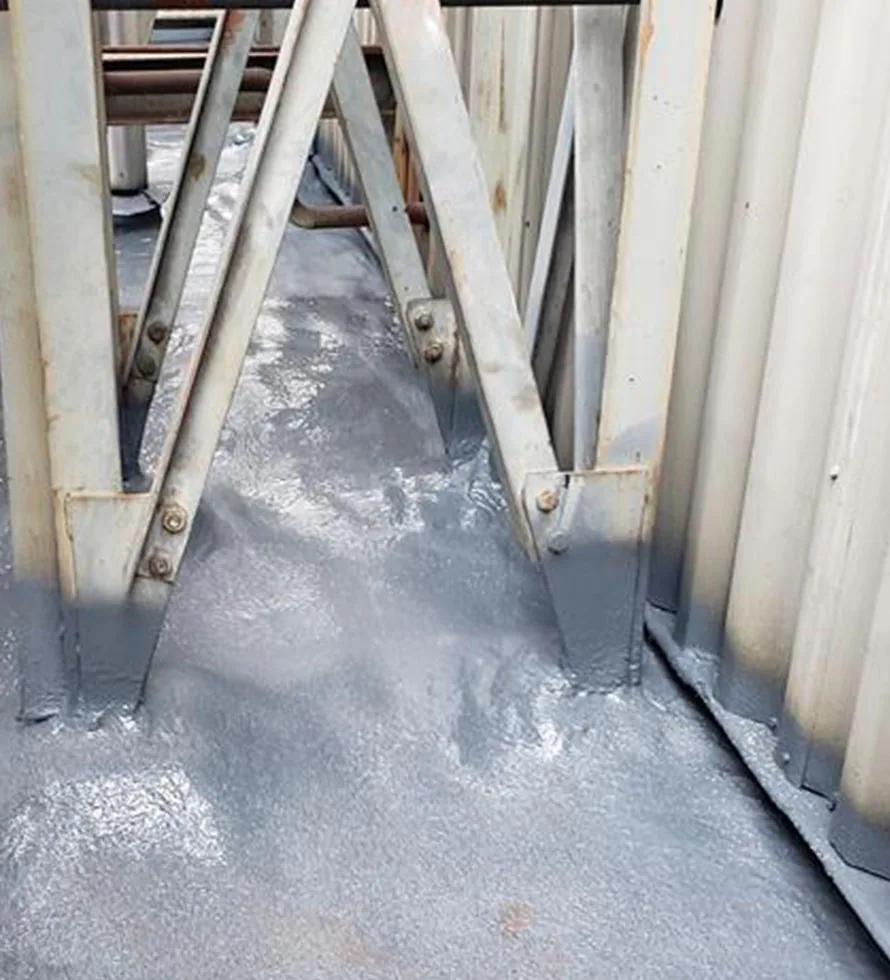
A foam roof gone chalky and pale has lost its coat. The foam underneath still works, but the sun is now eating it. That is a cheap fix this season and an expensive one three seasons from now.
Spray polyurethane foam roofing in Greenville, TX is a two-part liquid sprayed onto the deck. It rises into one unbroken layer of closed-cell foam and cures hard. It insulates and seals in a single pass. It also needs a dry deck, a calm morning and a crew that has run a rig before. We walk the roof first and tell you plainly whether foam fits your building.
What actually goes on the deck, and in what order?
The deck comes first. We clean it, test it for moisture and fix anything loose. Foam bonds to clean, dry concrete, metal, wood and many old membranes. It does not bond to dust, oil or standing water.
Then the crew sprays thin passes and builds thickness until the roof reaches the depth the design calls for. Foam can be built thicker toward the drains, so it corrects low spots as it goes.
Bare foam will not last in the sun. The finish is a protective coating, usually silicone or acrylic, with granules added where people walk. Each behaves differently over foam. Silicone coating systems shrug off ponded water. Acrylic coating systems cost less to put down and suit roofs that drain well.
Does foam suit my roof, or should I go another way?
Foam shines on busy roofs. Curbs, pipes, vents, drains and equipment stands all get wrapped in the same layer. There are no seams to split and no laps to chase.
It also works as a recover over a sound old roof. If an infrared moisture survey and a few cores show dry insulation, we can spray right over the old membrane or built-up surface. You skip the tear-off and the weeks of staging.
Foam is a poor fit where wet insulation is widespread. It is a poor fit where heavy foot traffic will chew the coating. It is also a poor fit where the building cannot tolerate overspray and fumes during application. In those cases we steer you toward a single-ply, a modified bitumen system or a metal roof retrofit instead.
What does a foam roof cost, and what moves the number?
Foam pricing follows conditions we can measure:
- How thick the foam must be to drain and to carry the insulation the building needs.
- How much wet or failed insulation has to be cut out first.
- Which coating goes on top, and how many coats.
- How many penetrations, curbs and edges need detail work.
- How far the crew has to haul material and hose up the building.
- How many weather days the schedule can absorb.
Foam also adds insulation, and the energy code the city adopted is the 2018 IECC. We check how a foam thickness fits that code before we price it. Greenville Community Development issues permits for commercial repairs and reroofing. Confirm current project requirements with the permitting authority before work is scheduled.
You get the number in writing, split into foam, coating and prep. We also price the wait on a roof that is already leaking.
How long does spraying take, and what does the weather have to do with it?
Spraying is fast once everything is staged. The rig sets up on the ground and hoses run up the building. A crew can foam a lot of deck in a day, and the coating follows soon after because bare foam should not sit exposed.
The weather window is the real schedule. Foam needs a dry deck, low wind and surface temperatures inside the maker's range. Dew in the morning can push a start back. A gust carries overspray onto parked cars. Plan foam application around the coating manufacturer’s temperature and weather limits, and confirm conditions before mobilization.
On an industrial roof in Park West along SH 380 or the broader SH 66 and US 380 corridor, we stage work in sections. Each section is dried in and coated before we move on. On occupied buildings we shut down outside-air intakes near the work, post notice to tenants and keep the staging area clear of doors and dock traffic.
How does foam stand up to Greenville hail and heat?
Foam is tough but not hail-proof. The June 2019 storm hit Greenville with 85 mph wind and baseball-sized hail. It collapsed a roof on Lee Street downtown and badly damaged a church sanctuary roof on Joe Ramsey Boulevard. Stones that size bruise foam and crack the coating over the bruise, and a bruise holds water.
After a hail event we walk the roof, press on the soft spots and core the worst ones. Small bruises get patched with foam and recoated. Widespread damage means a full recoat, and sometimes a tougher coating or added granules. A hail damage roof repair follows the same steps on every roof type.
Wind is a different story. Foam is bonded across the whole deck, so there are no fasteners to back out. The weak point is the edge. Hunt County has logged 75 tornadoes since 1680, and the April 2014 EF1 east of Merit left one structure near FM 1569 with part of its metal roof and wall panels gone. We tie the foam into solid edge metal and fasten that metal like it matters.
Heat is the steady enemy. A foam roof needs a protective coating compatible with the system. Specify the product and follow its application requirements before the surface is exposed to summer heat.
What do we look for when a foam roof is already up there?
We start with the coating. Chalking means it is thinning. Pinholes and cracks mean water has a way in. Blisters mean the foam has lost its bond to the deck or trapped moisture is pushing up.
Then we check the traffic paths. Foam crushes under repeated foot traffic, so worn paths near rooftop units are where we expect damage first.
We core a few spots to check foam thickness, density and what is underneath. A foam roof in good shape can often take a fresh coat and run another cycle. That is the cheapest way to extend one, and it is the logic of roof coating and restoration. A roof with wet foam needs a different conversation, and we have it before you spend anything. On foam roofs in Commerce and Sulphur Springs, document coating wear and exposed foam by roof section so repair quantities reflect what is actually open.
Commercial Roofing Questions
How thick should the foam be on my roof?
Thick enough to shed water and carry the insulation the building needs, and no thicker. We set the target after coring and checking slope. Low spots get extra depth so the roof drains. Thin foam is cheap to spray and expensive to repair.
Can you spray foam over my old roof, or does everything come off?
Often the old roof stays. If cores and a thermal scan show the insulation under the membrane is dry, foam can bond right over it. If the insulation is wet in large areas, that wet material has to be cut out first. We price the wet sections separately and show you photos first.
What happens to my tenants while the roof is being sprayed?
They get a notice, a clear staging area and a shutdown of any air intake near the work. Spraying makes odor and fine overspray, so we watch the wind and protect cars and glass. We move the noisiest steps outside business hours when the building needs it.
How long before the coating on a foam roof needs redoing?
The coating is the wear layer, so that is the clock. How fast it goes depends on the coating type, how many coats went down and how much sun and foot traffic it sees. We inspect it every year and after every hail event. A fresh coat laid before the foam is exposed costs a fraction of replacing foam that has been chewed by the sun.
Will a hailstorm ruin a foam roof?
Large hail will bruise it, and bruises left alone will leak. Small hail usually leaves the coating intact. After any big storm we walk the roof, mark every soft spot and photo it for your insurance file. Most damage is patched with foam and recoated. A roof is only a loss when the foam has been broken through across a wide area.