Silicone Roof Coating Systems in Greenville, TX
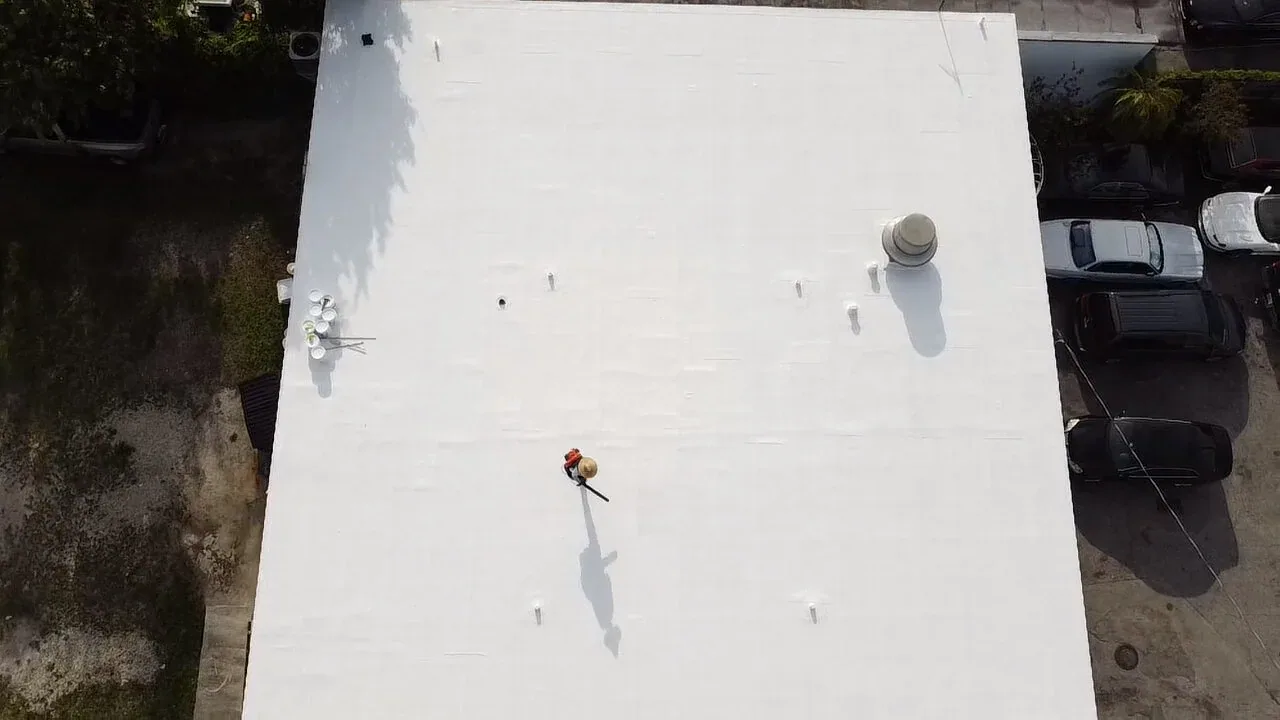
Water still standing on a roof two days after the rain tells you where silicone belongs. Most coatings soften and break down under that pond. Silicone does not. That one trait is why we reach for it on low spots and flat decks.
A silicone coating system in Greenville, TX is a liquid film rolled or sprayed over a sound roof. It cures into a rubbery, UV-stable skin that bridges small cracks and sheds heat. It is not a cure for a roof that is soaked or worn out. We walk the roof, test the substrate and tell you which side of that line you are on before anyone mixes a bucket.
What does silicone do that other coatings do not?
Silicone keeps its film in standing water. Acrylics can soften and wash out when a roof holds a pond for days. Silicone is also very stable under sun, so it does not chalk away the way many coatings do after a few summers.
It stays flexible through the swings Greenville throws at a roof: a cold morning, then a baking afternoon. It cures from the moisture in the air, so a humid day does not ruin the job. It also goes down in one heavy coat on many roofs, which shortens the crew time on site.
The tradeoff is dirt. Silicone stays slightly tacky, so dust and pollen stick to it and the white film dulls, which lowers reflectivity over time. If you want the cheaper option for a roof that drains well, we also install acrylic coating systems, and we will tell you which one fits.
Which roofs can take silicone, and which cannot?
Silicone bonds to a wide list of surfaces. Metal, built-up, modified bitumen, TPO, EPDM, concrete and spray foam are all candidates. Some need a primer. Some need a test patch left to cure before we commit the whole roof.
Asphalt surfaces can bleed oil up through the film and stain it. PVC can release plasticizer into the coating. Old coatings of the wrong chemistry can keep silicone from sticking at all. We pull adhesion tests on every roof before we price.
The bigger question is what is under the surface. A coating cannot fix wet insulation or a broken deck. An infrared moisture survey and a handful of cores tell us whether the roof can hold a coating or needs a tear-off. On a metal roof the answer is often yes, once fasteners are backed out and re-set. A standing seam metal roof with sound panels is a good candidate.
How do you prep a roof for silicone?
Prep is most of the job. We wash the roof, let it dry and walk it for loose laps, open seams and torn flashing.
Every seam, curb and penetration gets reinforced with fabric and mastic. Ponded areas get a close look, because silicone will survive the water but the substrate under it still has to be sound. Fasteners on metal get re-set. Rust gets treated. Drains and scuppers get cleared.
Then the coating goes on. We measure thickness with a wet-film gauge as we spray or roll, because coverage rate is what the system depends on. Too thin and it wears through early. We chalk the roof into sections so every area gets its coverage. Rain-ready time is short compared with most coatings, but the surface still has to be dry when we start.
What does a silicone roof job cost, and what moves the number?
A silicone system usually costs well under a tear-off and replacement, and it avoids the dumpsters and disruption. Silicone material runs higher than acrylic. The savings come from keeping the roof you already own. These are the things that move the price:
- How much repair the roof needs before the coating goes on.
- How many coats the system requires on that substrate.
- Whether a primer or bleed barrier is needed.
- Roof size, access and the number of penetrations.
- How many weather days we have to build into the schedule.
The price should be written out in prep, repair and coating, so you can see what each piece costs. We also compare it against replacement on the same roof, because the right answer sometimes is not a coating. If cores show the insulation is soaked, coating over it just hides a bigger bill. We tell you that on day one, not after the invoice.
Community Development issues the permit for commercial reroofing in Greenville, and the written scope for a roof coating and restoration job should list what the city will need to see.
How does silicone handle Greenville heat, hail and wind?
Heat is where silicone earns its keep. DFW logged a record 31 days at or above 100 degrees in July 1980, and July 2022 reached 27. A reflective white film reduces solar heat gain. Park West and the Shelby Avenue district include industrial activity, but each roof needs a measured survey, moisture check and adhesion test before a coating is specified. That is also the work a cool roof installation starts with.
Hail is the limit. A silicone film is thin. Baseball-sized hail, like the stones in the June 2019 storm that collapsed a roof in downtown Greenville, can bruise the substrate and crack the coating. Coating a bruised roof hides the bruise but does not repair it. After a storm we core the worst spots first, then decide what can be coated and what has to be cut out. Long summers do their own damage to an older membrane, and heat and UV roof damage repair starts with finding where the sun has cooked it.
Wind is a quiet strength. A coating adds no weight and no fasteners, so there is less for a straight-line gust to grab.
Can silicone go on while the building stays open?
Yes, and that is a big reason owners choose it. There is no tear-off, so there is no debris falling and very little noise. Odor is low. Crews stage on the ground, run lines up, and work section by section.
At an occupied healthcare building near Joe Ramsey Boulevard, the facility contact sets access and work-hour limits. The I-30 and Joe Ramsey commercial corridor has healthcare property, but the roof condition and facility plan determine whether coating fits. The inspection checks drainage and adhesion before anyone recommends recoat or tear-off. When reviewing coated roofs in Commerce and Bonham, verify adhesion, ponding history and existing coating compatibility before proposing another application.
Commercial Roofing Questions
Can silicone go over my existing TPO or PVC roof?
Usually, once a test patch proves it. TPO often needs a bonding primer, and PVC needs a close look at plasticizer loss before anyone coats it. We clean a small area, apply the system and check adhesion after it cures. If the patch peels, we stop and talk about other options before you spend money on a full coating.
Why does a silicone roof look dirty after a year or two?
Because the surface stays a little tacky, dust, pollen and soot stick to it. The white film dulls, but the roof underneath is still waterproof. Rain and a light wash bring most of it back. If reflectivity matters to you, plan a cleaning into the maintenance schedule instead of waiting for it to get bad.
Can I recoat silicone with something cheaper later?
Not easily. Most other coatings will not bond to cured silicone, so future recoats usually have to be silicone too. That is a real point to weigh before you start. If you might want a different system down the road, say so now, and we can price a different path.
How soon after application can it rain without ruining the job?
Sooner than with most coatings, though the surface must be dry when we spray. Silicone cures fast and sheds water early, so a surprise shower after the film sets does little harm. We watch the radar all morning, keep sections small and stop early when a cell is heading for Hunt County.
What happens if there is wet insulation under my roof?
Coating over wet insulation traps the water, and the roof will blister and fail early. We find the wet areas with an infrared scan, confirm them with cores and cut them out. Then we dry in with new insulation before the coating goes on. You get photos of each repair, so you know exactly where the problems were.