Cool Roof Installation in Greenville, TX
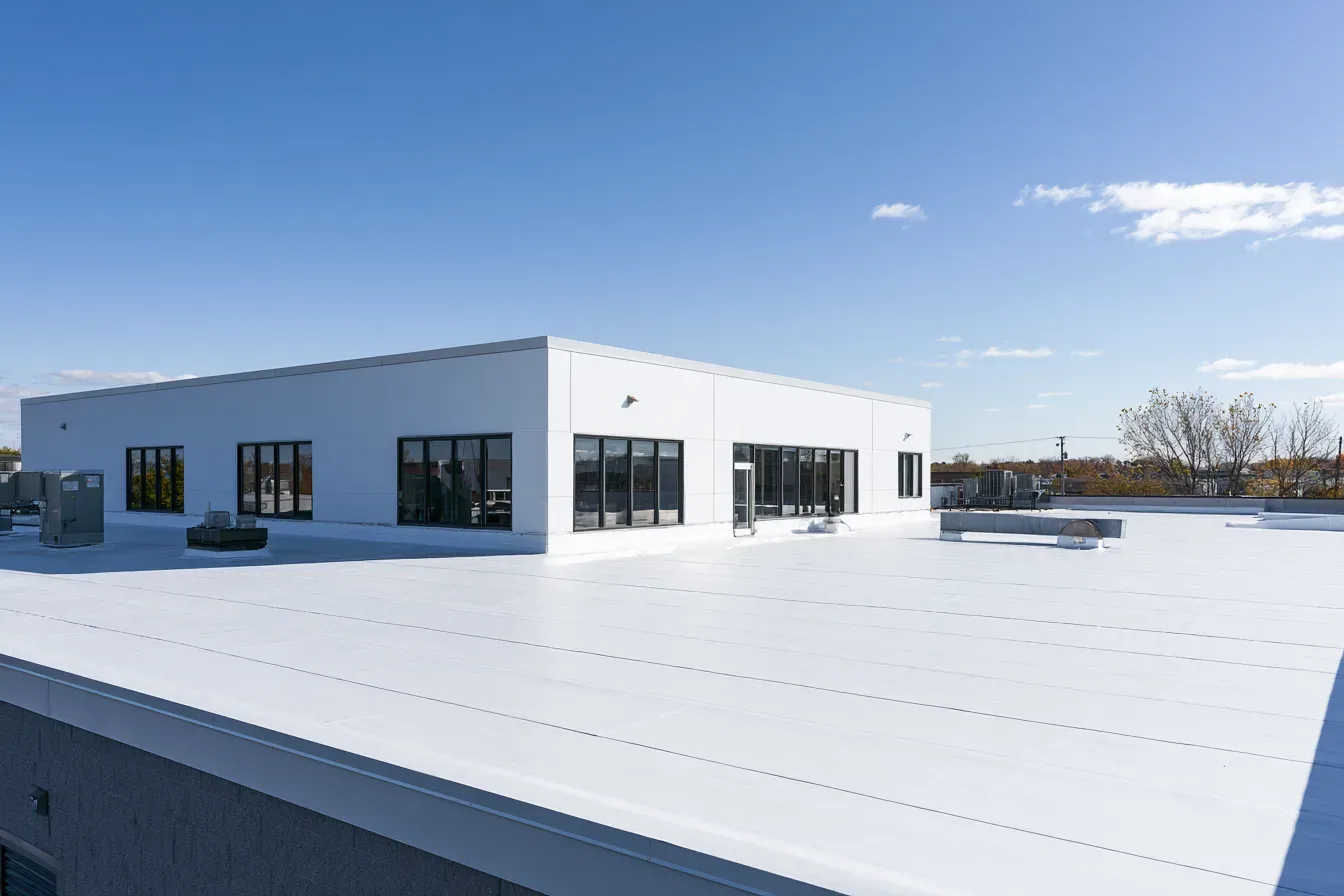
A white roof that has gone the color of old dishwater is still a roof. It just stopped doing the one extra job you paid for. Dirt and ponding turn reflective into ordinary, and the building feels it by August.
A cool roof installation in Greenville, TX puts a bright, high-emissivity surface on top of the building so the sun bounces off instead of soaking in. It can be a new white membrane or a reflective coating over a sound existing roof. Either way, the roof underneath has to be dry and tight first.
We walk the roof, test it for wet insulation and tell you which path is cheaper and which one lasts. Color is the easy part. Condition is where the money is.
What makes a roof cool, and what does not?
Two numbers matter. Reflectance is how much sunlight the surface throws back. Emittance is how well it lets go of the heat it did absorb. A good cool roof scores high on both. A shiny roof that traps heat does not qualify.
Paint color alone is a poor guide. A pale gray membrane can reflect less than a bright white one, and a dirty white one can reflect less than a clean gray one. Ask for the aged numbers, not the day-one numbers, because the roof will spend most of its life aged.
A cool surface also does not replace insulation. It cuts the heat the roof takes on. Insulation slows what gets through. A building that needs both should get both, and we will say which is the weaker link on your roof.
Which cool roof system fits my building?
There are three realistic routes. The first is a new white single-ply membrane, either TPO roofing or PVC roofing, installed over new or reused insulation. This is the choice when the old roof is at the end of its life.
The second is a reflective coating over a sound existing roof. Acrylic coatings are the common pick on roofs that drain well. Silicone coatings take on ponding better. Both need a clean, dry, repaired surface to stick.
The third is a white cap sheet or granule surface on a modified bitumen roof. It is less common on new work, but it fits some retrofits. We pick by what the old roof is, what the deck can carry and how long you plan to hold the building.
What does the energy code say about reflective roofs?
The City of Greenville has adopted the 2018 International Energy Conservation Code, along with the 2018 International Building Code family. Roof reflectance, emittance and insulation language in that code applies to many low-slope commercial roofs in this climate zone.
It does not apply the same way to every job. A repair is treated differently from a tear-off, and a recover is treated differently again. We read the code against your roof before we bid, not after the inspector shows up.
Permits come through the Community Development Department, the same office that handles reroofing permits. If you have a design professional on the job, we price to their spec. If you do not, we will tell you what a permit reviewer is likely to ask for.
What does a cool roof cost, and what does it save?
We cannot quote a savings number from a drawing, and neither can anyone honest. Savings depend on the insulation, the HVAC load, how many hours the building is conditioned and how much of the roof is shaded by equipment. A cooled warehouse with a lot of roof and little insulation sees the most.
Cost follows a few things. Tear-off or no tear-off. Wet insulation that must be replaced. The size of the roof and the number of penetrations. And the access, because a roof with few units and one safe ladder goes quickly.
A coating is often the lower upfront price, but only on a roof that passes its moisture test. A new membrane costs more and buys a longer reset. We price roof coating restoration beside a new membrane so you can compare.
How does a reflective roof age in North Texas?
Dirt, dust and pollen settle on any roof, and a flat roof does not rinse itself. Ponding water leaves rings that stay dark. Sun-baked coatings chalk and thin. A reflective roof loses some of its bounce every year, and the loss is faster where water stands.
That is why drainage comes first. A cool roof that ponds is a cool roof with dark patches. We fix low spots, clear drains and add tapered insulation where it pays, before the white goes on.
A yearly wash and a walk keep the surface honest. We check seams, flashings and coating thickness, and we log what we find. Long summers are hard on a neglected membrane, and heat and UV damage is what that looks like up close.
Where around Greenville does a cool roof pay off first?
North Texas heat is not subtle. Dallas-Fort Worth set its July record in 1980 with 31 days of 100-degree heat, and July 2022 ran 27. A dark membrane on a big building spends those weeks absorbing it, and the interior pays for it every day.
The best candidates are large, low-slope roofs with conditioned space under them, and how much of a building is cooled decides the payback. Greenville’s industrial mix includes Partsmaster’s warehouse totals 123,200 square feet, roughly three miles west of I-30 and Orbis’s roughly 240,000 square feet of warehouse space. Orbis also has about 420,000 square feet of injection-molding space in the SH 66 and US 380 industrial area. Building area is not roof area; measure the roof and inspect its assembly before selecting a reflective system.
Hail is the other half of the plan. A reflective membrane has to take a spring storm and still reflect. We check for bruising after every big hailstorm, because a cracked coating or a punctured seam turns into a leak that no color can fix. Before a cool-roof assembly is selected, review roof insulation and cover board.
Commercial Roofing Questions
Will a white roof really lower my cooling load?
It lowers the heat the roof pushes into the building, which usually helps the air conditioning. How much depends on insulation, equipment and hours of use. On a warehouse with thin insulation the effect is largest. On a well-insulated office with a small roof it is smaller. We would not promise a number. We will tell you where your building sits on that range.
Can I coat my existing roof white instead of replacing it?
Sometimes. The roof has to be dry, tight and well attached, and the insulation cannot be soaked. We run a moisture survey first and cut a few cores. If the answer is yes, a reflective coating is a faster, cleaner path with less waste. If the answer is no, coating over a wet roof only hides the problem for a season.
Does a cool roof leak less than a dark roof?
Color has nothing to do with waterproofing. A white roof leaks at the same weak points as a black one: seams, flashings, penetrations and drains. What a cool roof can change is how hard the sun works on the surface, which may slow some kinds of aging. Watertightness still comes from good details and a maintained roof.
How often should a reflective roof be cleaned?
Plan on a wash when the surface visibly darkens, and at least once a year on roofs near dust, trees or heavy truck traffic. Use low-pressure rinsing and the cleaner that matches the membrane. High-pressure washing can lift seams and damage coatings. We do the wash and the roof walk together so any defect gets caught the same day.
What happens to a reflective roof after a hailstorm?
Hail bruises it like any other membrane, and a bruise or crack in a coating stays open to water. After a storm, we walk the roof, mark every impact and core the worst spots. Small damage gets repaired and recoated. Large damage goes into an insurance claim with photos and dates. Do this soon, before the next heat wave loosens the edges.