Occupied Building Reroofing in Greenville, TX
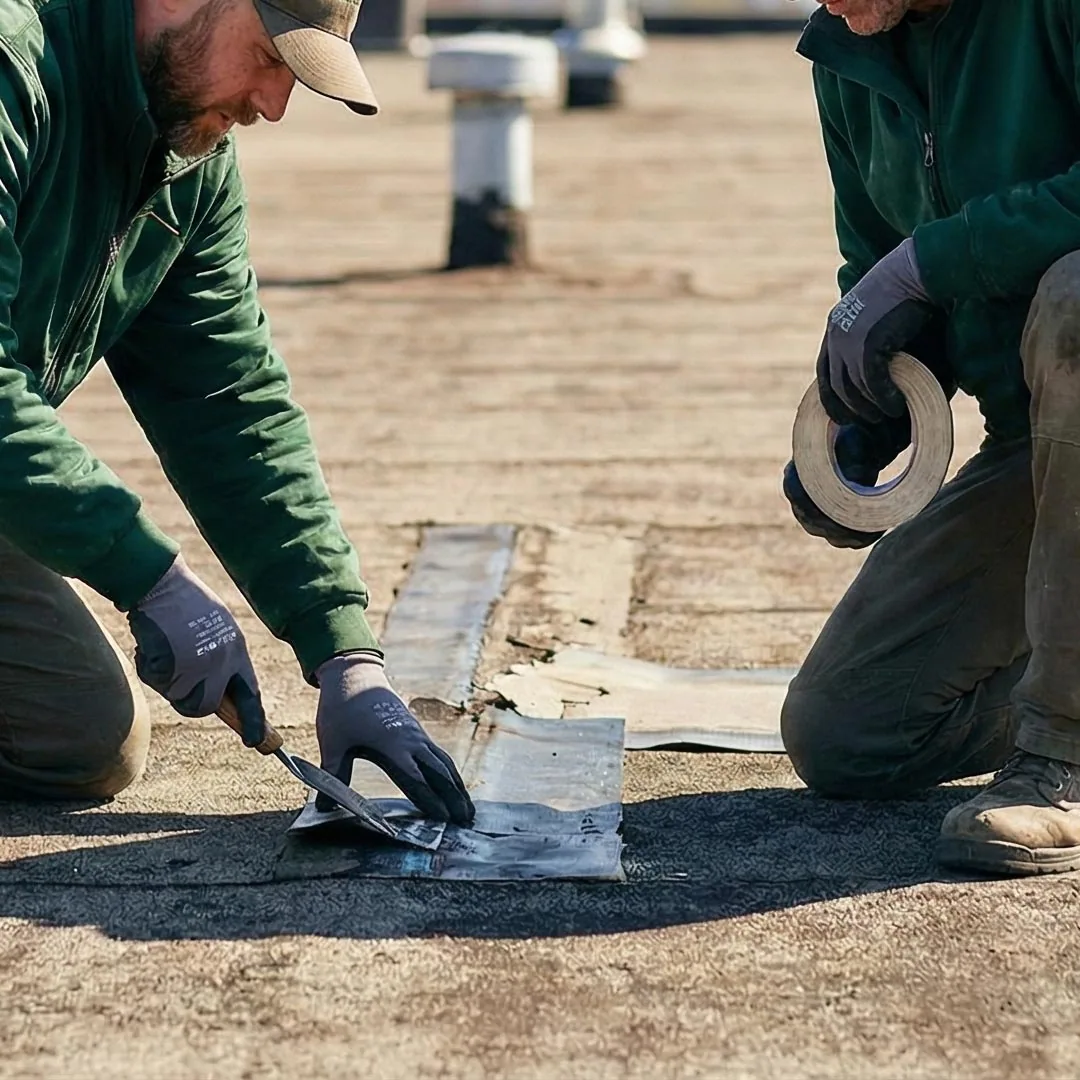
Open deck, rain in the forecast and a tenant sitting under it. That is the whole risk of an occupied reroof, and it is why the plan matters more than the membrane.
Reroofing an occupied building in Greenville, TX means planning the work around the people and operations below. Clinics see patients. Plants run shifts. Schools hold class. Some areas may need a short restriction while a section is open.
The plan uses short sections and a scheduled dry-in, with the daily opening sized to the forecast and roof conditions. The cost shows up in the schedule, not in surprises. We tell you up front how long each area will be open and what each tenant will hear, smell and see.
How do you tear off a roof over people who are working?
One section at a time. We split the roof into areas small enough to tear off, dry-in and seal in one working day. The crew plans each opening to fit the shift and weather window. If conditions change, it secures the tie-in before moving into another section.
The edge of each section gets a temporary tie-in to the old roof. Water cannot run under the new membrane or into the old one. The next morning, the tie-in comes out, and the crew continues into the next section. It is slow to describe and quick to run.
Staging matters just as much. Materials and a hoist stay away from entrances and loading docks. Routes for tenants stay open and marked. Where a roof sits above an entry, we protect the entry from falling debris before the first piece comes off.
What protects the people and equipment underneath?
Four things come up on every job. Noise from tear-off, dust and debris, odors from adhesives and air intakes that can pull both inside. We review nearby intakes with the building engineer and agree on protection or shutdown steps before dusty work begins.
Inside, ceilings and equipment under open deck areas get temporary protection. Sensitive rooms like server closets, labs and operating suites get a conversation first and a plan second. Some rooms cannot take any dust at all. We find that out before mobilization, not after.
We favor attachment methods that keep odor and heat low near occupied space, and we avoid open flame near people. The right membrane for an occupied building is often TPO roofing, installed with fasteners or adhesive instead of a torch.
What does staying open do to the price and the schedule?
It adds time and care. Phased work runs longer than a closed-building tear-off, because the crew starts and stops each day, sets up protection and cleans up at night. That extra time is the cost of staying open, and it is a fair trade.
Price moves with the number of phases, the amount of night or weekend work, the extra protection each area needs and the distance between the staging area and the section being roofed. Sensitive rooms can call for more containment, protection and staging than open warehouse space, so we scope those needs by area.
We write the schedule by area, so each tenant sees the dates their roof will be open. If you can recover instead of tear off, a roof recover removes the most disruptive part. We will tell you if that route is open to your building.
Who talks to the tenants, and when?
Tell tenants early, in writing, with dates and names. We can prepare a notice for each work area with dates, expected noise and the contact for questions. The property manager or facility lead sends it, so the message comes from someone tenants know.
A crew lead walks the roof with the building contact each morning and again before the crew leaves. Small issues get fixed on the spot. A punch list at the end of each phase is shorter than one at the end of the whole job.
Night and weekend shifts are an option when the daytime is too sensitive. When after-hours work is needed, we confirm crew availability and access first, then place noisy steps in the agreed window. Not every roof needs that, but the ones that do should not be forced to guess.
When is an occupied reroof the wrong call?
Sometimes a space cannot take it. A room that tolerates no vibration, a lab with strict air controls or a deck so deteriorated that tear-off is unsafe are all cases where we talk about partial relocation or a different system first.
If the building is an emergency, emergency roof repair comes first and gets the roof dry. The permanent plan follows. A rushed replacement costs more than a staged one.
We lay out the options with the tradeoffs: a phased commercial roof replacement, a recover, or a repair that buys a year. You pick, and we build the schedule around your operations, not ours.
Which Greenville buildings cannot close for a roof?
Hunt Regional Medical Center on Joe Ramsey Boulevard began a two-story surgical and women’s-services expansion in 2021. For occupied healthcare buildings in the I-30 and Joe Ramsey commercial corridor, the facility contact identifies access, operating and noise limits before the hospital roofing schedule is set.
Orbis operates an industrial building on Shelby Avenue, and Brakebush Brothers built a chicken-processing facility in Park West. At an occupied production site, the property contact sets delivery, access and operating limits. For school roofing, the district calendar informs the work window. Downtown shops line Lee Street and Washington Street in older masonry commercial buildings, where staging and storefront access belong in the phasing plan.
The weather window is the real constraint. Greenville’s June 2019 storm brought hail and straight-line winds, collapsing a roof in downtown Greenville. Phasing keeps each open area small enough to close within the planned shift. On a downtown Greenville roof with a shop open underneath, staging and dry-in protect storefront access. When projects run in Commerce and Sulphur Springs, agree on access, delivery and interior protection with each building contact before sequencing roof sections.
Commercial Roofing Questions
Do tenants have to leave during a reroof?
Often, but the answer depends on access, noise, air handling and the condition of the deck. Most work stays above the occupied space; sensitive areas may need a temporary restriction. Tenants may hear tear-off and smell adhesives on certain days, and we plan those days with you. A few spaces, such as labs or rooms under open deck, may need temporary relocation for a day or two. We flag those rooms during the first walk, and the schedule reflects them.
How much notice should tenants get?
Give them as much as you can, and put dates in writing. A notice a couple of weeks ahead lets people move equipment, plan meetings and warn customers. We provide the notice text for each phase, and we update it if weather moves the schedule. A clear notice gives tenants time to protect equipment and adjust schedules.
What happens if rain arrives while the roof is open?
The daily plan limits exposed area to what the crew expects to dry in. If weather changes, the crew secures edges, protects exposed deck and moves loose material under cover before continuing. We watch the forecast every morning and shorten the day if the sky looks wrong.
Will the work be loud or smelly?
Some of it, yes. Tear-off is the loudest step, and adhesives and primers carry an odor on certain days. We schedule the loud steps for the quieter hours and cover air intakes during the smelly ones. Tell us which rooms are sensitive and we will plan around them. A phone number for the building contact makes complaints fixable in minutes.
Can the HVAC keep running during the job?
Mostly. We cover or temporarily shield outdoor air intakes when work sits nearby, and we coordinate with the building engineer before any unit is shut down. Equipment that has to come off for curb work gets its own schedule. We would rather lose an hour of cooling by plan than have dust pulled into the system by accident.