Senior Living Roofing in Greenville, TX
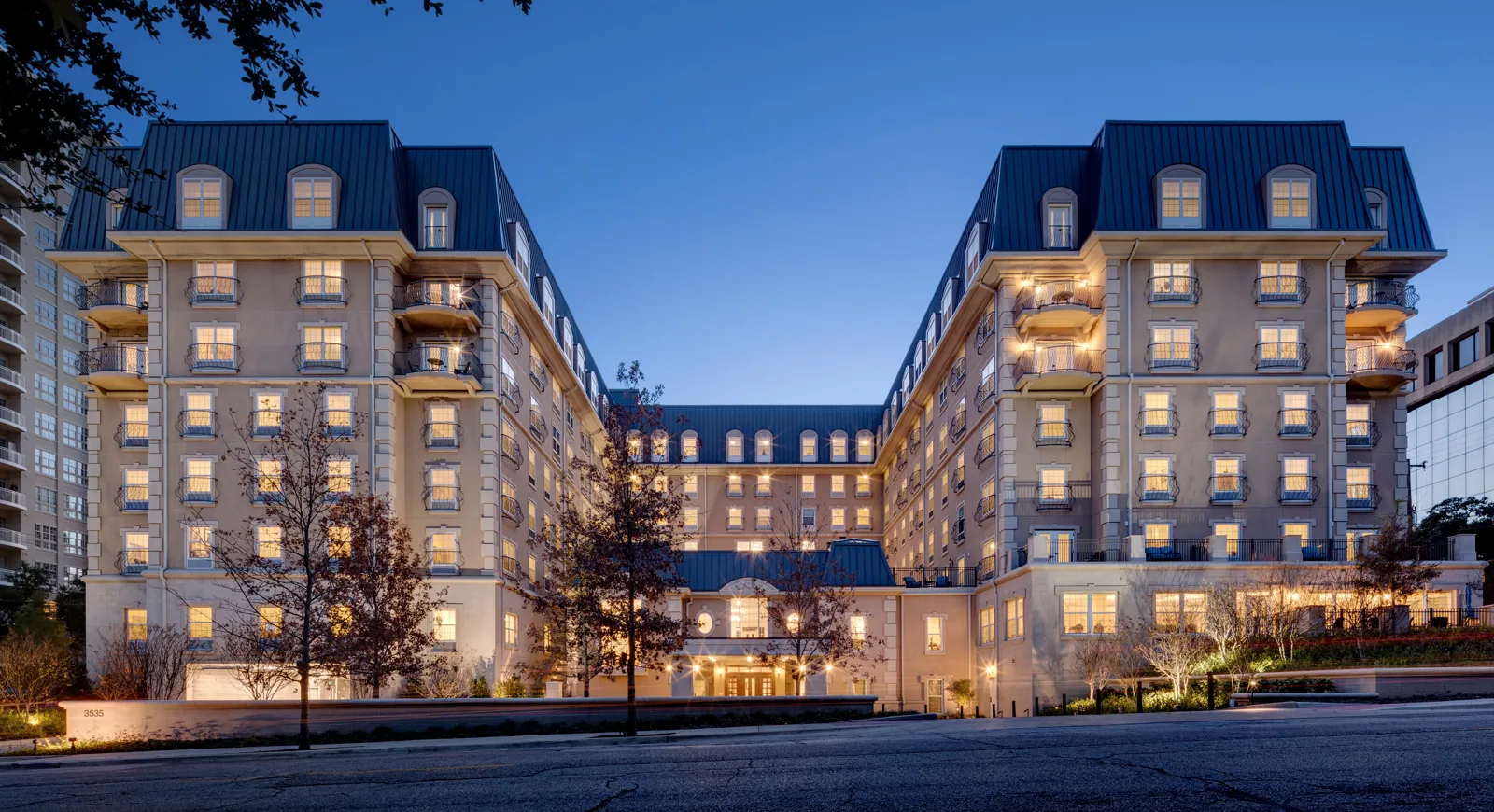
One wet ceiling tile over a resident's bed means a bed gets moved. That is the real cost of a leak in a care community, and it lands before any repair bill does.
Senior living roofing in Greenville, TX is mostly a scheduling job with a roof attached. We walk every wing, find the weak spots, and write a scope that keeps residents in their rooms. You get a plan that runs wing by wing, with the dry-in finished each afternoon.
What does a leak cost a care community before the roof is fixed?
Start with the room. A stained ceiling over a resident bed has to be inspected, taped off and often emptied. Staff move belongings. Families call. Licensing paperwork follows if the room goes offline. The roof repair itself is the smaller number.
Memory care and skilled nursing wings are the hardest. A resident who is confused by a move can lose a week of routine over one drip. That is why we treat every small leak as urgent, even when the stain is the size of a dinner plate.
Senior communities often run long, low buildings with several wings, and each wing can have its own roof age. A leak repair in the oldest wing is a short job. Ignoring it for a season turns it into wet insulation, a rotted deck section and a ceiling replacement.
Where do these roofs usually fail?
We see the same five places on care campuses.
- The tie-in where a newer wing meets the original building, where the membrane has to flex twice a day.
- Kitchen exhaust curbs, where grease softens seams and flashing.
- Rooftop units over common rooms, where service crews leave scuffs and loose panels.
- Drains at the low corners of a courtyard roof, where leaves and grit hold a pond for days.
- Entry canopies and covered drop-off lanes, where one thin roof sits over the busiest door on the property.
We mark each one on a roof plan, photograph it and note which wing it feeds. Your maintenance lead gets a map, not a list of adjectives.
Can a roof come off while residents stay in their rooms?
Yes, with the right method. Noise, fumes and heat are the three problems, and each has a fix. We stage tear-off for mid-morning, after breakfast and medication rounds. We keep adhesive and hot work away from fresh-air intakes, and we ask your team which vents to cover. Crews keep to the shaded side of a building when the afternoon turns hot.
Torch work is out on most care buildings, so we lean toward welded or mechanically attached systems. Our plan for occupied building reroofing breaks the roof into sections, so no wing is open longer than a single working day.
We hand your administrator a written schedule before mobilization. It names the wing, the date, the noisy hours and the person to call if a resident is bothered. Better to surprise nobody.
Which roof system suits a senior living building?
Flat and low-slope wings often get TPO roofing, a white single-ply whose seams are welded with hot air instead of a flame. It sheds the heat that Texas summers pile on. Kitchen and laundry roofs take PVC roofing, since grease and hot exhaust wear other membranes faster.
Pitched sections over lobbies and chapels often take standing seam metal. It sheds water fast and holds up to wind. We look at the deck first. If it is sound, the new system goes on. If not, we replace the bad sections and say so in the scope.
On any campus, a cover board under the membrane is worth pricing. Hail is the load that matters here, and a firmer surface takes a hit better than soft insulation.
What moves the price of a care community roof?
Four things. How many separate roofs the campus has. How much insulation is wet. How much of the work has to happen in small sections around residents. And how many units, vents and exhaust curbs sit on the deck.
The phasing costs money, and it is worth it. Smaller sections mean more setup and more dry-in work. We say so up front and price it as its own line, so your board or owner can see why.
A moisture survey narrows the number fast. Our infrared moisture survey shows which insulation is wet, so you replace only what has failed. For multi-wing campuses, roof capital planning sends the leakiest wing to the front of the line and parks the healthiest wing at the back.
What does Greenville weather do to these buildings?
Spring is the test. On June 19, 2019, straight-line wind near 85 mph and baseball-sized hail rolled through Greenville, and a sanctuary roof on Joe Ramsey Boulevard took extensive damage. A long, flat care wing is the same wide target, so hail damage repair belongs on the calendar before a leak shows up.
Heat wears the roof down more quietly. Plan maintenance around inspected conditions, resident comfort and the access controls agreed with facility staff. Review roof insulation and membrane condition when planning heat-related maintenance. Hunt County also counts 75 tornadoes since 1680, with May the peak month.
Occupied care buildings in Greenville need access and noise coordination. Hunt Regional Medical Center’s surgical and women’s services expansion is on Joe Ramsey Boulevard in Greenville’s medical corridor. The 78-acre Sam Rayburn Memorial Veterans Center in Bonham provides extended-care nursing. Plan roof access and temporary protection with the facility contact. Where a campus also includes outpatient care, coordinate roof access with medical office buildings. For a property with more intensive clinical operations, compare the protection plan with hospital buildings.
Commercial Roofing Questions
A resident room is leaking tonight. What happens first?
Call, and a crew gets to the roof, not just the ceiling. We find the water path, stop it with a temporary seal and photograph everything for your insurer. Your staff can then move the resident and dry the room with confidence that more water is not coming. The permanent repair is scoped the next day, once we have seen the deck in daylight. Emergency calls run around the clock, holidays included.
Who signs off on the schedule, the administrator or the owner?
Both, in different ways. The administrator knows meal times, therapy blocks and quiet hours, so that person approves the daily sequence. The owner or asset manager approves scope and price. We write the schedule so each can sign their half without reading the other's. Getting both signatures before mobilization avoids the argument on day three about why a lift is parked outside the dining room.
Can we recover over the old roof on a care building?
Sometimes. Core first. Dry insulation and a solid deck mean the new roof can go right over one old layer, which skips the tear-off and cuts noise and dumpster traffic around residents. A wet core means that wet layer has to go. Covering it hides the problem and shortens the new roof's life. The cores settle the question in one afternoon.
What should we ask a roofer about fumes and noise near our residents?
Ask which adhesives and sealants they plan to use, where the fresh-air intakes are, and what hour tear-off starts. A good answer names the products, the intake locations and the hour. We prefer welded seams and low-odor products near occupied wings. We also cover or shut intakes in agreement with your maintenance lead. Anything vague on those three points is a reason to keep looking.
Does hail damage show up on a senior living roof right away?
Not always. Hail bruises the membrane and leaves a soft spot that holds for months before it leaks. After any large hail we walk the roof, flag each bruise and cut cores at the worst ones. Sooner is better. Insurance carriers set deadlines for a claim, and our roof insurance claim assistance package documents the damage while it is fresh.