Self-Storage Roofing in Greenville, TX
Rust bleeds from a screw head and runs down the panel rib. Under that screw, a tenant's boxes sit on a concrete floor. The leak is slow, and the claim is not.
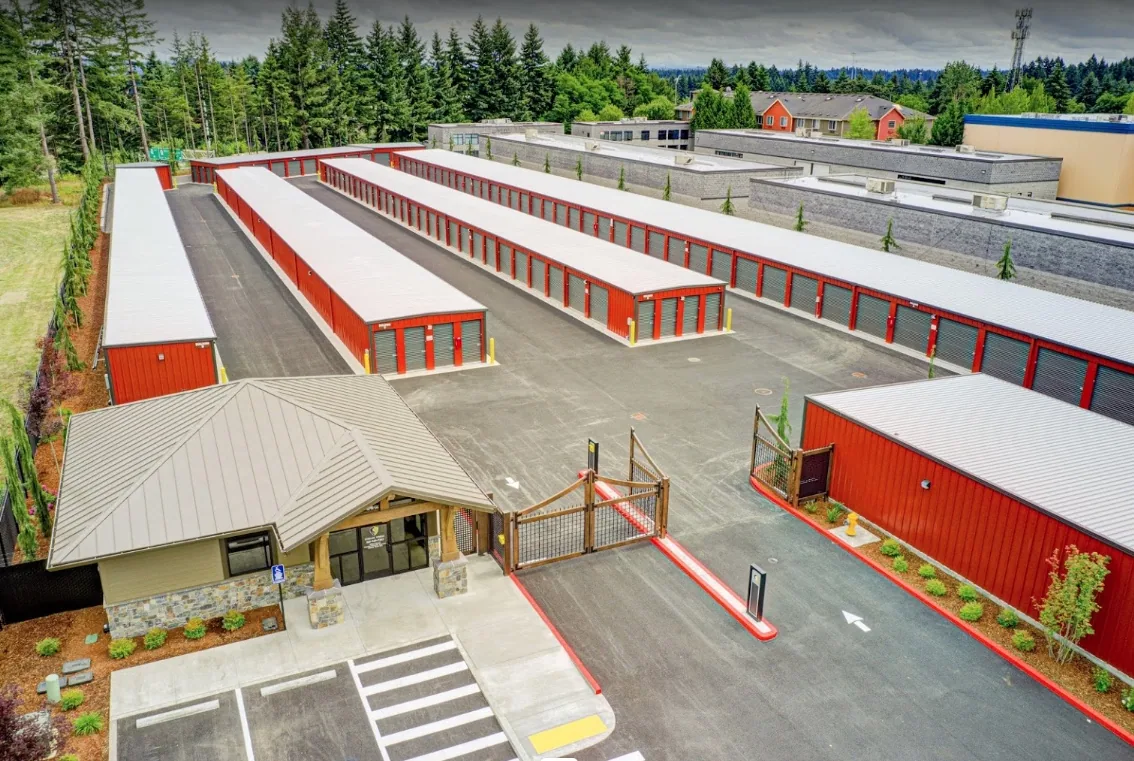
Self-storage roofing in Greenville, TX is a volume job. One site may hold a dozen long metal buildings, each with thousands of fasteners and one roof edge after another. We walk the rows, count what has failed and price the fix per building, so you can spend where the water is actually coming in.
Where do storage roofs fail first?
At the fasteners. Most drive-up storage rows wear exposed-fastener metal panels. Heat swells and shrinks that metal all summer, and each cycle works a screw a little looser. The rubber washer cracks in the sun. Water follows the thread into the unit.
Next come the eaves and end walls. Long, low buildings have a lot of edge, and wind gets under trim that was never tied down well. A flashing strip lifts first, then a panel.
Climate-controlled multi-story buildings usually carry a low-slope membrane with drains and equipment. Those fail the way any flat roof does, with ponds, split seams and wet insulation. We scan both kinds. A good rule of thumb is that the water you see inside is three screws away from where it started.
Should we re-screw, coat, retrofit or replace?
Match the fix to the panel. If the metal is sound and only the fasteners have backed out, we replace them with larger-diameter screws and new washers, then seal the laps. That is the cheapest honest repair, and it buys real time.
If the panels are rusting through but the framing is good, a metal roof retrofit goes over the old roof with new purlins and panels. You skip the tear-off and keep the units dry during the work. If the surface is just tired, a silicone coating can seal the seams and fasteners together and extend the life of the roof.
When the panels are wrecked or the framing is bent, replace. We would rather say that on day one than patch a roof that will not hold.
What does the price depend on across a whole site?
Four things. The count of buildings. The panel type and condition. Whether any units sit under sections that cannot be moved. And how far a lift has to travel between rows. A flat, open site costs less to work than a tight one with trees and fences.
Scale helps. Mobilization is the same whether we fix one building or six, so pricing several rows together costs less per building than coming back every year. Owners with more than one facility can run every site as a multi-site roof program.
We also give the cost of waiting. A tenant claim for stained goods, a unit left unrentable and a rusted purlin all add up. On most storage sites the gap between a fastener repair now and a retrofit in three years is the whole reason to call this season.
Can the office stay open and tenants keep access?
Yes. We work one row at a time and keep the driveway and gate clear. Tenants get a notice on the door of any unit under the work, with the day and the hours. We tarp and lock off sections as needed, and we do not leave tools or panels where a customer could trip on them.
The crew starts early in summer, because metal bakes by noon and hot panels burn hands. Wet weather stops the work on any section that is open. We close what we open each day.
Staging is easy on most sites. A lift, a truck and a small laydown space cover it. For multi-story buildings, we follow the occupied building reroofing sequence, so climate-controlled units stay stable while the roof comes off in sections.
Set a route for customer traffic before staging lifts or tear-off containers. Storage tenants may visit briefly and without notice, so cones and a clear alternate path need to work throughout the day. The manager should identify units beneath the first work zone and explain how staff will handle a customer who needs access there. Roof photographs and unit-level notes should stay separate; the crew needs a roof map, while the facility keeps the tenant record. That separation protects privacy and keeps the roof scope actionable.
What do Hunt County storms do to a metal storage roof?
They strip it. During the April 2014 outbreak, an EF1 tornado with roughly 105 mph wind struck east of Merit in Hunt County and left a structure at FM 1569 and FM 903 without part of its metal roof and wall panels. A long metal building has the same weakness. Once wind gets under one panel edge, it can take the next one. Wind damage roof repair starts with the trim and the panel edges for that reason.
The June 19, 2019 storm brought baseball-sized hail and 85 mph straight-line wind through Greenville. Hail dents metal, and the question is whether the dent is cosmetic or whether it opened a seam. We check both and photograph each building for the file.
Growth pulls storage along the highway. Caddo Mills sits on I-30 and is projected to grow quickly, and Royse City added a large travel center and a new I-30 overpass. About 8,000 residential lots are under development around Greenville. For storage properties, verify occupancy and expansion plans with the owner before setting project phases. The large industrial buildings in Park West are another animal, and warehouse roofing follows different rules. For properties with larger loading areas, compare access and drainage needs with warehouse buildings.
Commercial Roofing Questions
Our units leak only after wind-driven rain. Where do we look?
Check the end walls, the eave trim and the ridge cap before the field of the roof. Wind-driven rain pushes water sideways under loose trim and up the laps. We walk each building with a hose and a spotter, then mark every spot that lets water through. That is cheaper than blind sealant, and it tells you whether the problem is trim, fasteners or the panels themselves.
Will hail dents hurt a tenant claim or our insurance?
Dents alone do not always void a policy, but the wording matters. Some carriers pay for cosmetic metal damage and others exclude it. We document each dent, note whether a seam opened and check for fastener movement. That record lets you ask the carrier a specific question instead of a vague one. That same record feeds a roof insurance claim if you file.
Is a coating on old storage metal a real fix or a cover-up?
Real, on sound metal. A coating seals fasteners, laps and small rust spots, and it reflects heat so the units run cooler. It does not fix panels with rust through the sheet or loose purlins. We clean a test patch, check adhesion and look at the metal under it before recommending a coating. If the metal is too far gone, we say so.
How do you handle a site with a manager on-site and a different owner?
We talk to both. The manager knows tenant traffic, gate hours and which units are rented. The owner signs the scope and the price. We send a daily one-page update to the manager and a weekly summary with photos to the owner. That way tenant notices go out on time and the owner sees the work without driving out.
How soon can you start after a storm?
For an open roof, the same day. Emergency calls run around the clock, holidays included, and a crew comes to tarp and dry in what is exposed. Permanent repairs follow once the scope is written and the material is ordered. Panel lead times vary, so we confirm them early. Starting the claim paperwork in parallel saves a week or more.