Roofing for Hotel Owners and Hospitality Groups in Greenville, TX
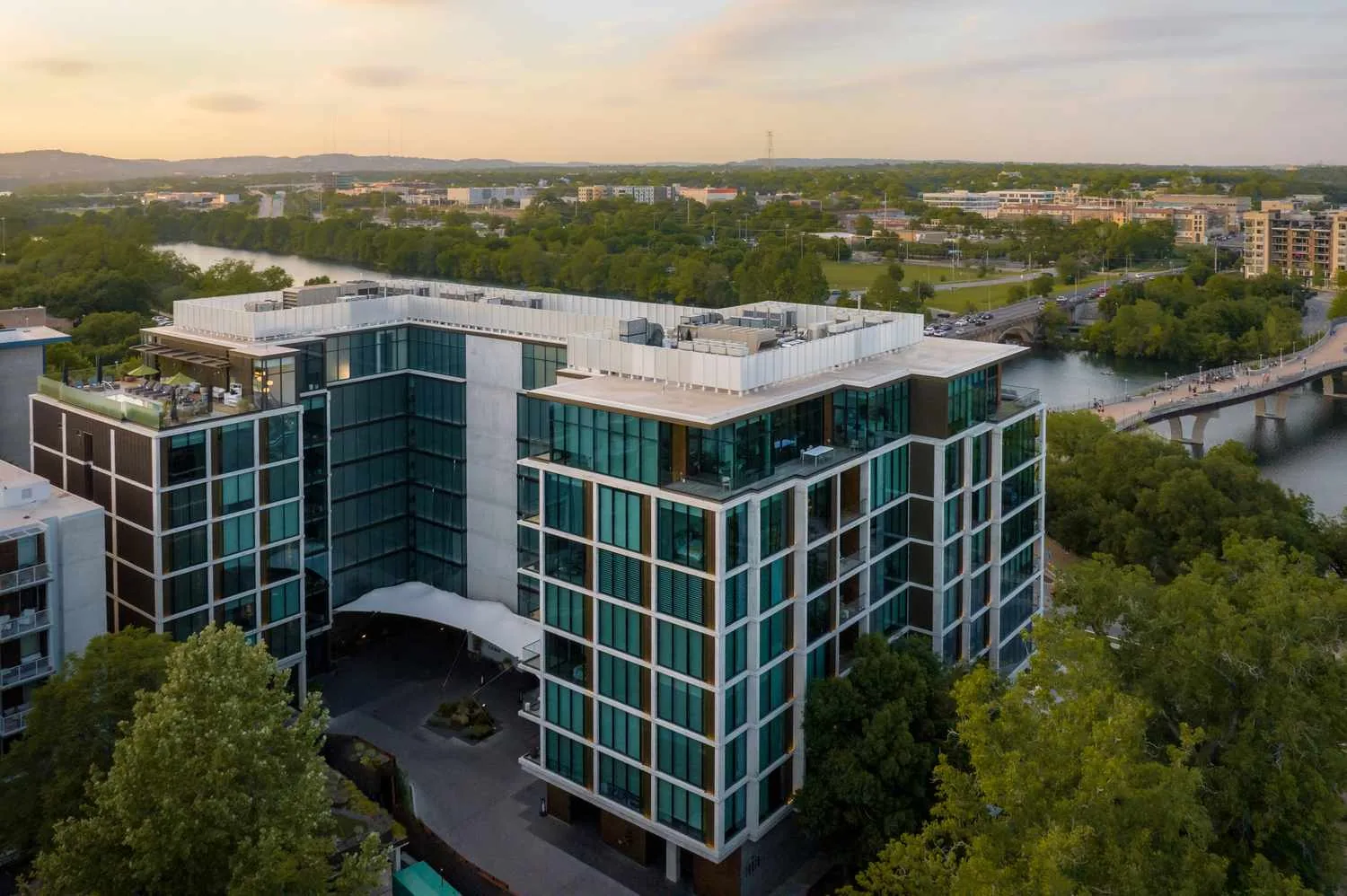
A stripe of dark algae runs along the low edge of a hotel roof, right where the water should be leaving. That stripe is a pond that comes back after every rain. Over guest rooms, it is a slow leak with a review site waiting at the end of it.
Hotel owners and hospitality groups in Greenville, TX run buildings that cannot go quiet for a week. Rooms sell every night. We inspect the roof, mark failures and present a price and sequence for the property team to review. You decide what gets fixed now and what can wait for the next budget year.
Which rooms take the hit when a hotel roof leaks?
The top floor, and the corridor outside it. Water rides the deck and the framing before it shows on a ceiling, so the stain often sits ten or fifteen feet from the actual opening. A housekeeper spots it first. Then the room comes off the board.
One dead room is a small loss. Four in a row on a Friday is not. Add the odor, the drywall and the repaint, and the roof bill turns out to be the cheaper half of the invoice. Wet insulation under a flat section also holds water for months, so a room can go back on sale and come off again.
We trace the stain back to the lap, flashing or drain that let the water in. Then we pull cores to see how wide the wet area runs. That tells you whether the fix is a patch or a whole section.
What does a hotel roof cost when the rooms stay booked?
Cost comes from three places: roof area, the number of penetrations, and the hours a crew can actually work. Rooftop units, kitchen and laundry exhausts, stair towers and pool equipment all add tie-ins. Each tie-in is labor and flashing, and each is a spot where a leak can start years later.
Timing adds its own line. Quiet hours, noise limits and room blocks near the work all slow production. A crew that can only tear off from nine to four gets less done than one with the whole day. That is mobilization you pay for, so plan it before the bid, not after.
Waiting has a price as well. A roof patched every spring usually costs more over a few years than a planned recover or replacement. We price both paths side by side so you can see the gap.
How do you reroof a hotel without emptying the floors?
You work in zones and you keep sold rooms away from the noise. The crew stages material in the back lot or the service drive, never over the entrance. Tear-off runs in sections small enough to dry in the same day, so no open deck sits overnight above a sleeping guest.
The front desk gets a schedule and a phone number. If a block of rooms sits under the work that week, those rooms come off the board early, not at the last minute. Fall protection, debris chutes and hot-work rules are set before the first panel lifts.
That is the same plan we use for any occupied building reroofing job: quiet hours, protected entries, a daily sweep and a punch list closed out zone by zone. A guest tower with a low-slope wing needs the same zone plan, and a hotel roof gets laid out room block by room block.
Which roof system suits a flat roof over guest rooms?
On a low-slope hotel roof, TPO is the usual answer. The white sheet reflects heat, the seams are welded, and a repair is a patch instead of a rebuild. Over a kitchen or laundry vent, PVC stands up better to the grease and oil that soften other sheets. Both go over fresh insulation, with a proper tie-in at every curb.
If the membrane is tired but dry, a coating can buy time for less than tear-off. We core first. A coating over wet insulation just paints a problem. Pitched sections and mansard fronts are usually metal or shingle, and those are separate scopes with separate crews.
How do hotel groups budget roofs across several buildings?
One building at a time is the expensive way. A group with several properties should go up on all of them in the same season and rank the roofs by condition. The worst roof gets the money first. The rest get a maintenance plan until their turn comes.
A written multi-site roof program puts every roof on one schedule: repair list, replacement year and a working range for each. Lenders, franchisors and buyers ask for that file. Owners who already have it answer in a day instead of a month.
The same ranking works for property management companies that run hotels beside apartments or offices, and for retail and restaurant chains that share a roof footprint with a lodging pad.
What do Greenville storms and summer heat do to hotel roofs?
The June 19, 2019 storm put 85 mph winds and baseball-sized hail through Greenville and left a collapsed roof in downtown Greenville. A hotel roof takes that kind of storm the way any commercial roof does: big flat areas, rooftop equipment, and edge metal the wind grabs first. Hail damage bruises the membrane and cracks the insulation underneath. The leak shows up next summer, in a room you were about to rent.
Heat does the slow work. July 2022 stacked up 27 days of 100 degrees or more at DFW, and a sun-baked membrane over a top-floor room makes the cooling system pay for it.
Lake Tawakoni is a 36,700-acre reservoir, and it drives marina, lodging and lake-service buildings at Hawk Cove, 16 miles south of Greenville. Those roofs sit under the same North Texas sun. Permits for reroofing run through the City of Greenville Community Development Department under the 2018 International Building Code, and we build that step into the schedule.
Commercial Roofing Questions
Should we replace the roof before a brand renovation or after it?
Do the roof first. Lobby and room finishes laid under a roof that still leaks get torn out again, and that is money spent twice. If your renovation plan covers rooms, corridors and the lobby, put the roof ahead of them on the calendar, or at least get core results before you pick finishes. Tell us the renovation dates and we will build the roof window around them.
Which weeks of the year should a hotel schedule roof work?
Pick the slowest sold weeks that also fall in a dry stretch. For many hotels that means late fall into winter, but single-ply adhesives and welds have temperature limits, so a cold snap can move the start. Spring is the riskiest time to leave an old roof open because hail season is on.
A guest posted a photo of a ceiling stain. What happens next?
Take the room off the board and send someone up the same day. Do not paint over the stain or swap the tile before the roof is checked, because the stain is your evidence of where the water traveled. We trace it back, photograph the source, and give you a dry-in fix now and a permanent scope after. The room goes back on sale once the ceiling below tests dry.
Our pool equipment and kitchen exhaust sit on the roof. Does that change the roof choice?
It does, and it sets the layout. Grease from exhaust fans attacks some membranes, so PVC or a protected walk zone often goes near the vents. Pool chemicals corrode curbs and fasteners, so we check the metal and the flashing there first. Equipment also needs raised curbs and enough clearance to replace a unit without cutting the new roof open.
We may sell the property in a couple of years. Repair or replace?
Look at what a buyer's inspector will find. A roof with a clean condition report, a repair history and cores that show dry insulation sells easier than one with open questions. If the roof has years left, repair it and document it. If it is near the end of its life, a buyer will price a full replacement, and doing it first lets you set that number yourself.