Commercial Roofing in Celeste, TX
A parapet cap has lifted at one corner. Rain finds that gap and runs down inside the wall. By the next storm a small flashing fix has turned into a wet deck and a stained ceiling.
Commercial roofing in Celeste, TX starts with the assigned roof, not an assumption drawn from a highway or town history. We check the assembly, drainage, penetrations and access during the first walk. Celeste sits on U.S. 69 about twelve miles from Greenville. Build travel and equipment needs into the project quote after confirming the property address and scope.
We walk the roof, mark what is open, and give you two numbers: fix it now, or pay more later.
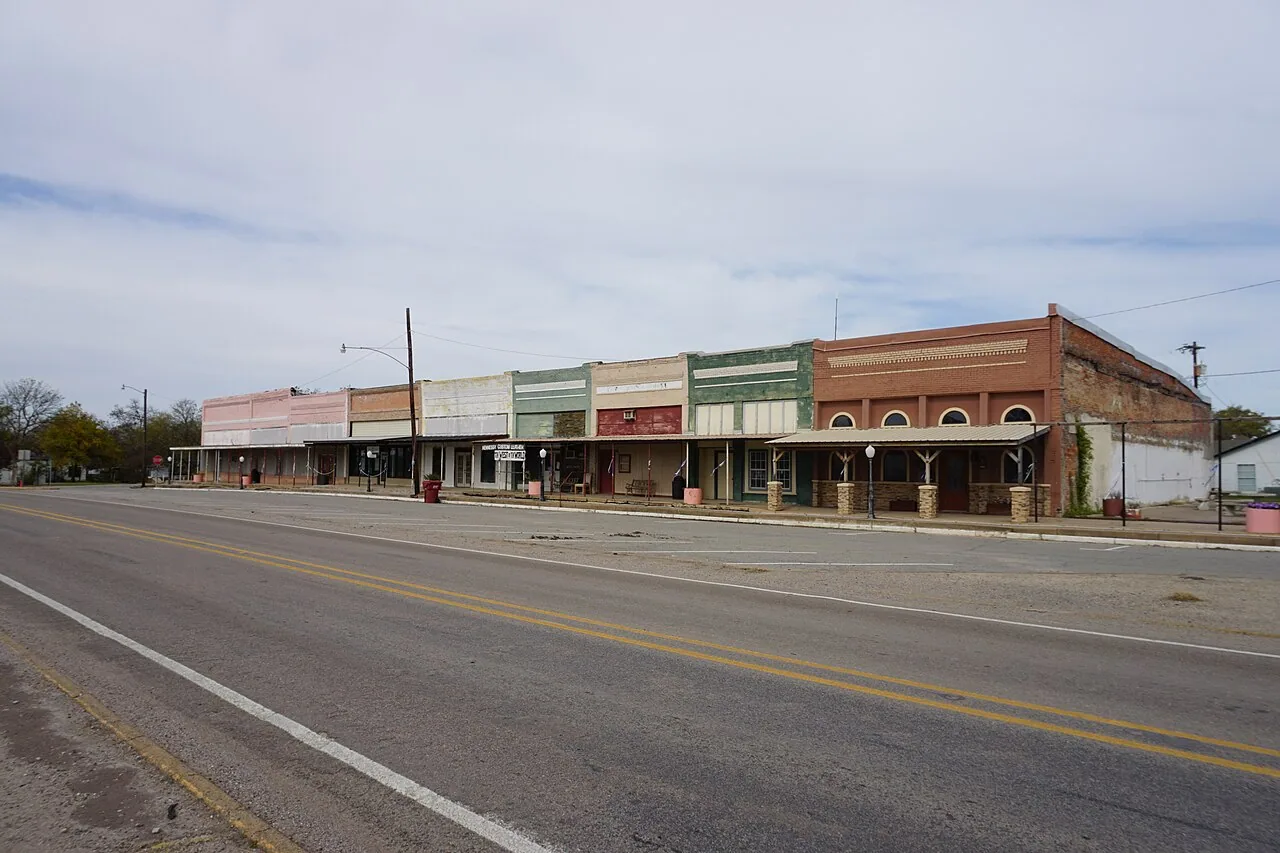
What sits behind the parapets on an older storefront?
A parapet turns the roof up against a wall, so the flashing and coping need to shed water together. We check the cap joints, wall base, scuppers and drains rather than infer the roof assembly from the building exterior.
We find the same trouble in the same places. Coping caps that have loosened and let water behind the wall. Flashing at the base of the parapet that has pulled away from the brick. A low spot against the wall where a pond sits for two days. Each one is cheap to catch early. Each one soaks the insulation if it waits.
An older built-up roof shows its age as alligatoring on the surface and soft spots in the field. Most often the fix starts at the edges, so we price edge metal and coping repair as its own line.
How soon can a Greenville crew be on a Celeste roof?
Celeste sits on U.S. 69 about twelve miles from Greenville. Arrival depends on the scope and current crew availability, so confirm the property address and requested window when scheduling.
When a storm opens a roof, speed is the whole job. A dry-in crew can tarp, seal and photograph the damage first, then the permanent repair gets scheduled for the next weather window. An emergency roof repair crew runs around the clock, holidays included.
Storefront buildings on a town street bring their own staging problem. A lift or a dumpster may need curb space, and the neighboring storefront may need a heads-up before the noise starts. We settle that with you before mobilization, not on the morning the truck shows up. If the shop below stays open, the same plan holds: loud work early, a clean deck by evening.
What does a small-town reroof cost, and what moves the number?
Size sets the base, but a small roof has fixed costs that do not shrink with it. The crew still has to stage, tear off, dry in and haul away. That is why the price per square foot runs higher on a small storefront than on a big warehouse.
Five things move it after that. How many layers are already on the deck. How much insulation is wet. Whether the deck underneath is sound. How tall the parapet is and how much wall flashing it needs. And how hard it is to get material up to the roof.
We core the roof before we quote. A core tells you whether the insulation is dry enough to keep, and that one fact can change the scope a great deal. A firm cover board over new insulation adds a little on day one and takes a lot of the sting out of the next hail season. We also check drain flow and the path water follows after a heavy rain; the roof surface, not the town’s age, determines the repair.
Which roof system fits an old flat roof or a metal shop?
The two buildings want different answers. On a flat roof behind a parapet, modified bitumen is a solid choice. It is tough underfoot, it handles the wall flashing well, and a small crew can repair it with a torch or a cold-applied patch. A white single-ply works too when the deck is sound and the owner wants to cut the heat load.
A metal-panel roof is a different scope. If the panels are sound but fasteners have backed out and seams have dried, a metal roof retrofit may go over the existing panels without tear-off. That can reduce disruption below.
If the panels are rusted through, we say so. Covering a bad roof only hides it for a season.
What has Hunt County weather done to roofs this close to Greenville?
In June 2019, Greenville recorded baseball-sized hail and straight-line winds near 85 mph. Inspect any Celeste roof after a local severe-weather report, with special attention to wall flashings and exposed edges. After a storm reported in Celeste, inspect that property and photograph the roof surface, edges and penetrations before setting scope.
An April 2014 EF1 east of Merit, near FM 1569 and FM 903, removed part of one structure’s metal roof and wall panels. After a wind report in Celeste, inspect the actual roof’s panel edges, ridge caps and fasteners. A wind damage roof repair starts there, and hail bruising gets the same photo-and-core treatment.
Then summer comes in. In July 2022, DFW stations logged triple-digit highs on 27 days. On a roof in Celeste, inspect the membrane and exposed details after extended heat. A property on the U.S. 69 route in Lone Oak needs its own measured scope and access plan. A roof closer to Greenville, including one in downtown Greenville, still gets a separate inspection record.
Commercial Roofing Questions
Our brick storefront has a flat roof behind a parapet. Where does the water usually get in?
Along the wall base, most of the time. Flashing there pulls loose from the brick as the wall and the roof move at different rates. Coping joints and clogged scuppers come next. We walk the full perimeter first, then the drains, and only then look at the field of the roof. A repair at those spots costs far less than a new membrane.
The building is old and the patches keep growing. Is it time to stop repairing?
Pull a few cores and let the insulation answer. If it is dry and the deck is firm, another round of repairs is cheaper than a tear-off. If it is wet in several places, you are paying for a roof that no longer works. We put both prices side by side so the owner or the lender can see the break-even.
How do we get a lift and a dumpster next to a main street building?
With a little planning and a call to the neighbors. We pick the spot for the lift, check whether the street or an alley is the better side, and stage materials so the sidewalk stays open. Some jobs need a lane held for a morning. We ask your contact to clear that before the crew rolls, so nobody is surprised.
A metal-sided shop on U.S. 69 lost a few panels. Can it be patched or does it need a full retrofit?
A few panels can be replaced if the rest of the sheet metal is tight. We look at the fastener pattern, the seams and the rust along the edges. Where the roof is failing everywhere, a retrofit costs less than chasing leaks one panel at a time. Photographs of the missing panels also help any insurance claim.
Insurance wants a roof report on a storefront after a storm. What goes in it?
Dated photos, a marked roof plan, core results and a plain list of what is storm damage and what is age. An adjuster reads that faster than a stack of loose pictures. For an insurance file, a roof claim scope should pair dated photos with a marked roof plan and core results.