Aircraft Hangar Roofing in Greenville, TX
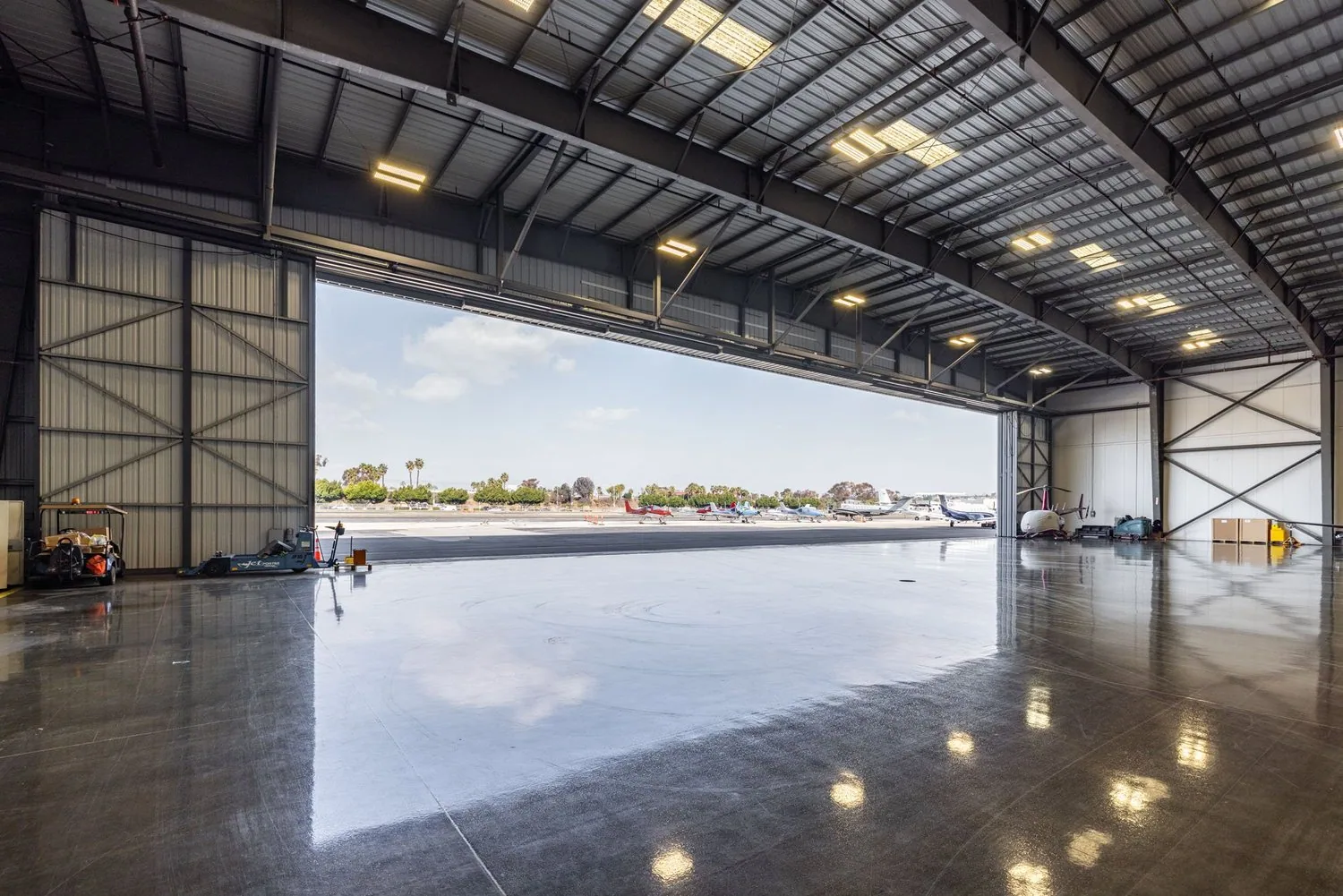
A hangar door sits open in a gust, and the wind finds the roof from underneath. That is when a loose panel edge turns into a missing panel.
Aircraft hangar roofing in Greenville, TX starts with the span, roof assembly and equipment use documented at the site. A drip over a fuselage is a bigger problem than a drip over a pallet. We walk the roof, check how the panels are tied down and write a scope that keeps the aircraft dry through the work.
What goes wrong on a clear-span hangar roof?
Four things, mostly. Panel fasteners back out as the metal swells and shrinks. Seams and laps open where sealant has dried. Edge trim lifts at the eaves and along the door header. And condensation drips from the underside of the panel onto whatever sits below.
The door header is the worst spot. A huge opening sits at the end of a long roof, and the flashing above it takes wind from both sides. Bi-fold and rolling doors also rack the wall over time, and the roof edge moves with them.
We check each fastener row by sampling, walk the laps and photograph the trim. A thermal scan picks up wet insulation in a lined hangar, and the photos from a commercial roof inspection show the ridge and trim up close.
Do we re-roof, retrofit or coat a hangar?
The framing tells us. If the purlins and rafters are sound, a metal roof retrofit puts a new panel system over the old one and keeps the hangar usable while we work. You skip the tear-off, which is the dirtiest and riskiest part over aircraft.
If the roof needs full replacement, standing seam metal is the usual choice. Its fasteners are hidden under the panel, so there are fewer holes for water to find. It also handles thermal movement better than exposed-fastener panels.
A coating can stretch the life of a sound exposed-fastener roof, but it will not fix rusted-through panels or a roof that is already leaking at the laps. We test a patch, look at the metal and say yes or no.
How do you reroof over a hangar with aircraft inside?
Carefully, and in sections. The aircraft stay put or move out, and we agree on which in a meeting with your operations manager before mobilization. Where they stay, we hang protection under the work area and cover the aircraft with the owner's approval.
Fuel and hot work do not mix. We use cold-applied systems and mechanical fastening around fueled aircraft, and we hold a hot-work permit process for any torch or grinder work. Your fire marshal or safety officer approves the plan.
Airports have their own rules. A lift or crane near a runway needs airport management approval, and the flight line may restrict where a truck can park. We coordinate material deliveries and lift locations ahead of time. Crews wear safety gear suited to the ramp, and they stay clear of taxi lanes.
First establish whether the aircraft can move and who controls the hangar door. A large opening changes wind exposure and may make interior protection just as important as the exterior dry-in. The work plan should state where cranes, lift equipment and debris routes can operate, then divide the roof so a crew does not leave a broad area exposed at shift end. If the aircraft stays, protect it from dust and falling material and have the owner inspect the enclosure before the crew demobilizes.
What does a hangar roof cost, and what does a leak cost?
Square footage is the base, since hangars are wide. Panel type, framing condition, access height and the number of skylights or vents move the price. Dust protection and sectioned work add labor. Aircraft protection adds some more.
A leak over an aircraft costs differently than a leak over a warehouse floor. Water on avionics, composite surfaces or paint is a repair bill that can dwarf the roof repair. We put that risk next to the price so an owner can see what waiting costs.
A drain on the roof edge or a missing gutter downspout can look like a small problem and still send water down a wall. Our roof drains and scuppers work checks the run from roof to ground and clears what is packed.
What does Hunt County wind do to a hangar?
It tests every panel. The June 19, 2019 Greenville storm brought straight-line winds near 85 mph; inspect the specific hangar after a local wind event. In April 2014 an EF1 tornado, roughly 105 mph at its peak, struck east of Merit and left a structure near FM 1569 and FM 903 missing part of its metal roof and wall panels. Hangars are big metal boxes with large openings, so they feel wind from the outside and, when a door is open, from the inside as well. Wind damage roof repair on a hangar starts at the door header and the eaves.
The Greenville Business Air Park area is the center of aviation work here. Majors Airport is city-owned, has an 8,030-by-150-foot runway and began as an Army Air Forces training field in 1942. L3Harris Mission Integration Division does aircraft modification there and is the city's largest employer. The Business Air Park sits right next to the field.
Other airfields in the region include McKinney National Airport, which handles general aviation, Caddo Mills Municipal Airport, Ralph M. Hall/Rockwall Municipal Airport and Van Zandt County Regional Airport. A shop building beside a hangar often carries the same curb and drainage questions as a manufacturing plant or a flex industrial roof.
Commercial Roofing Questions
Our hangar roof drips with no visible hole. Where is the water coming from?
Often it is condensation. Warm, humid air meets a cold panel and drips from the underside. A roof with no insulation or a damaged liner does this on cool mornings. Real leaks tend to show up after rain, in a line below a lap or fastener row. We check both. If it is condensation, a liner or insulation fix is the answer, and sealant on top will not help.
Will a retrofit change the hangar's clear height or door clearance?
A little, in some cases. A retrofit adds a layer over the old roof, which raises the roof line by a few inches at the eave and ridge. Door tracks, crane rails and lights inside are not touched, but a header above the door may need new flashing. We measure those details first and tell you whether any clearance changes before you approve the scope.
What about the fire suppression and sprinkler lines in the roof structure?
They stay protected. We never cut, hang loads from or fasten into a pipe or a hanger without approval from your safety officer. Anything near foam suppression lines or detectors gets marked on the plan. If a retrofit changes the loads on the framing, your engineer needs to see that before work starts, and we provide the details so the review is fast.
Do aviation tenants and the airport authority need to sign off?
Usually both. A private hangar owner signs the scope. An airport tenant may also need permission from airport management for lifts, trucks and anything near the ramp. We submit the work plan, the crane or lift locations and the delivery schedule in writing. Getting that done early keeps the start date from sliding because a gate was not cleared.
How much warning do we get before a heat wave or a storm ruins the schedule?
We watch the forecast daily and tell you the plan each afternoon. A hot week moves work to early morning, since metal bakes by noon. A storm line moves the open section to another day, and we dry in whatever is already open. The schedule always has weather windows built in, and we say so up front rather than promising an exact finish date.