Carlisle SynTec Roofing Systems in Greenville, TX
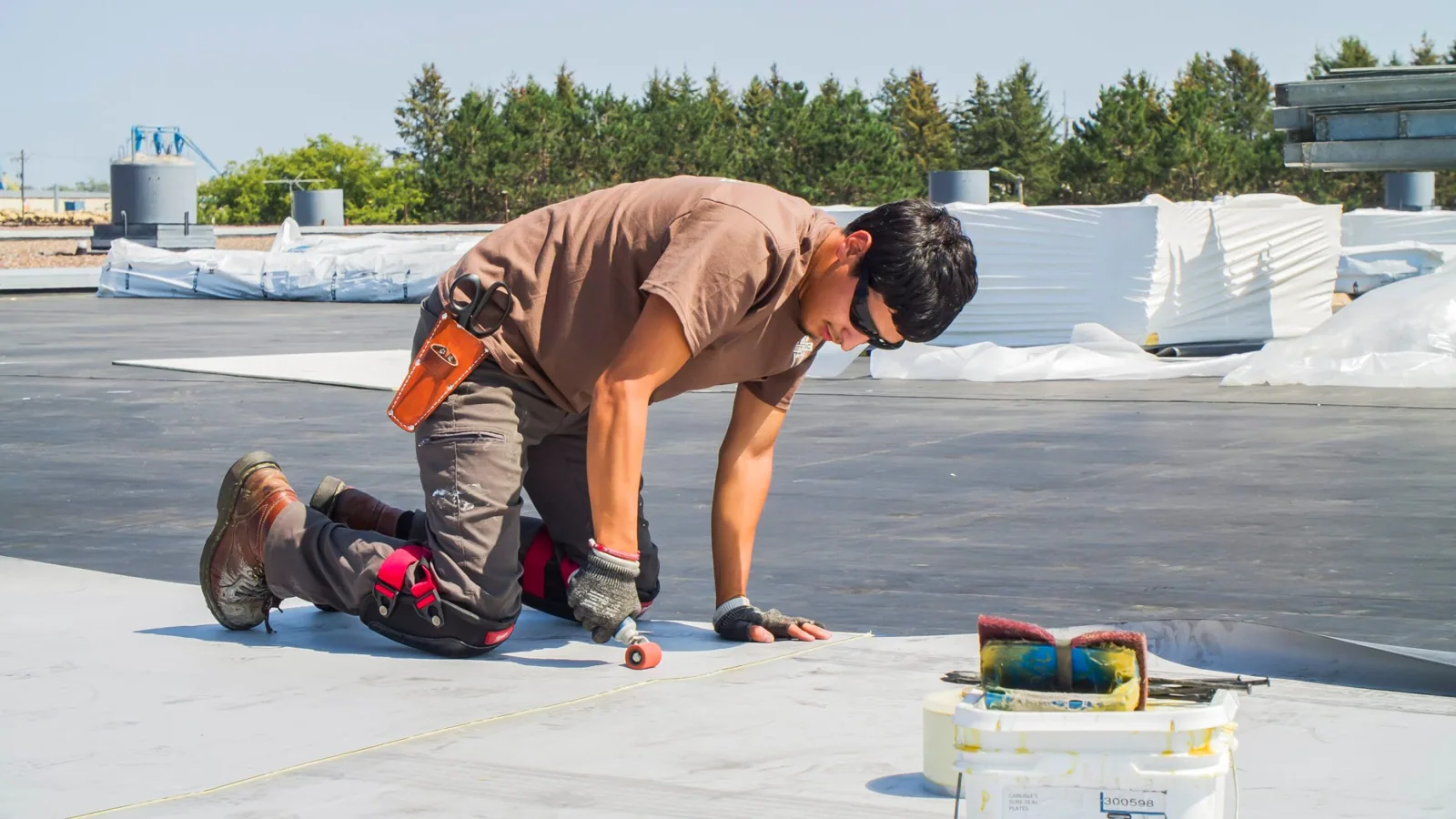
A black EPDM roof does not crack the way an old TPO roof does. It shrinks. You spot it at a wall base, where the sheet has pulled tight and lifted off the flashing.
That one detail tells us most of what we need to know about a Carlisle SynTec roof in Greenville, TX. We install, repair and maintain Carlisle systems, and we have a plain view of where they hold and where they quit. A Carlisle job comes down to which of the three membranes fits the building, what hail and heat do to it, and what the work costs in time and money.
Which Carlisle SynTec sheet belongs on which building?
The line has three membranes that matter here. Sure-Seal EPDM is the black or white rubber sheet. Sure-Weld is the TPO, welded with hot air. Sure-Flex is the PVC, also welded, and built for roofs that see grease and chemicals.
Fleece-backed versions of each go down with adhesive instead of fasteners. That helps on roofs where you want no screw plates in the deck.
Pick by the building, not the brochure. A big warehouse with long straight runs often fits EPDM roofing or TPO roofing. A plant with exhaust grease often calls for PVC roofing. We walk the roof before we pick. A bid priced on GAF membrane can sit beside it once the layers match.
Thickness and reinforcement matter too. A thicker sheet takes more foot traffic and more hail before it fractures. A thinner one costs less and suits a roof nobody walks on. We list the thickness in the scope so the bid you get matches the sheet you get.
Why do some owners pick EPDM for hail country?
Because rubber gives. A hailstone that cracks a stiff sheet often bounces off EPDM and leaves a dimple. That is not a promise. Baseball-sized hail fell in Greenville and Campbell on June 19, 2019. A membrane inspection should record surface marks, seam condition and attachment at the property.
EPDM has its own weak points. Seams are taped or glued, not welded, so we check them closely. Flashing at curbs and walls is where moving rubber pulls loose first.
Black sheet soaks up heat. Compare the proposed Carlisle assembly with the documented roof condition, insulation and attachment requirements. Surface color is one consideration in system selection; the specified product and roof assembly matter too. White EPDM trims that load.
What is a fleece-backed system, and when is it worth the extra?
It is a membrane with a felt-like layer bonded to the back. We roll adhesive onto the cover board, lay the sheet in, and the two grip as one. No fastener plates dot the surface. Wind lifts the sheet less, and the roof reads smoother.
It is worth it over an old gravel roof you keep in place, or where deck fasteners are a problem. It costs more in adhesive and labor, and it needs a dry deck and a decent day to cure. We will not glue on a damp morning.
For a building in the Greenville Business Air Park, confirm the existing assembly, deck and access before choosing a fleece-backed sheet. Ask about the old roof too if it is tar and gravel.
Where does a Carlisle roof leak first?
Not in the middle of the sheet. Almost always at a detail. A curb, a pipe boot, a drain, a wall base or an edge. Those spots move the most and see the most sun.
The June 2019 storm path ran through Greenville and Campbell, both on I-30, and left roof damage in both. Wind finds a loose edge, gets under it and peels. We check coping, fasteners and edge metal first on any storm call.
A fix on a seam or a flashing is cheaper than a field repair. A flashing failure repair is often a day of work on a roof that otherwise has years left.
How long does the job run, and what does the crew need?
On a large roof, weeks. The pace follows the weather window. We open only what the crew can dry in by evening. Insulation, cover board and sheet go down in sections, and each section gets sealed at day end.
The crew needs a clear lift spot, a place for rolls, and a plan for the dock doors. Brakebush Brothers announced a 315,000-square-foot chicken processing facility in Park West. Confirm measured roof area, access routes and staging needs with the property team before mobilization. We lay it out with your facility lead before the first truck shows up.
Price follows scope: tear-off or recover, insulation depth, deck repair and the count of curbs and drains. A building with tenants inside follows an occupied building reroofing plan, with lift spots and dock doors set before the first truck.
What does a Carlisle roof need after it is dry?
Two walks a year. One in spring, one after summer. We clear drains, check seams, look at flashing and press any spot that looks soft. Small items get fixed on the visit.
Carlisle sets its own warranty terms and its own inspection rules. We keep photos and a scope record so you can show what was installed and what was done since. A preventive roof maintenance plan puts that on a calendar, so nothing waits for the next storm to be found.
Between walks, tell your maintenance crew what to leave alone. A new rooftop unit, a conduit run or a satellite dish all add penetrations. Each one needs a proper boot or curb. A call before the work costs nothing, and a call after the leak costs a ceiling.
Commercial Roofing Questions
Is Carlisle EPDM tough enough to take a Greenville hailstorm?
It takes a hit better than many stiff sheets, but not every stone. Over a firm cover board, EPDM shrugs off small hail. Baseball-sized stones can still bruise it and open a seam. After any storm we walk the roof, press the field and photo every mark. Then you can decide with real numbers.
Can you repair a Carlisle roof that another crew installed?
Yes, as long as the roof is sound enough to take a repair. We identify the membrane, check the seams and flashing, and probe for wet insulation before we touch it. Where the sheet is old and the splice adhesive will not bond, we say so and price a larger repair next to a replacement.
What separates a Carlisle bid from a Versico bid on the same roof?
Often less, because Versico is a Carlisle company and the products overlap. The real differences are in the layers, warranty rules and which distributor stocks what. Ask both bidders for the layer list and the manufacturer rep contact so you compare like with like.
Do I still need a cover board with a fleece-backed sheet?
On most commercial roofs, yes. Cover board gives the adhesive a clean face and gives hail something to push against. We check the insulation under it for moisture and flatness first. Skipping the board on a large roof saves a little on day one and costs more after the first spring storm.
How soon should I call about a Carlisle roof in Sulphur Springs or Campbell after a storm?
Within a few days, before the next round of rain. A property in Sulphur Springs or Campbell needs its own inspection. Check edges, curbs and other details where accessible, and document observed conditions instead of assuming storm damage from the town name. A short walk finds it early. Waiting lets water get into insulation, and wet insulation turns a repair into a tear-off.