Versico Roofing Systems in Greenville, TX
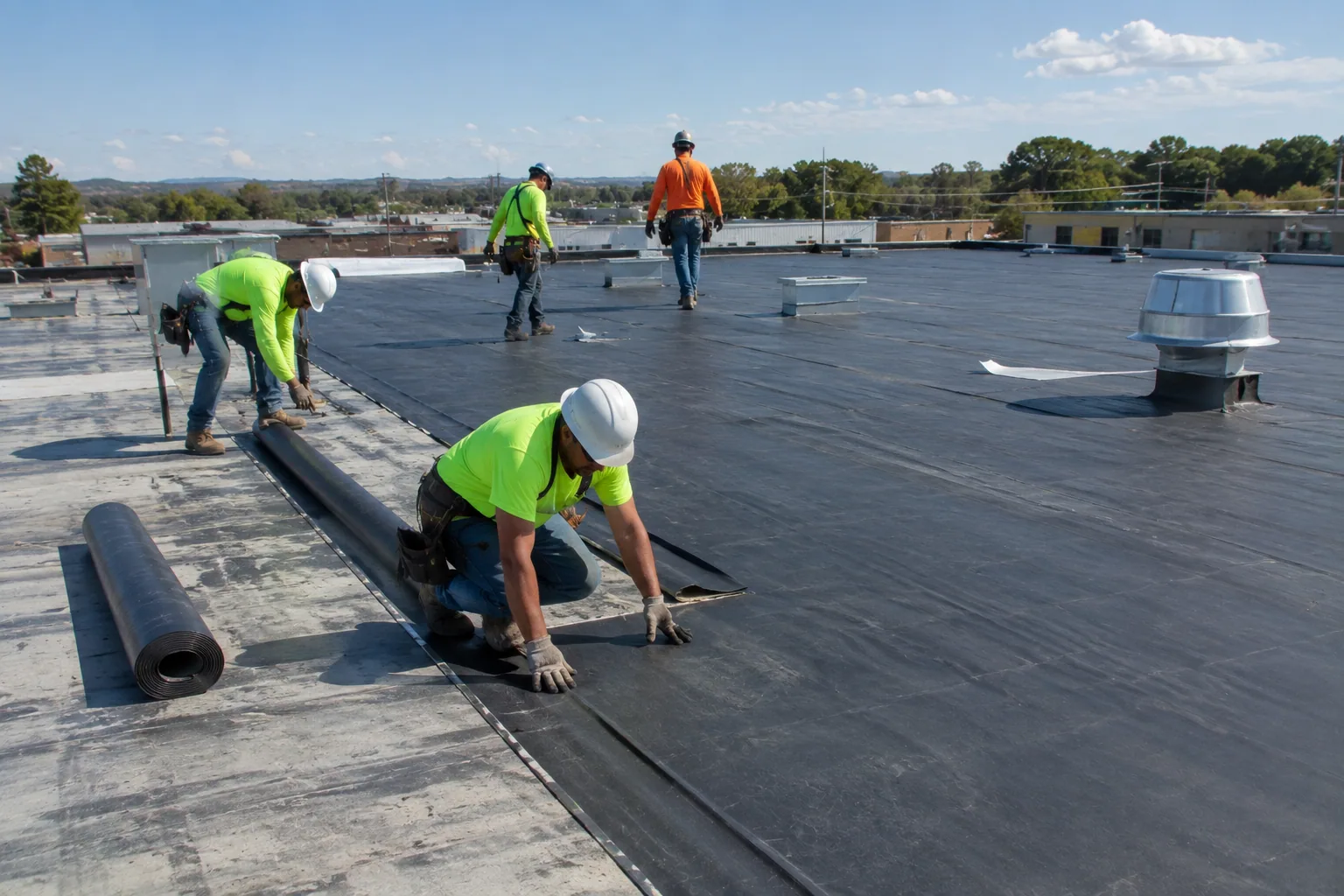
A fastener plate backing out of the deck leaves a bump you can feel through the sheet. Run a boot over it and the bump moves. That small rise is a loose screw, and a loose screw is a roof that is starting to flutter in the wind.
Versico sells commercial single-ply, TPO, PVC and EPDM, and we install, repair and maintain it across Greenville, TX. Here is what matters on a Versico roof once the sheet is down: the deck, the fasteners, the laps and the way wind goes after all three.
Who is Versico, and how does it sit next to Carlisle?
Versico is a Carlisle company. It sells a lot of the same single-ply families, and it moves through roofing distributors. The names on the rolls change. The jobs underneath do not.
On a bid that means two quotes may look different on paper but use close cousins in the field. Ask for the layers: insulation, cover board, fastener type, sheet type, flashing details. Where two quotes differ, compare the layer list against what parent Carlisle SynTec specifies for the same roof.
Warranty rules belong to the maker. We build the scope to meet whatever spec you are given, and we keep photos so there is proof of what went down.
Why does the screw plate matter more than the brand name?
Because the sheet is only as secure as what holds it. A mechanically attached roof sends wind load into the fasteners, then into the deck. If the deck is rusty or thin, the screw has nothing to bite. The sheet may look fine and still lift in a storm.
That is why we test. Pull tests on steel deck show whether a fastener actually holds. Where the deck is weak, we replace sections or change the pattern.
Perimeters and corners see the highest uplift. Fasteners go in tighter there, and edge metal gets the same attention. A cheap roof skips that step. We write it into the scope.
Old fasteners matter too. Rusted screws left in the deck can back out and push up through the new sheet. We pull or reset them before the insulation goes down, and the deck gets a final walk before dry-in.
How does a Versico TPO lap get welded, and what do we check?
Hot air softens both sheets and a roller presses them together. The crew keeps the nozzle steady and the speed even. We run a test weld at the start of each day and peel it to see if it bonds.
After the roof is welded we probe the full length of each lap with a thin tool. Skipped spots, cold welds and dusty edges show up fast. Probing costs minutes. A callback after a leak costs a lot more.
The hot-air weld on TPO roofing works the same way on PVC.
What does wind do to a mechanically attached roof near I-30?
It tries to get under it. Greenville took a June 2019 storm with gusts around 85 mph and baseball-sized stones. East of Merit, an EF1 tornado on April 3, 2014 tore part of the metal roof and wall panels away from a structure at FM 1569 and FM 903.
Big, light, flat roofs take that load across a huge area. Partsmaster’s facility is listed at 123,200 square feet about three miles west of I-30. Specify a roof system only after measuring the roof and confirming assembly, exposure and attachment.
When a sheet billows, we look at fasteners, edge metal and coping first. A wind damage roof repair starts there. Caddo Mills is also on I-30; inspect each roof’s attachment, edge metal and perimeter after severe weather.
Can a Versico sheet go over what is already up there?
Sometimes. A roof recover works when the old roof is firm, flat and dry. Cover board over the old surface gives the new sheet a clean base. We cut cores and run a moisture scan to see what sits below.
If insulation is wet, a recover just buries the problem. A tear-off costs more now and saves a callback.
Price follows the scope: roof size, tear-off or recover, deck repair, insulation, penetrations and staging. A warehouse with open docks and few curbs is cheaper to roof than a tight roof with a crowd of rooftop units. On a big floor, the dry-in and the punch list for warehouse roofing get planned around the open docks.
How long will the dock be tied up, and who is on the roof?
The crew is a steady team with a foreman who stays put. A roof this size runs in sections. Day one is staging and mobilization: lift, dumpsters, roll storage, safety lines. Then tear-off or cover board, then sheet, then flashing, then the punch list.
Dock doors stay open when we can. We tell your shipping lead which side is down on which day. Roof drains are protected from debris, and trash is hauled before the lunch trucks arrive.
Heat sets the clock in summer. A crew on a dark deck at 100 degrees slows down and welds worse, so we start at first light and finish early. Spring is about the forecast. We open only the area we can close up by dark.
A delivery and staging sketch answers both questions better than a broad promise about duration. Mark the lift area, keep fire lanes and customer paths open, and identify the person authorized to release each roof section. Before the first shift, compare the existing assembly and deck with the proposed attachment method; the manufacturer’s current details and project warranty govern the final fastening pattern. At closeout, retain photographs of representative seams, perimeter work and penetrations with the daily record.
Commercial Roofing Questions
Do I need a pull test before a mechanically attached Versico roof goes on?
On steel deck, yes. A pull test shows whether the fasteners bite and how many it takes. Rusted or thin deck shows up in minutes. We bring the results to you with a map of the weak areas, and we mark each failed spot on the deck. Skipping the test can leave you with a new sheet on a deck that will not hold it.
Is a fully adhered Versico sheet worth the extra on a warehouse?
Adhered sheet leaves no screw plates on the surface and resists wind lift better, but needs a dry, clean base and costs more in labor. On a roof with high wind exposure or a rough deck, many owners choose it. On a sheltered roof, mechanical attachment may be enough.
How can I tell whether my steel deck can take new fasteners?
We look from below and above. Rust at the flutes, loose deck panels and old fastener holes are all signs of trouble. Then we pull test a sample of screws. If the deck fails, we replace panels or change the pattern. A deck report goes in the scope, so your next owner can see it too.
My Versico sheet is billowing in the wind. Is that a leak waiting to happen?
It is a warning. Billowing means the sheet is not held down well, or the insulation under it has shifted. Constant flexing tears at the seams and fasteners over time. We map where it moves, check the fastener pattern and edge metal, and tell you whether a repair or a bigger fix makes sense.
What should I ask a distributor or rep about a Versico spec?
Ask for the current spec in writing, the warranty terms for your wind zone and the approved layers for your insulation. Then hand it to us and to any other bidder. We price every layer. Compare with GAF only after the layers match, or the numbers mean nothing.