Fire Damage Roof Repair in Greenville, TX
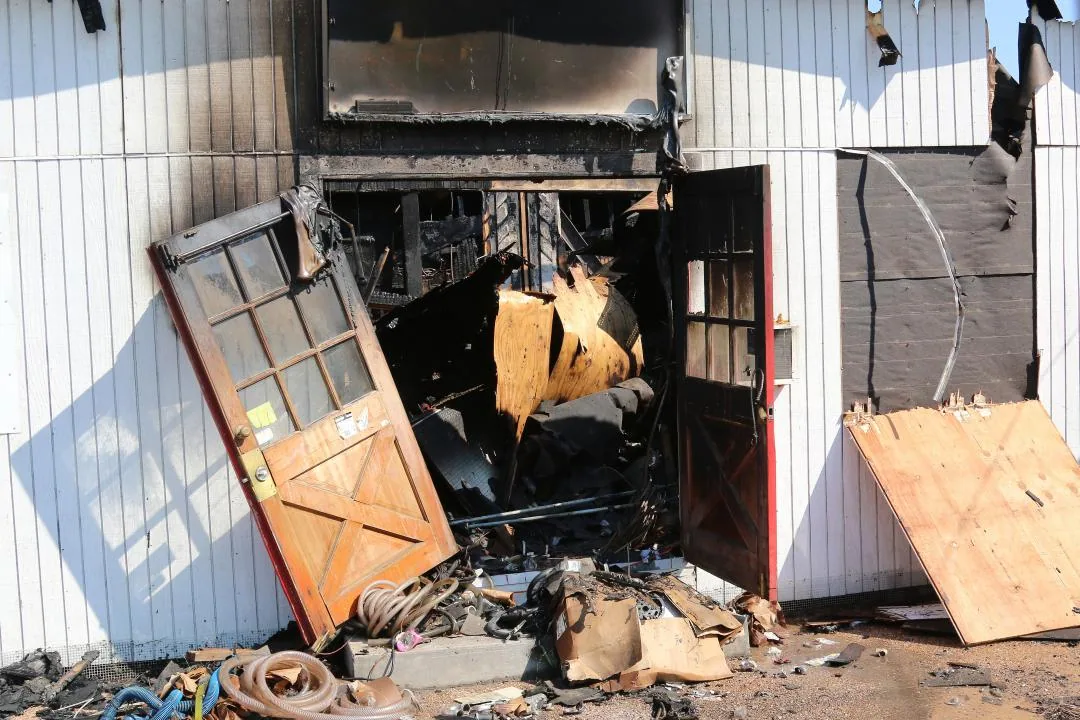
Char on the deck shows where the fire went. Blistered membrane shows where the heat went, and that is usually farther.
A fire hurts a roof three ways: flame, heat and water. Fire damage roof repair in Greenville, TX starts with safety and a structural look, then moves to a full map of the burn, the heat zone and the soaked insulation around it. Heat and water can extend the repair beyond the visible burn. We photograph it for the carrier, dry the building in and give you a number for repair and a number for replacement, so you can plan the schedule around the claim.
What does a fire do to a roof beyond the burn mark?
Heat travels. Flame burns through a small area, but heat blisters, shrinks and softens membrane for yards beyond it. Foam plastic insulation melts and pulls away from the deck. Adhesive lets go. Metal flashing warps and opens its laps. Smoke and soot coat everything downwind.
Roof that sits next to the damage may look intact and still be compromised. Heat-distorted membrane has stretched, thinned or dried out, and it will crack on the first cold snap or the first hot afternoon. We probe a wide ring around the visible burn and cut cores to see what the insulation looks like inside.
A failed motor, faulty connection or grease buildup in a kitchen exhaust can start a fire near a roof penetration. When equipment is the origin, inspect its wiring, flashing and curb together.
Is the deck still safe to walk?
Do not assume it. A steel deck that has seen high heat can lose strength and sag even when it looks sound. A wood deck may be charred through on top and hold on the bottom, or the other way around. We do not put a crew on a burned roof until someone has judged what it will carry.
On larger losses a structural engineer looks at the deck and framing before we start. That is not an extra. It keeps a crew from walking into a hole. We bring plywood or sheet metal for temporary decking and rope off the weak area.
Sound deck gets cleaned. Damaged deck gets cut out and replaced before any insulation goes down. Laying new roofing over burned or weakened deck is the one shortcut we will not take.
What does the fire hose do to the roof?
More than the burned patch suggests. Firefighting water pours through the burned opening and runs into the insulation, the deck seams and the building below. Wet board holds that water for months, and trapped moisture rots a deck, corrodes fasteners and feeds mold in the ceiling.
We map the wet area with an infrared moisture survey and confirm it with cores and meter readings. The wet insulation comes out, along with any membrane over it that cannot be dried and reused. Board that soaked in smoke and water may come out too.
Skip this step and the repair covers a problem that is still growing. The roof looks new, and the ceiling below is stained by spring.
What happens in the first week after a fire?
Day one is safety and dry-in. The fire department and the carrier clear the building, then we secure the openings with temporary decking, tarps or sheet metal so no more rain gets in. Our emergency roof repair crew runs around the clock for exactly this call.
Days two and three are documentation. We photograph the burn, the heat zone and the wet areas, write up the scope and the sequence, and hand it to your adjuster or restoration contractor. A good record for a roof insurance claim has dated photos, a sketch of the burn and a map of the wet insulation. The adjuster sets the claim. We make sure the roof side of the file is complete.
The rest of the week is permitting, ordering and scheduling the rebuild. Material for a big roof can take time to ship, so the temporary protection has to hold. Greenville Community Development issues the permits for roof repairs and replacements, so the permit goes in before the rebuild starts.
Which Greenville roofs worry us most?
The ones where one fire takes a lot with it. Park West Industrial Park sits along SH 380 at Greenville’s entrance. Brakebush Brothers built a chicken-processing facility there. The Greenville Business Air Park sits next to Majors Field, where L3Harris Mission Integration Division performs aircraft modification. A fire scope at either industrial setting starts with roof measurements, cores and a deck check. At Majors Field, confirm property access and staging with the site contact before material arrives.
Downtown has older masonry commercial buildings along Lee and Washington Streets. A roof fire there makes the condition of the deck, parapet and storefront protection part of the first inspection. On a repair in downtown Greenville, we map the work area and confirm street access and staging with the property contact before material arrives. A reported lightning strike calls for an inspection of rooftop equipment, penetrations and nearby membrane.
What does fire repair cost and who signs off?
Cost follows the size of the burn, the size of the wet area and the state of the deck. A small fire gets a local repair. A large fire gets a replaced section or the whole roof. Deck repair, engineering review, temporary protection and permits all sit on top of the membrane price.
Usually the carrier pays for some or all of it, and the repair has to follow a scope they have seen. We price a repair beside a full replacement so the choice rests on numbers. A fire loss moves faster when adjusters and restoration contractors get the roof scope early, so we send it the day it is written. After a fire, inspect adjacent roof materials for separate heat and UV damage. If the event also affected roof edges, assess wind damage.
Commercial Roofing Questions
Should anyone go on the roof right after a fire?
Only after the building is released and someone has judged the deck. Heat can weaken steel and char wood where you cannot see it. Call us and we will inspect from a lift or from the ground first, then set up temporary decking before a crew steps on the burned section.
Do I have to tear off the whole roof if the fire was in one corner?
Not always. If the heat zone stays local and the rest of the membrane is sound, a section replacement can tie into the old roof. We probe a wide ring to find where good material starts. If the heat reached the whole sheet, or the insulation is wet across the field, the numbers favor replacement.
Will my carrier want the burned roofing left in place?
Often for a short time. An adjuster or an investigator may need to see the burned area untouched. We photograph everything, dry the building in without disturbing the evidence and wait for release before demolition. Ask your adjuster in writing when the area can be cleared, and keep that email.
Is smoke damage on a roof a real problem or just cosmetic?
Soot is sometimes only a stain. If the membrane is sound under it, it cleans off. The trouble starts when smoke and firefighting water soaked into the insulation, because that material usually has to come out. We clean what can be cleaned and replace what cannot, and the report says which is which.
How long does a fire repair run compared with a normal repair?
Longer, mostly because of what happens before the work. Releases, engineering review, claim approval and permits come first, and material for a large roof can take a while to ship. The on-roof work is often quick once those are done. We keep the building dry in the meantime so the wait does not add water damage.