Big-Box Retail Roofing in Greenville, TX
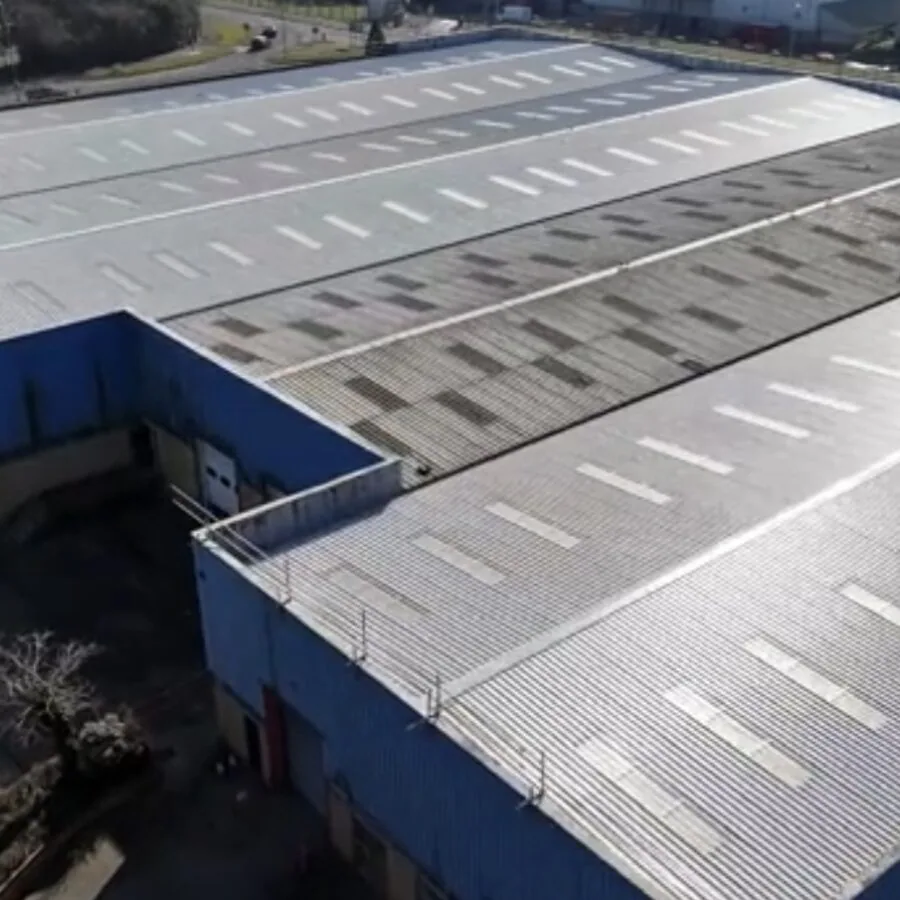
A fastener head backs out of the deck and pushes up a lump in the membrane the size of a fist. Walk it in a hot afternoon and you can see the sheet flap. Multiply that by a few thousand fasteners and you have the real condition of a big-box roof.
Big-box retail roofing in Greenville, TX is about scale and calendar. The roof is huge, the store cannot close and the holiday season is not negotiable. We walk every inch, write down what is failing and plan the work for the nights and weeks when sales are slow.
Why do the fasteners tell the story on a roof this big?
Many big-box roofs are mechanically attached. A single-ply sheet is screwed through the insulation into a steel deck, and plates hold it down along the seams. Wind pulls on the sheet and the heat swells and shrinks the deck. Over time, the screws back out or work loose.
When enough fasteners let go, the membrane starts to billow. It rubs the deck and wears through at the plates. That is a hidden leak, because the water runs along the deck and drips in an aisle far from the hole. Finding it means a hands-on walk, not a glance from the lot.
Where does water get into a store roof?
The roof is huge, but the leaks come from a short list of spots.
- Lifted seams along the long laps.
- Base flashing at the tall front and rear walls, where wind pulls hardest.
- Rooftop unit curbs with dry, cracked sealant.
- Roof hatches, skylights and exhaust fans left from earlier remodels.
- Low spots where water ponds after a storm and stays for days.
We mark each one on a roof plan and match it to a ceiling zone inside, so store staff know which aisle to watch. A commercial roof repair visit can often close the whole list in one trip.
What does a roof this size cost to leave alone?
More than the repair. A small leak over a sales floor does not stay small. Water finds its way into the ceiling tile, the light fixtures and the product on the shelf, and it soaks the insulation, which then costs real money to remove.
What moves the price of a fix: how much insulation is wet, the condition of the deck, the number of curbs and penetrations, the height of the walls and whether the old membrane comes off. A roof recover over a dry, sound system skips tear-off. A full replacement costs more now and resets the clock.
We hand you both numbers on one page, along with what each does to the store schedule. Then your facilities team can decide whether this is a maintenance expense or a capital project.
Which roof system suits a sales-floor roof?
Most owners land on TPO roofing, in white, with a cover board over the insulation. It reflects heat, welds at the seams and costs less than some alternatives. A thicker sheet and a tighter fastening pattern help with wind and hail.
Wind rules matter on a big flat building. The City of Greenville has adopted the 2018 International Building Code and the 2018 energy code, and the community development office issues the permit for a commercial reroof. We design to those codes and the attachment pattern for the wind zone.
Fully adhered systems cost more and take longer, but they get rid of the fastener problem altogether. On a store with a tight budget, we price both.
How do you reroof a store that opens at nine?
In sections, mostly at night. We split the roof into zones, tear off and dry in one zone per shift, and leave the roof watertight at dawn. The lift and staging go at the back near the dock, away from the front doors and fire lanes.
Retail has its own calendar. Holiday stock goes in during the fall, and no manager wants a crane in the lot in late November. So we plan a roof for the slow months, with material ordered early and a weather window picked in advance. If a store is open all night, the crew works around inventory and keeps noisy work to the early hours.
An occupied building reroofing plan puts every zone, every delivery and the closing punch list on paper before the first night shift.
What do Hunt County hail and heat do to a store roof?
They go after the biggest, flattest surface in town. When the June 2019 storm came through with winds near 85 mph, hail the size of baseballs fell on Greenville, and Campbell took it too. Hail can bruise a single-ply roof; inspect the membrane and underlying assembly before connecting a later leak to storm damage.
The stores are spread along the corridors. Walmart runs several locations in Hunt County, including in Commerce, and large-format retail runs along I-30 in Royse City, where a Buc-ee's opened in 2019. Rockwall's population grew 26 percent from 2010 to 2020, which supports ongoing retail, medical and office construction.
Summer finishes the job. DFW records show extended triple-digit heat in July. Inspect membrane, sealants and equipment flashing during seasonal maintenance. A retail or restaurant chain with several stores gets one scope across all of them. A grocery store roof carries refrigeration load on top of the same weather, and a smaller multi-tenant shopping center roof splits its leaks among tenants.
Commercial Roofing Questions
Is it smarter to replace the roof at the lease end or keep patching?
Look at the cores and the leak history. If the same spots keep coming back, the insulation under them is wet, and each patch is wasted money. A short lease may only justify a repair, while a long one justifies a new roof. We write both options, with the cost of each, so the real estate and facilities teams can decide with the same numbers.
Can we get one scope that covers all of our stores in the region?
Yes, and it is the better way to buy. We walk each store, rate each roof and write the same report for all of them. Then you can rank the stores by need and bid them as a group, which saves on mobilization. A chain gets a clear order of work instead of an emergency list that changes every time it rains.
What happens to the merchandise when the roof leaks at night?
That is why we offer 24-hour emergency calls. A crew can reach the roof, find the opening and dry it in with a temporary membrane while the store staff cover and move stock. We then photograph everything for your insurance file. After the roof is dry, we come back for the permanent repair on a planned schedule.
Does a thicker TPO sheet make a roof hailproof?
No roof is hailproof. A thicker sheet and a firm cover board take more of the hit, and a good attachment pattern keeps the sheet from flapping. But very large hail still bruises. The best defense is a roof that is walked after each big storm, so any damage is caught while the claim and the repair are both still open.
Do you need to shut down the lot or the garden center?
Usually only a small piece of it. The lift needs a patch of pavement and a dumpster needs a spot, and we pick them for the least disruption. Garden centers, fuel islands and pick-up lanes get a walk-through before the first day. Where we have to block something, we tell the store manager in advance and put up fencing and signs.